TailVille
1. Overview
With its flame-coloured coat and luxurious bushy tail, the red fox is the animal most people picture when they hear the word 'fox'. It lives across most of the Northern Hemisphere and North Africa, and people introduced it to Australia, giving it the largest natural range of any wild carnivore.
Adaptability is the red fox's superpower. It thrives on Arctic-fringe tundra, desert margins, farmland and even in the centres of big cities such as London. Small rodents are its staple, but it will happily eat insects, fruit, eggs and human leftovers.
Globally the species is abundant and listed as Least Concern by the IUCN. South Korea is a striking exception: foxes that were once common across the country had all but vanished from the south by the late twentieth century, and the species is now a Class I endangered animal with a reintroduction programme centred on Sobaeksan National Park.
2. Name and classification
Linnaeus named the species Vulpes vulpes in 1758; vulpes is Latin for 'fox', so genus and species names are identical, a so-called tautonym. The genus Vulpes includes around a dozen species, among them the Arctic fox, fennec, kit fox and Bengal fox, and the red fox is both the largest and the most widespread.
The Korean word yeou derives from an older form of the language. In English a male fox is a dog or tod, a female a vixen, and the young are kits or cubs.
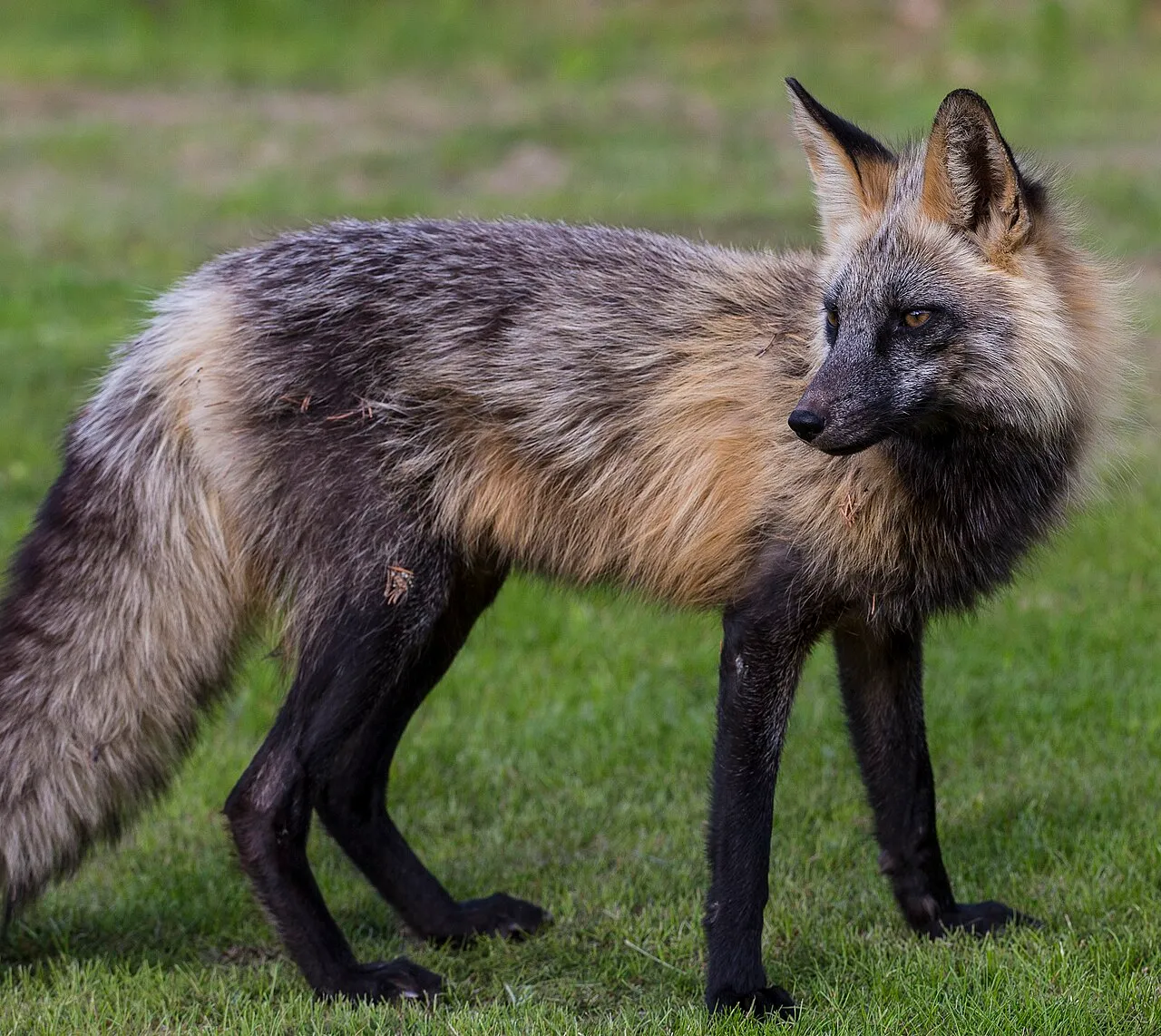
Despite the name, coat colour varies. 'Silver foxes', black with silver-tipped hairs, and 'cross foxes', with a dark cross over the shoulders, are colour morphs of the same species. More than forty subspecies have been proposed, and the classification is still being sorted out; some researchers argue North American red foxes deserve species status as Vulpes fulva.
3. Evolution
Foxes branched off from the wolf-and-jackal line early in the history of the dog family. The genus Vulpes arose in the Old World several million years ago, and the red fox itself appears in Eurasia a few hundred thousand years ago. During the Ice Ages it spread across Eurasia and later crossed the Bering land bridge into North America.
It was long claimed that North American red foxes descended from foxes imported by European settlers for hunting. Genetic work shows that most are in fact native populations that arrived far earlier, although some eastern US foxes do carry traces of introduced European stock.
The red fox's closest relatives include the Arctic fox and the corsac fox. Its relationship with the Arctic fox is now a climate-change story: as the north warms, larger red foxes are pushing into the tundra and displacing their smaller white cousins.
4. Range and habitat
Red foxes live throughout Europe, most of Asia, North Africa and most of North America. In the nineteenth century British settlers released them in Australia for sport hunting, and they spread across most of the continent remarkably quickly.
They use an astonishing range of habitats. Their favourite is the patchwork edge where woodland meets open ground, but they also live on tundra, steppe, semi-desert, mountains, farmland, city parks and suburbs. Urban foxes trotting through gardens and back streets at night are a familiar sight in Britain, Germany and Japan.
Foxes were once common across the Korean Peninsula, in hills, fields and around villages. In South Korea they declined sharply in the late twentieth century until confirmed records all but stopped. A wild fox carcass found in Gangwon Province in the early 2000s is often cited as one of the last certain records of a native wild fox in the south. Foxes are still reported from North Korea.
5. Body
A red fox is smaller and lighter than most medium-sized dogs, and its thick fur makes it look bigger than it is. Foxes in the north tend to be larger than those in the south.
| Measure | Approximate value |
|---|---|
| Head-body length | 45–90 cm |
| Tail | 30–55 cm |
| Shoulder height | 35–50 cm |
| Weight | 2–14 kg, typically 4–8 kg |
| Top speed | about 45–50 km/h |
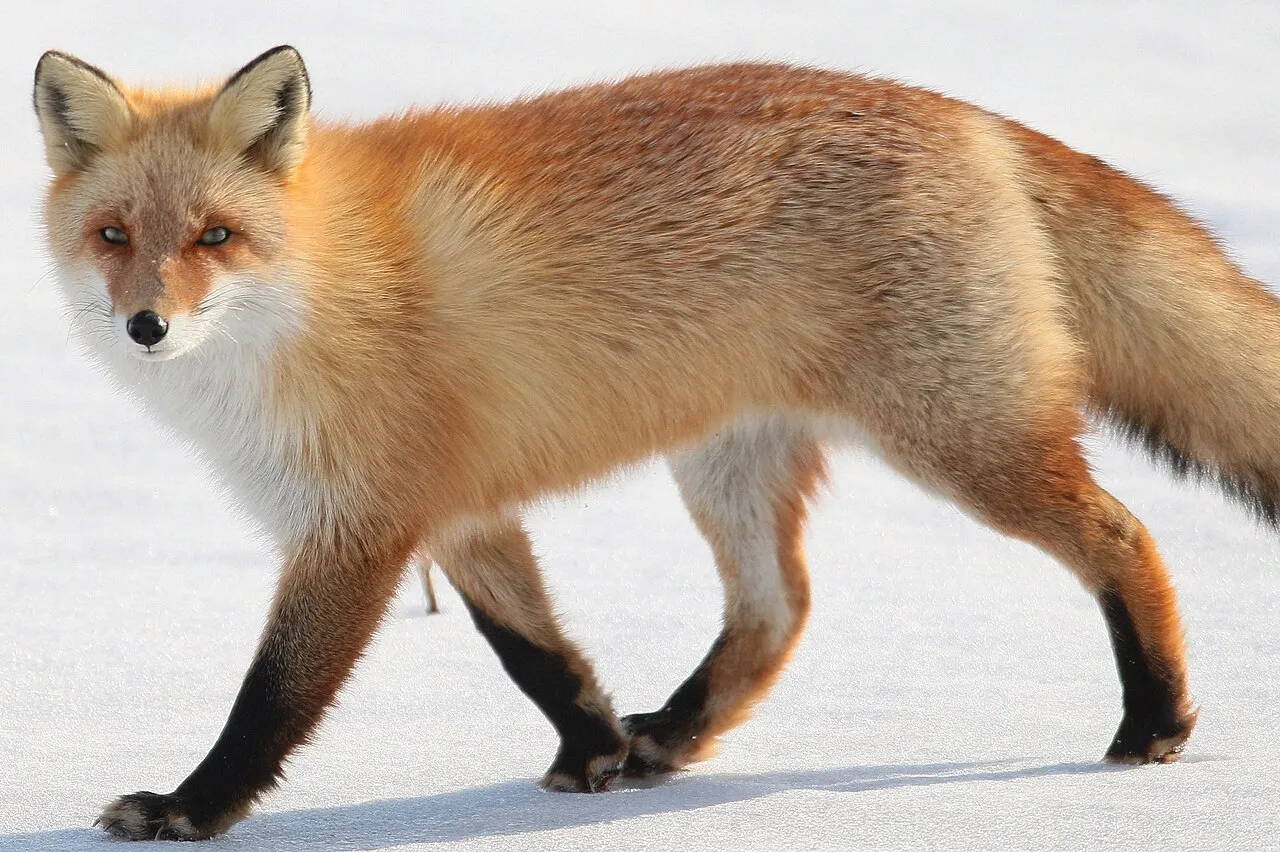
The back and flanks are orange to rusty red, the belly and throat white. The lower legs and backs of the ears are black, giving the look of dark stockings, and the tail usually ends in a white tip, a handy feature for telling a red fox from other species.
The tail, often more than half the body length, helps with balance when running and doubles as a blanket on cold days, wrapped over nose and feet. Vertical, cat-like pupils control light in the dark, and the large ears can pick up the rustle of a mouse beneath the snow.
Males are slightly larger with broader heads than females, but the sexes are hard to tell apart by sight.
6. Behaviour and ecology
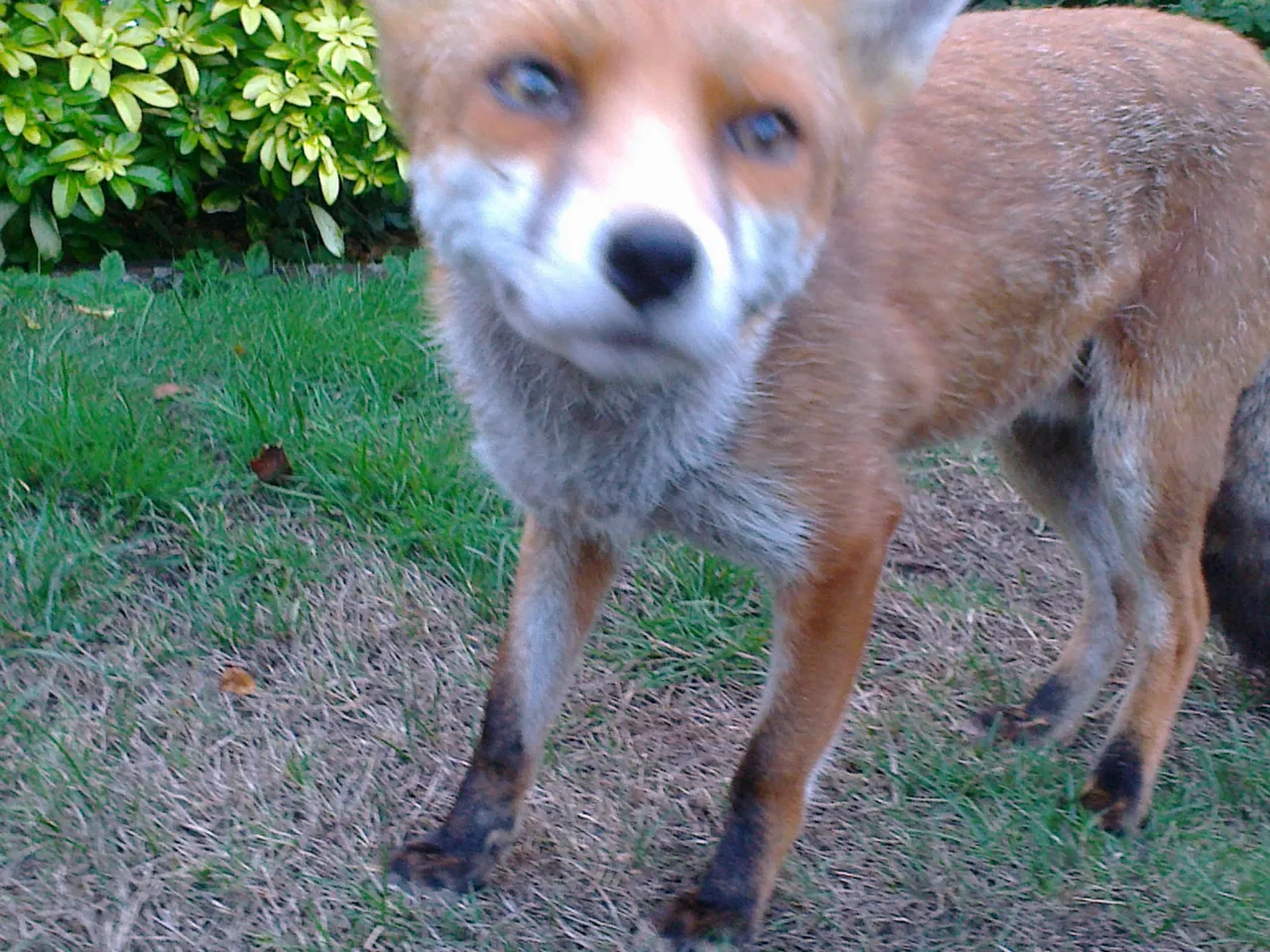
Red foxes are most active at dusk, through the night and at dawn. Where people are scarce they also move about by day, but the busier the area, the more nocturnal they become. They usually hunt alone, but pairs cooperate to raise cubs.
Family life is more flexible than once thought. The core unit is a pair and that year's cubs, but where food is rich, daughters from the previous year may stay on as helpers that bring food and babysit. Territories range from around a square kilometre in cities to tens of square kilometres where food is scarce.
Dens are used mainly for breeding; in other seasons foxes often rest above ground in thickets or under rocks. They dig their own burrows but readily take over and remodel those of badgers or rabbits. They do not hibernate.
7. Diet and feeding
The red fox is an opportunistic omnivore. Voles and mice are the backbone of its diet, supplemented by rabbits and hares, birds, eggs, frogs, insects and earthworms. In summer and autumn it eats a lot of berries and fruit, and city foxes add scraps and handouts.
Its most famous technique is the 'mousing pounce'. The fox stands motionless with ears cocked, pinpoints a rodent by sound, then leaps high and dives down nose-first onto it. It can locate prey under nearly a metre of snow.
Surplus food is buried in shallow caches for later, and foxes remember their scattered stores surprisingly well. A fox that gets into a henhouse may kill far more birds than it can eat, probably because the panicking flock keeps triggering its hunting reflex, which is one reason for conflict with farmers.
8. Reproduction and life cycle
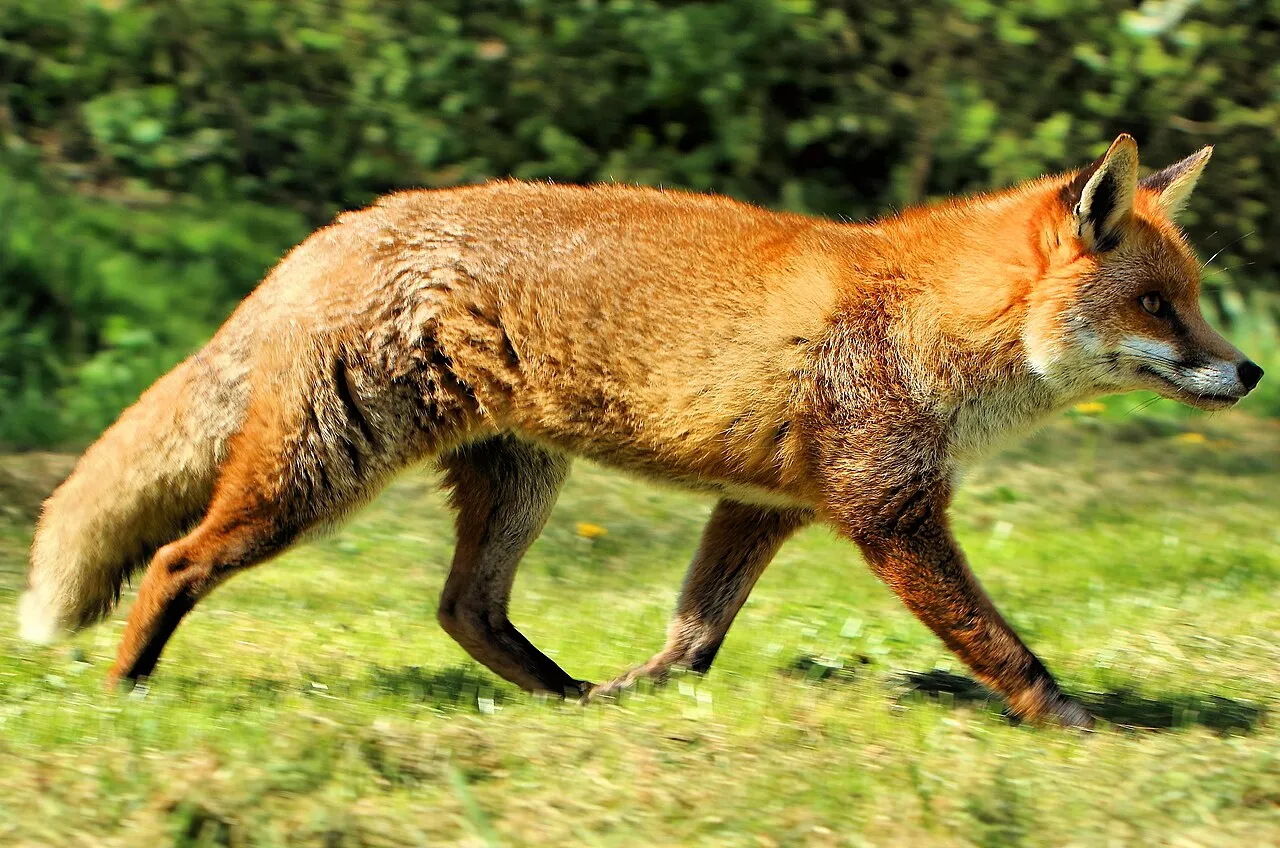
Airwolfhound from Hertfordshire, UK · CC BY-SA 2.0
Breeding takes place in midwinter, around December to February, when the night air fills with eerie screams, often vixens calling for mates. Gestation is about 50–53 days, and in spring, roughly March to May, the vixen gives birth underground to an average of four to six cubs, occasionally more than ten when food is plentiful.
| Stage | Age | What happens |
|---|---|---|
| Newborn | 0–2 weeks | Blind, about 100 g, dark grey-brown fur |
| Den life | 2–5 weeks | Eyes open; nurse and venture to the den mouth |
| Play outside | 1–3 months | Wrestle and practise hunting; coat turns red |
| Pre-independence | 4–6 months | Begin hunting alone |
| Dispersal | Autumn–winter | Leave for areas a few to tens of kilometres away |
| Maturity | about 10 months | Can breed the following winter |
While the cubs are small the male brings food and the vixen stays close to the den. Wild foxes live short lives, often just two to four years on average, with traffic, hunting and disease the main killers. In captivity they may live past ten.
9. Intelligence, communication, special abilities
Foxes deserve their reputation for cunning. Urban foxes learn human routines, turning up on bin day and crossing roads when traffic is light.
Their vocal repertoire is rich, with more than twenty distinguishable calls, from short barks and blood-curdling screams to the whimpers of cubs. Tail position, ear angle and open-mouthed gapes carry meaning too, and foxes mark their territories with urine and droppings. Fox scent is so pungent that people can easily detect it.
One intriguing study found that mousing pounces aimed roughly north-east were more successful, prompting the hypothesis that foxes may use Earth's magnetic field to judge distance. It remains unproven but tantalising.
In Russia, a decades-long experiment bred foxes selected only for tameness. Over generations they began wagging their tails, developed floppy ears and patchy coats, and behaved remarkably like dogs. The study is a landmark in understanding domestication, but it does not make wild foxes suitable pets.
10. Predators and survival
As a mid-sized predator the red fox has bigger enemies: wolves, coyotes, lynx, leopards, and large raptors such as golden eagles and eagle owls. Where wolves or coyotes are common, foxes often shift closer to people or into different terrain to avoid them. Cubs may be killed by badgers or large dogs.
Foxes escape with speed, sudden changes of direction and quick retreats into burrows or cover. Today, though, the greatest dangers come from people: traffic, hunting and trapping, secondary poisoning from rodenticides, and diseases such as mange and distemper that can spread from dogs.
11. Relationship with humans
Foxes and people have a complicated history. To farmers the fox was a poultry thief, yet also a useful rodent catcher. Its beautiful, warm pelt made it a mainstay of the fur trade, and fox fur farms still operate in some countries, drawing strong international criticism over welfare.
In Britain, hunting foxes with hounds was a long-standing upper-class tradition until a ban in England and Wales in the 2000s after years of debate over cruelty. In Australia, introduced foxes have devastated small native marsupials and ground-nesting birds and are managed as a major invasive species.
Foxes can also carry rabies. In Europe, air-dropped oral vaccine baits dramatically reduced fox rabies over recent decades.
11.1. Fox reintroduction in Korea
Foxes were once common in Korea. A widely told explanation for their crash is the government-led rat eradication campaigns of the 1960s and 1970s: foxes ate poisoned rats and died of secondary poisoning. Hunting for fur and habitat change added to the decline until foxes had all but vanished from South Korea.
Against this background, national park authorities launched a reintroduction programme in the early 2010s centred on Sobaeksan National Park, which straddles Yeongju in North Gyeongsang and Danyang in North Chungcheong. The site was reportedly chosen for its historical fox records, plentiful rodent prey and relatively low human disturbance. Founders included foxes brought from abroad and animals bred in Korea; they underwent pre-release training and wore tracking collars.
Released foxes have paired up and raised cubs in the wild, and some have dispersed beyond the park into neighbouring areas. Published population figures vary with timing and survey method, but the wild population is thought to number at least several dozen. Roadkill, illegal snares and agricultural poisons remain significant causes of death.
Bringing back a mid-sized predator that keeps rodents in check is meant to help restore ecological balance, so coexistence with local residents matters. The programme supports stronger henhouses and runs outreach. If you see a fox in the hills, the best thing you can do is watch quietly from a distance and never feed it.
12. Conservation
The IUCN lists the red fox as Least Concern. There are probably millions worldwide, the overall trend is considered stable, and in many European and North American cities numbers are rising.
Some isolated populations are nevertheless at risk. Native mountain foxes in the western United States, such as the Sierra Nevada red fox, survive in very small numbers and receive special protection, and in places like southern Korea human activity wiped the species out almost entirely.
In South Korea the red fox is a Class I endangered species under the Wildlife Protection and Management Act, so capturing, harming or trading one without a permit is punishable. In Australia, by contrast, it is an invasive pest subject to control, a vivid example of how one species can need opposite conservation strategies in different places.
13. In zoos
Red foxes are kept in zoos, but they are shy and largely nocturnal, often spending the day hidden in dens or bushes. Removing cover so visitors can see them better causes real stress. Good enclosures offer diggable ground, hiding spots, varied terrain and enrichment that makes foxes search for their food.
In Korea, zoo-bred foxes helped seed the reintroduction programme, showing how captive facilities can support conservation, though that value shrinks when display is the only aim.
Videos of 'pet foxes' are popular on social media, but foxes smell strongly, dig, chew and wreck furniture, and do not behave like dogs even when tame. In South Korea the red fox is an endangered species and keeping one privately is illegal, and many other jurisdictions restrict them too.
14. In culture
In East Asian folklore the fox is among the most magical of animals. Korea's gumiho, a nine-tailed fox that takes human form and hungers for human livers, is endlessly reinvented in dramas, films and webtoons. In China the nine-tailed fox could also be an auspicious omen, and in Japan foxes, kitsune, serve as messengers of the rice deity Inari, guarding shrine gates in stone.
In the West the fox is the archetypal trickster. Reynard, the hero of medieval European fox tales, became so famous that renard is now simply the French word for fox. Aesop's 'The Fox and the Grapes', the fox in Saint-Exupéry's 'The Little Prince' who explains what it means to be tamed, Roald Dahl's 'Fantastic Mr Fox' and Nick Wilde in Disney's 'Zootopia' all trade on the clever-fox image.
In Korean, calling someone 'fox-like' can mean sly, but also charming and quick to read a room. A sun shower is poetically called a 'fox rain'.
15. Trivia
- One theory holds that the white tail tip helps cubs follow their mother in the dark.
- A fox diving headfirst into deep snow is a staple shot of winter wildlife documentaries.
- The vixen's midwinter scream is so human-like that it regularly prompts calls to the police.
- Though a member of the dog family, the fox has cat-like vertical pupils and a stalking style much like a cat's.
- Red foxes live on every continent except Antarctica and South America, counting North Africa and introduced populations in Australia.
Wild animals are not pets. Catching, trading or keeping them is illegal in most places. If you find an injured wild animal, call your local wildlife rescue centre.
FAQ
Why did foxes disappear from South Korea?
A widely cited explanation is secondary poisoning during the rat eradication campaigns of the 1960s and 1970s, when foxes ate poisoned rats. Fur hunting and habitat change also played a part.
Has the Sobaeksan fox reintroduction worked?
Released foxes have bred in the wild and spread to surrounding areas, which is encouraging. Roadkill, illegal snares and agricultural poisons remain major problems.
Can a fox be kept as a pet?
In South Korea the red fox is an endangered species, so private keeping is illegal. Even tame foxes don't behave like dogs; they smell strongly, dig and destroy things.
Photo credits
Photos are freely licensed images from Wikimedia Commons. Authors and licenses are listed below.
- Portrait of a red fox in Rautas fjällurskog (cropped).jpg — ClaudiaTen · CC BY-SA 4.0
- Cross Fox in the Fortymile Wild and Scenic River corridor (30230932296).jpg — mypubliclands · Public domain
- Ezo red fox, Japan; February 2021 (03) (cropped).jpg — MIKI Yoshihito. (#mikiyoshihito) · CC BY 2.0
- Fleet Fox AKA Rolf, Winterwatch Brighton.png — Harshmustard · CC BY-SA 3.0
- Fox - British Wildlife Centre (17429406401) (cropped).jpg — Airwolfhound from Hertfordshire, UK · CC BY-SA 2.0