TailVille
At a glance
Rough ranges for supplies, food and electricity in Korea (USD is approximate). Purchase or adoption fees are not included.
Apartment dwellers and busy singles who want a quiet, low-maintenance bird that still enjoys human company.
Anyone hoping for a talking or trick-performing bird, or who can't stand splashed water and scattered husks.
1. Overview
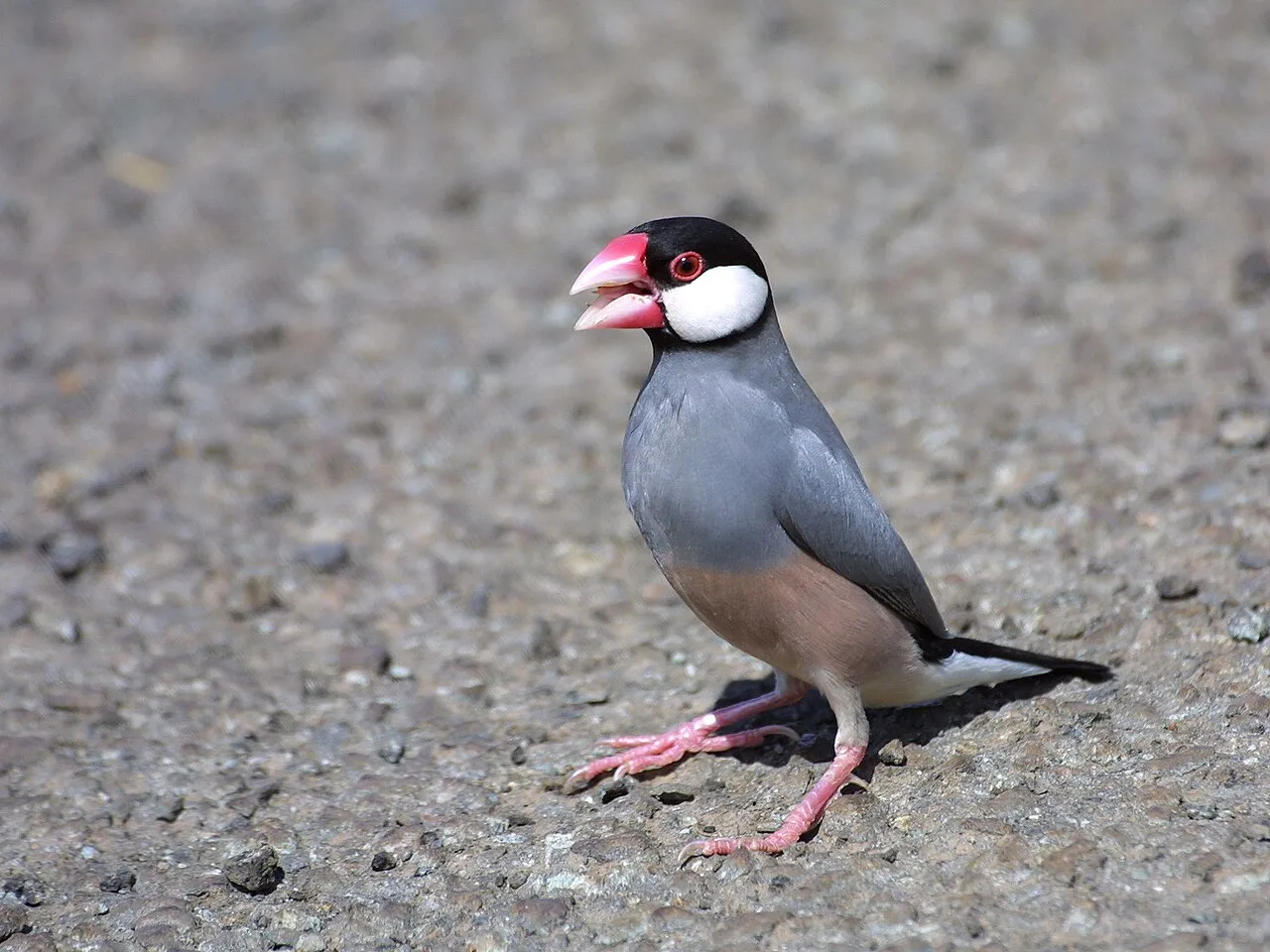
The Java sparrow is a small finch from the Indonesian islands of Java and Bali, belonging to the waxbill and munia family, Estrildidae. At 15 to 17 cm and 24 to 30 grams it is a little bigger than a house sparrow, and its glossy, chunky pink bill, crisp white cheeks and red eye-ring give it a neat, appealing look. Despite the English name, it is not a true sparrow at all.
Java sparrows won't talk or wreck toys the way parrots do, but birds hand-reared from chicks are famous for bonding so closely that they fall asleep in their owner's palm. Their voice is soft and quiet, making them good apartment birds, and their enthusiasm for bathing, several times a day, is entertainment in itself.
In its homeland, however, decades of trapping and habitat loss have pushed the wild population into steep decline, and the species now has international protection. Common in homes yet rare in the wild: understanding that double identity is the first step to keeping one well. This article covers its name, classification, history, anatomy, behaviour, care, health, breeding, costs, laws and place in culture.
2. Name and classification
2.1. Scientific name and etymology
The name most widely used today is Lonchura oryzivora. Linnaeus described the bird in 1758 in a different genus, and for a long time it was known as Padda oryzivora. Padda comes from the Malay word padi, rice, and oryzivora joins the Latin oryza, rice, with vorare, to devour. Both names record the bird's long association with rice paddies. Some authorities still keep the separate genus Padda, so you may see either name.
In Indonesia it is gelatik Jawa, gelatik being the local word for this kind of bird. English names besides Java sparrow include Java finch and rice bird.
2.2. The Korean name
The Korean name munjo is written with the same characters as the Japanese buncho, 文鳥, and appears to have been borrowed from Japan. The first character means writing or pattern; explanations range from the bird's tidy markings to its popularity among scholars, but no origin is confirmed. Korean keepers prefix colour names, such as white, sakura or cinnamon munjo, and call hand-reared birds hand-tame munjo.
2.3. Relatives
Within the estrildid finches, the Java sparrow sits in the genus Padda or a broad Lonchura, and its closest relative is the brown, slightly smaller Timor sparrow from the Timor region of Indonesia.
The same family includes the Bengalese or society finch and the zebra finch, both long kept in Korea, as well as many munias. All are seed-eaters that like to sit pressed together in groups. Java sparrows are bigger and heavier-billed than most, though, and can bully smaller finches if housed together.
3. History
3.1. From Java to East Asia
Java sparrows originally lived in lowland grassland, forest edges and the farmland around rice paddies on Java and Bali. The spread of rice cultivation actually boosted their food supply, and people carried them to many other islands and regions of South-East Asia. Flocks descending on ripening rice made them unpopular with farmers.
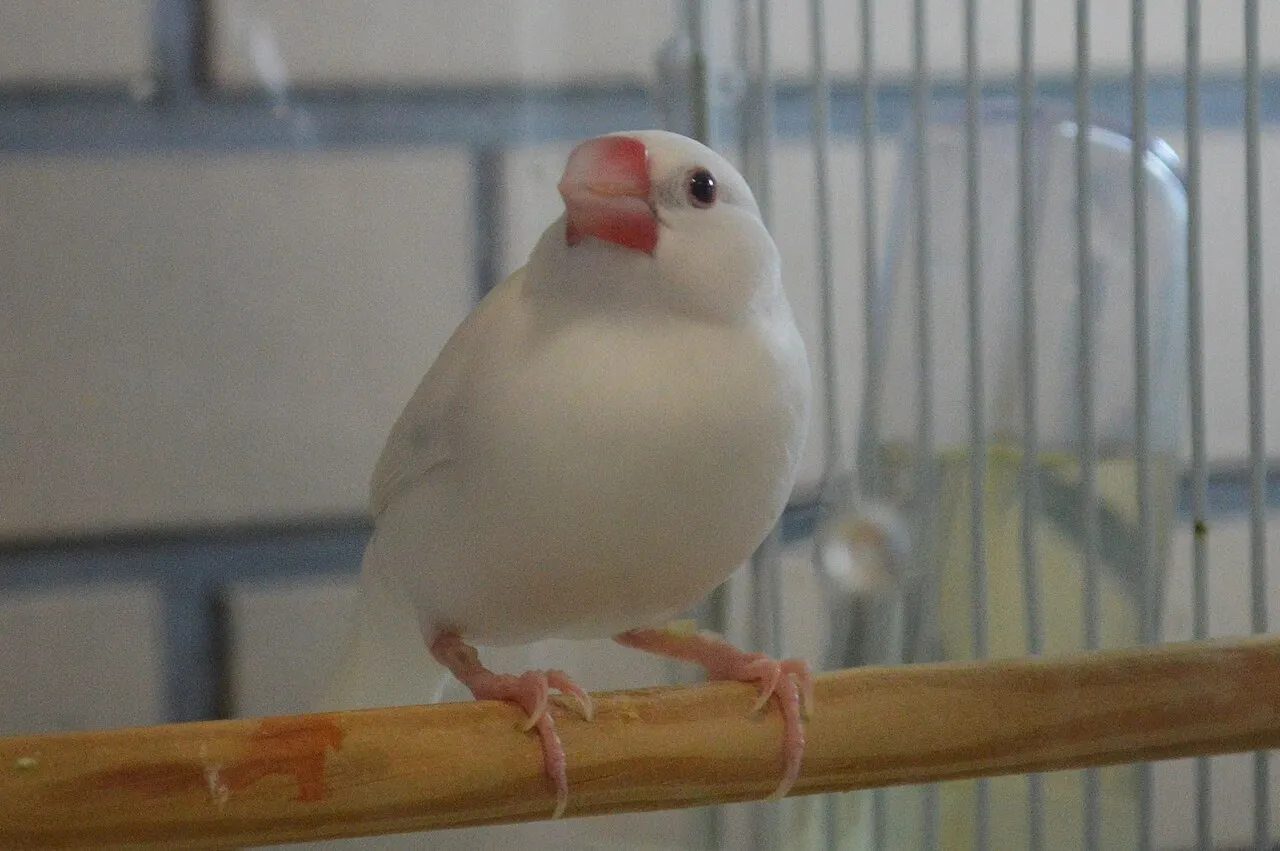
Their good looks took them to China as cage birds long ago, and from there to Japan. Bird-keeping culture there included Java sparrows by the Edo period, and Japanese breeders eventually fixed the pure white form. The Yatomi area of Aichi Prefecture is said to have been renowned for white Java sparrows from around the Meiji era. Crossing white and normal birds produced the white-flecked sakura type, and cinnamon, silver and other colours followed in the later twentieth century.
3.2. Java sparrows in Korea
There is no clear record of when Java sparrows first reached Korea. The Japanese-derived name and the strong influence of Japanese bird-keeping suggest they spread mainly via Japan in the modern era. In the bird markets of the 1970s and 1980s they were sold alongside society finches and budgies as classic ornamental birds, usually as a pair to be admired for their looks and song.
From the 2000s, online communities fuelled the popularity of hand-tame Java sparrows. Photos and videos of birds relaxing in their owners' hands spread on social media, and the species gained a reputation as a quiet companion for people living alone. At the same time, awareness has grown that Java sparrows are listed on CITES Appendix II and should come from legal captive breeding.
4. Physical characteristics
Asturio Cantabrio · CC BY-SA 4.0
4.1. Bill and face
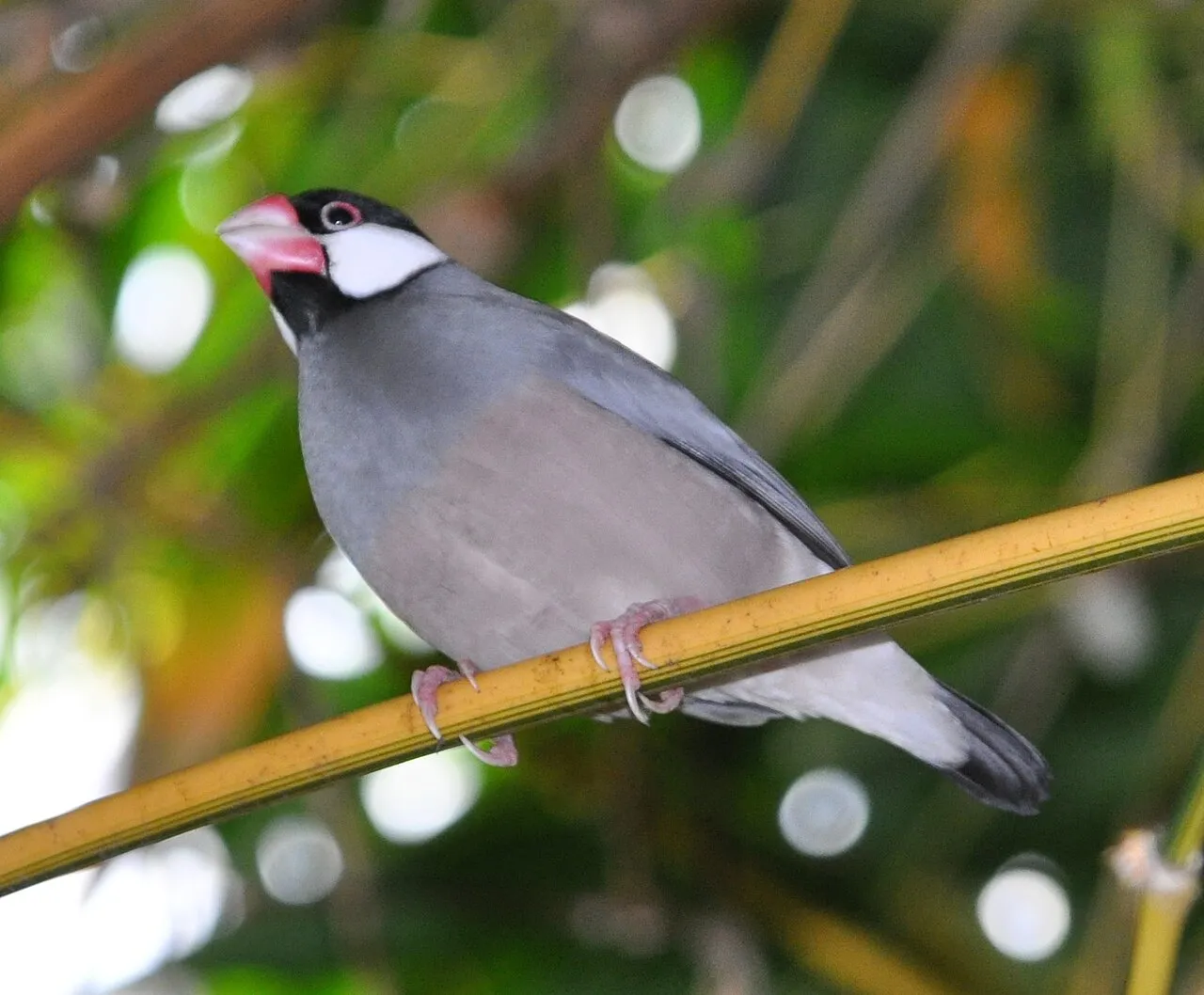
The Java sparrow's signature feature is its thick, smooth, conical bill. In a healthy adult it has a waxy shine and ranges from pink to deep coral, perfectly shaped for husking tough grains such as rice. A bill that becomes rough, flaky or suddenly pale can point to nutritional or health problems.
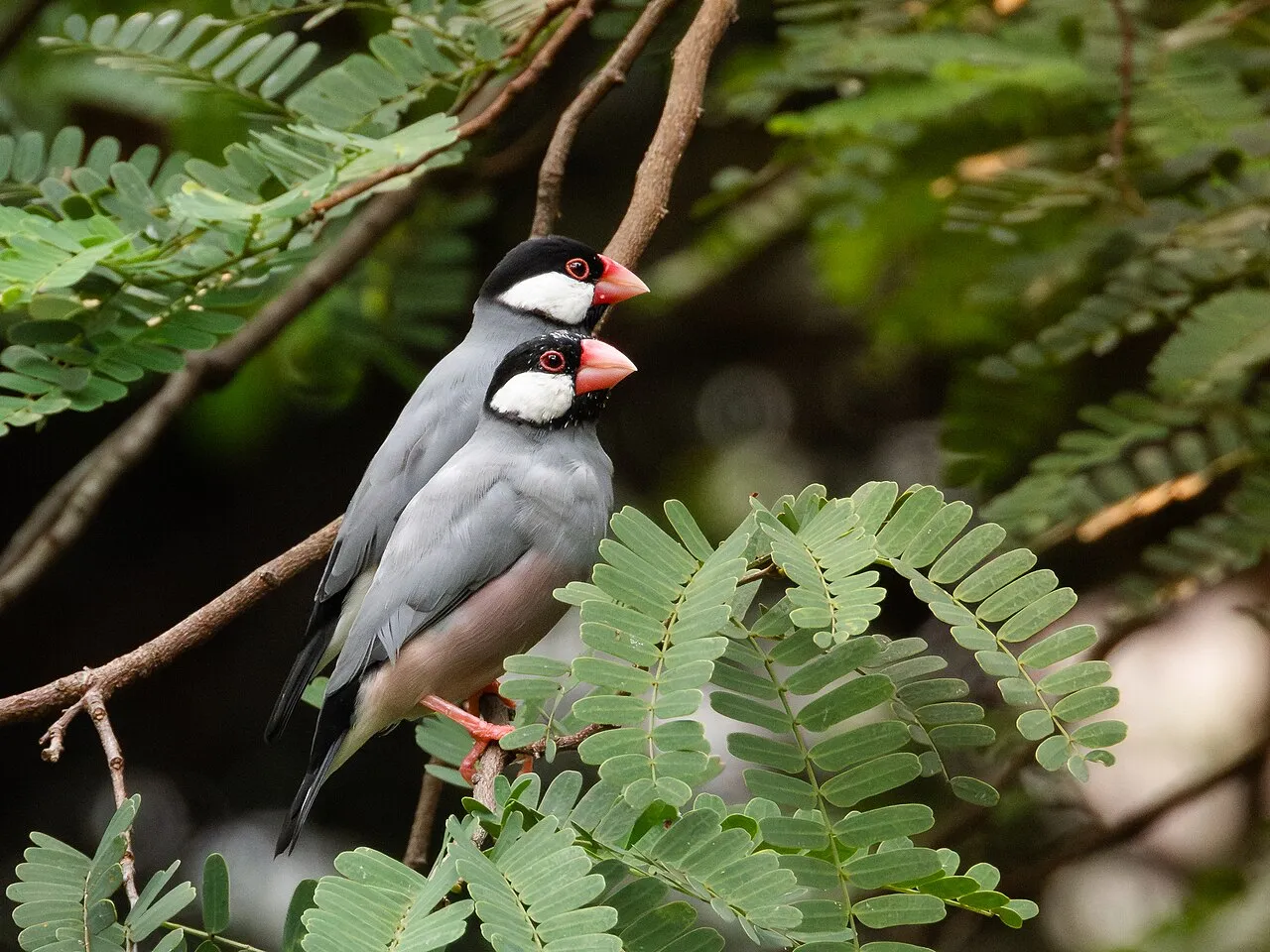
A ring of bare red skin surrounds each eye, making the eyes stand out. In normal birds the head and throat are black with a large white cheek patch, creating a masked look.
4.2. Plumage and build
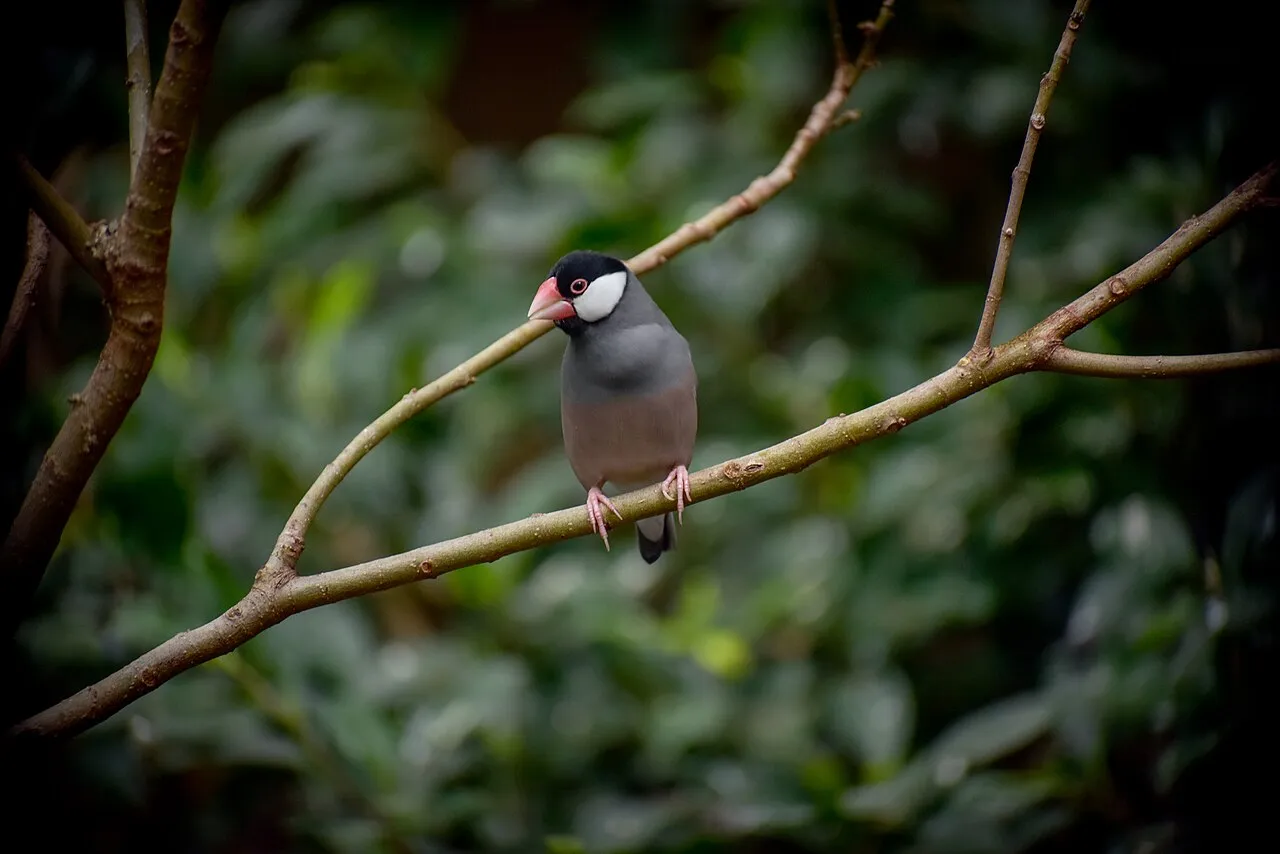
A normal Java sparrow has a soft blue-grey body, a pinkish-grey breast, white lower belly and undertail, and a black tail. The feathers lie sleek and tight, giving a polished look. The body is rounded with short legs, and the feet have three toes forward and one back, like sparrows and canaries.
Juveniles look so different that newcomers often doubt they are the same species. They are dull grey-brown with faint pale cheeks and a dark or greyish bill. Between about three and six months they moult into adult colours and the bill gradually flushes pink.
4.3. Sexing
Males and females share the same plumage, so sexing by eye is tricky. The following tendencies are widely cited, but treat them as clues rather than proof.
| Feature | Typical male | Typical female |
|---|---|---|
| Bill | Larger and heavier, with a swollen base | Slimmer, flatter at the base |
| Eye-ring | Thick and deep red | Thinner and paler |
| Song | Short song with a bouncing dance | Doesn't sing, makes short calls |
| Behaviour | Courts actively, even dances for its owner | Responds to courtship with tail quivering |
Song is the best clue. Young males start a mumbling practice song at two to four months, and adults repeat a song of soft whistles, trills and bill-clicks. If you haven't heard the bird sing, or you are buying a youngster, a DNA test gives a definite answer.
5. Colour varieties
Most Java sparrow colour varieties were fixed or popularised in Japan, so Japanese names are widely used.
| Variety | Appearance | Notes |
|---|---|---|
| Normal (grey) | Blue-grey body, black head, white cheeks | Wild type, often said to be the hardiest |
| White | Pure white, pink bill, red eye-ring | Youngsters may show grey flecks |
| Sakura (pied) | Normal colouring flecked with white | Amount and placement vary by bird |
| Cinnamon | Soft brown body, darker brown head | Eyes may look reddish |
| Silver | Pale silvery grey | Lighter overall than normal |
| Cream | Creamy beige with a pale head | Combines silver and cinnamon factors |
| Heavily pied | Large irregular white areas | More white than a typical sakura |
Breeders often say that pairing two whites lowers hatch rates, so whites are commonly paired with sakura or normal birds. Explanations of colour genetics vary between sources; if you plan to breed, consult experienced breeders or specialist books. There is no scientific evidence that colour affects temperament, which depends far more on the individual and how it was raised.
6. Behaviour
ꦥꦤ꧀ꦗꦶꦒꦸꦱ꧀ꦠꦶꦄꦏ꧀ꦧꦂ · CC BY 4.0
6.1. In the wild
Wild Java sparrows live in flocks of a few dozen in lowland grassland, farmland and around villages. They feed mainly on seeds taken from the ground or straight from rice heads, adding insects in the breeding season to give their chicks protein. Nests are domed grass structures in trees, under eaves or among palm fronds, sometimes used for roosting outside the breeding season too.
Once common in its native range, the species declined sharply through mass trapping for the cage-bird trade, pesticide use and habitat change, and the IUCN Red List now classes it as Endangered. Ironically, feral flocks established in places where people introduced them can be easier to see than wild birds in Java itself.
6.2. At home
Pet Java sparrows are calm but curious, cocking their heads to watch everything you do. Bonded cage-mates sit pressed together preening each other's heads, and a happy pair spends most of the day side by side. A hand-tame bird treats its owner as its partner, settling into a cupped palm or burying its head between your fingers for a nap.
When a male sings, he stands tall and bounces up and down, adding sharp clicks with his bill. This bouncing courtship dance is aimed at a mate or a favourite human. Java sparrows aren't intensely territorial, but when guarding a nest or a favourite spot they may gape and hiss or peck at fingers.
Bathing is a central part of the day. Change the water and a Java sparrow will often plunge straight in, wings whirring and water flying, then sit soaked on a perch to dry, sometimes several times a day.
6.3. Sounds and body language
- Short 'chip' calls: everyday contact calls.
- A soft song of whistles and trills mixed with bill-clicks: a male's song and courtship.
- Bouncing up and down while singing: the courtship dance, aimed at a mate or owner.
- Rapid side-to-side tail flicking: a female responding to courtship, or a contented bird.
- Gaping with a harsh hiss: annoyed or defending its space.
- Fluffed with head tucked into the back: sleeping or resting; if this goes on through the day, check its health.
- Sleeked feathers and an upright stance: startled or wary.
- Sitting pressed together and preening each other: a strong pair bond.
7. Life stages
Java sparrows usually live 7 to 10 years and well-kept birds sometimes pass 10, which is long for a small finch.
| Stage | Age | What happens |
|---|---|---|
| Egg | About 16 to 18 days | Both parents incubate |
| Chick | 0 to 2 weeks | Hatches naked; distinctive mouth markings guide the parents when feeding |
| Nestling | 2 to 4 weeks | Feathers grow; birds destined to be hand-tame are pulled for hand-feeding around now |
| Fledgling | 4 to 6 weeks | Leaves the nest and begs from parents or people |
| Juvenile | 6 weeks to 3 months | Feeds itself; grey-brown with a dark bill |
| Moult | 3 to 6 months | Adult plumage comes in, bill turns pink, males practise singing |
| Adult | 6 months to 6 years | Breeding age, very active |
| Senior | 7 years and up | Overgrown beak and nails, slower, longer moults |
Older birds often show faster beak and nail growth, thicker leg scales and fewer baths. If gripping becomes difficult and the bird rests on the floor more, lower the perches and line the floor with soft paper. Seniors also feel the cold more, so pay extra attention to warmth in winter.
8. Housing
Rachelle Haun · CC BY 2.0
8.1. The cage
A single bird needs a finch cage at least 45 cm wide, 35 cm deep and 45 cm high, and a pair 60 cm wide or more. Java sparrows don't climb the bars like parrots; they hop and make short flights between perches, so length matters more than height. Put a perch at each end and leave the middle clear for flight. Keep the gaps between bars to roughly a centimetre, no more than 1.2 cm.
Water gets splashed constantly, so a plastic, easy-wipe floor tray is practical. Use a shallow bath dish 12 to 15 cm across and place it away from the food so splashes don't soak the seed.
8.2. Temperature, humidity and light
As a tropical bird, the Java sparrow is happiest at 20 to 28°C. Healthy adults tolerate some cold, but on winter nights below 15°C use a small heat lamp or a cage cover. Windowsills that feel warm by day can turn cold at night, so move the cage further into the room in winter. Humidity of 50 to 60 percent suits them; very dry air can roughen the bill and leg skin.
Allow a quiet, dark night of 10 to 12 hours. Japanese keepers often provide a pot-shaped straw nest for roosting. It offers security but can also encourage hens to lay, so if you don't intend to breed, a cage cover is the better way to create darkness.
8.3. Equipment checklist
- A wide finch cage with bars 1 to 1.2 cm apart or less
- Two or three natural-wood perches about 1 cm thick
- Food dish, water dish and a 12 to 15 cm bath, plus spares
- A finch seed mix and some unhulled paddy rice
- Crushed oyster shell or a cuttlebone, and mineral grit
- A vegetable clip
- A cage cover and a small heat lamp for winter
- A digital gram scale
- A travel carrier
- A splash guard or waterproof mat around the cage
- For hand-rearing chicks: hand-feeding formula, a syringe or feeding spoon, a brooder box and a thermometer
9. Diet
9.1. Staple diet
The staple is a finch seed mix of millets, Japanese millet and canary seed. Java sparrows go wild for unhulled paddy rice mixed in, a legacy of their rice-field origins. Polished white or brown rice meant for people is nutritionally lopsided, so use it only as a small part of the mix. More keepers are now adding finch pellets too; mixing a few into the seed and increasing gradually helps balance the diet.
Allow about 5 to 8 grams, one to two teaspoons, per bird per day. They hull every seed, so blow off the husks daily and top up. Keep crushed oyster shell or a cuttlebone and mineral grit available in a separate dish at all times for calcium and minerals.
9.2. Greens and supplements
Offer a few leaves of greens daily, such as bok choy, komatsuna, kale, broccoli leaves, dandelion leaves or sprouts. Java sparrows enjoy tearing leaves with their bills, so clip a whole leaf to the cage. Fruit isn't essential, though a tiny piece of apple or mandarin now and then is fine.
Protein needs rise during the moult and breeding. Supplement two or three times a week with a little finch egg food or mashed hard-boiled yolk. Sprouted seed is another digestible, nutritious extra, but it spoils fast; make it fresh and remove leftovers within a few hours.
9.3. Feeding summary and foods to avoid
| Item | Frequency | Portion |
|---|---|---|
| Seed mix and pellets | Daily | 5 to 8 g a day |
| Paddy rice | Daily or regularly | Mixed into the seed |
| Leafy greens | Every day | A leaf or two, torn or clipped |
| Oyster shell, cuttlebone | Always available | Free choice |
| Egg food | Two or three times a week in moult and breeding | A small spoonful |
Keep these away from your bird:
- Avocado
- Chocolate, coffee, green and black tea
- Salted or seasoned rice, bread and snacks
- Onion and garlic
- Mouldy seed or stale paddy rice
- Smoke from candles, mosquito coils, air fresheners and insecticides
- Fumes from overheated non-stick pans
- Long threads, string or wool as nesting material, which can strangle toes
10. Health and disease
Quartl · CC BY-SA 3.0
A bird weighing around 30 grams can lose strength within hours of not eating, so act on symptoms the same day. Vets who treat finches are far rarer than dog and cat vets, so locate an avian or exotic-animal clinic before you bring a bird home. The following is background information; diagnosis and treatment must come from a vet.
10.1. Common conditions
| Condition | Cause | Main signs | Prevention and response |
|---|---|---|---|
| Overgrown beak and nails | Age, nutrition, liver disease, nothing to wear them down | Crossed or elongated bill, curled nails | Vet trimming, check for underlying disease |
| Air sac mites | Mites in the respiratory tract | Clicking or wheezing breath, open-beak breathing | Diagnosis and treatment, quarantine newcomers |
| Megabacteria | Yeast-like organism in the stomach | Weight loss, whole seed in droppings, vomiting | Faecal testing, antifungal treatment |
| Egg binding and oviduct disease | Low calcium, excessive laying, obesity | Swollen belly, straining, crouching on the floor | Calcium, nest management, emergency care |
| Bumblefoot | Obesity, poor hygiene, hard perches | Swollen, scabbed soles, limping | Varied perches, clean floor |
| Coccidia and other gut parasites | Contaminated food or water | Loose droppings, weight loss | Faecal tests, keep bath and drinking water separate |
| Chilling | Cold winter conditions | Heavily fluffed, inactive | Warmth, avoid windowsills |
Don't trim an overgrown or crossed bill at home with nail clippers. The bill contains blood vessels and nerves, so a mistake causes bleeding and pain, and the overgrowth may stem from an internal problem such as liver disease. Let a vet trim it and investigate the cause.
10.2. When to see a vet
- Sitting fluffed and dozing by the food dish or on the floor
- Pronounced tail movement or clicking sounds with each breath
- Skipping baths for a day or more and noticeably less active
- Loose droppings or droppings containing whole seed
- Losing 2 to 3 grams or more in a week, a big change for a 30-gram bird
- A bill that suddenly turns chalky white or starts peeling
- A hen straining with a swollen belly but not passing an egg
- Holding up a foot or limping
For the trip, keep the carrier warm and covered with a towel. Water dishes tip over easily in transit, so a few pieces of watery vegetable can provide moisture on the way.
11. Breeding and hand-rearing
Java sparrows can breed from six to eight months, but most keepers wait until about a year old, when birds are fully grown. Give a compatible pair a pot-shaped straw nest or a wooden nest box and they will work together to line it with dry grass, coconut fibre and similar material.
The hen lays four to six eggs, one a day, and both parents share incubation for about 16 to 18 days. Chicks emerge from the nest at three to four weeks and feed themselves at around six to eight weeks. Provide plenty of egg food and calcium during breeding, and keep nest checks to a minimum, because frequent disturbance can make parents abandon their eggs.
Hand-tame Java sparrows are chicks taken from the nest at about two to three weeks and fed by hand several times a day. Keepers use soaked millet, egg-coated millet or commercial hand-feeding formula served warm; food that is too hot burns the crop and food that is too cool causes digestive trouble. Chicks cannot regulate their own temperature, so a brooder must be kept steadily warm. It is demanding work for a beginner, and guidance from an experienced keeper is strongly advised.
- Consider whether you can take responsibility for every chick or find each a good home.
- Java sparrows are on CITES Appendix II, so check whether transferring captive-bred birds requires any formalities where you live.
- Remove the nest between rounds and avoid more than two clutches a year.
If you don't plan to breed, leave out nests and nesting material, and remember that two hens kept together may still lay infertile eggs.
12. Costs
These are rough figures; prices vary by colour, tameness, country and clinic.
| Item | Typical range | Notes |
|---|---|---|
| Bird | 15 to 80 dollars | Hand-tame and rare colours cost more |
| Cage | 40 to 120 dollars | Wide finch cage |
| Basic equipment | 25 to 50 dollars | Dishes, bath, perches, carrier |
| First vet visit | 25 to 80 dollars | Droppings test and air sac mite check |
| Monthly food and supplements | 8 to 15 dollars | Seed, paddy rice, greens, egg food |
| Monthly supplies | 4 to 12 dollars | Floor paper, oyster shell |
| Yearly check-up | 25 to 80 dollars | Weight, droppings, beak and nails |
| Emergency care | Tens to several hundred dollars | Egg binding, respiratory disease |
Compared with parrots, Java sparrows rarely destroy toys and eat little, so running costs are low. Do budget for the electricity used by winter heating and for emergency vet visits.
13. Before you get one
Before getting a Java sparrow, consider the following.
- Do you want a hand-tame bird, or a pair to watch interacting with each other?
- Can you refresh the bath daily and clean up splashed water and husks?
- Can you commit for 7 to 10 years or more, with an avian vet within reach?
- Can you keep the room warm enough in winter?
- Will the seller provide information or documents showing the bird was legally bred?
If you want a hand-tame bird, it must come to you young; Java sparrows that first meet people as adults often stay afraid of hands for life. For a display pair, adopting an adult couple is a fine option. A healthy bird has sleek plumage, a glossy bill, a vivid eye-ring and a clean vent. Avoid birds that breathe noisily, pump their tails or sit fluffed and motionless.
An unweaned chick needs feeding several times a day, so check that this fits your work or study schedule before committing.
14. Laws and regulations
The Java sparrow has been listed on CITES Appendix II since 1997. In Korea, trade and management of CITES species fall under the Wildlife Protection and Management Act, administered by the Ministry of Environment and its regional environment offices.
- Importing or exporting a Java sparrow requires CITES permits.
- When buying domestically, keep documents proving captive breeding or legal import.
- Whether you also need to report transfers, register captive breeding or register premises can depend on the species and on changes to the law, so check with your regional wildlife authority.
- Animal welfare laws cover birds, so cruelty and abandonment can be prosecuted.
- Sales and movement of birds may be restricted during avian-influenza outbreaks.
- Releasing a pet bird can count as abandonment, and a tropical finch is unlikely to survive a cold winter outdoors. In warm places where Java sparrows have escaped, they have sometimes become agricultural pests, another reason never to release them.
Rules change, so always rely on the latest guidance from your national wildlife authority rather than this summary.
15. Java sparrows in culture
Natsume Soseki, one of the giants of modern Japanese literature, published the short story 'Buncho' (Java Sparrow) in 1908. Its narrator takes up keeping a Java sparrow at a disciple's suggestion, and the story quietly traces his feelings as he watches the little bird, and what happens when daily busyness leads to neglect. It is still the work most Japanese readers associate with the bird.
Japan's affection for the species remains strong. Manga, essays and photo books about Java sparrows appear regularly, and there is no shortage of buncho-shaped sweets, stationery and plush toys. Simple designs showing a round body and a pink bill have spread to Korea, where Java sparrow goods and emoticons are easy to find.
In Indonesia, keeping caged birds for their song and beauty is a deep-rooted tradition, and the Java sparrow was long one of the birds traded in markets. Recognition that this trade contributed to the wild decline has shifted attention toward conservation and captive breeding.
16. Trivia
- Java sparrow chicks have dot-like markings inside the mouth, thought to act as targets that help parents place food in the dark nest. Many estrildid finches have species-specific mouth patterns.
- Song is learned from the father or nearby males, so a hand-reared male raised alone may invent a song entirely his own.
- The clicking in a male's courtship dance is made by snapping the bill, and the way it is timed to the song has interested researchers studying rhythm in animals.
- Introduced Java sparrows have become established in Hawaii and some other places, a contrast with their decline at home.
- Despite the name, true sparrows belong to the family Passeridae, while the Java sparrow is an estrildid finch.
- After bathing, a Java sparrow carefully preens feather by feather; birds denied regular baths often end up with scruffy plumage and short tempers.
Health notes are general information. If something seems wrong, contact a vet who treats this species.
FAQ
How do I sex a Java sparrow?
Males tend to have a heavier bill and a bolder red eye-ring, but singing is the most reliable clue. Looks alone often mislead, so a DNA test settles it.
What is a hand-tame Java sparrow?
These are chicks taken from the nest at two to three weeks and hand-fed several times a day. Imprinting on people at that age makes them happily step onto hands as adults.
How often should a Java sparrow bathe?
They'll do it themselves, often several times a day, so simply leave a bath in the cage. Use room-temperature water, and on cold days keep the cage somewhere warm so they dry quickly.
Further reading
Photo credits
Photos are freely licensed images from Wikimedia Commons. Authors and licenses are listed below.
- Java Sparrow - Baluran NP - East Java MG 8180 (29726690101).jpg — Francesco Veronesi from Italy · CC BY-SA 2.0
- Padda oryzivora -University of Hawaii at Manoa campus, Honolulu, Hawaii, USA-8.jpg — Kim Bridges · CC BY 3.0
- Yatomi Japanese Rice Bird ac.jpg — Asturio Cantabrio · CC BY-SA 4.0
- Padda oryzivora, Bekasi, Java - 577597759.jpg — ꦥꦤ꧀ꦗꦶꦒꦸꦱ꧀ꦠꦶꦄꦏ꧀ꦧꦂ · CC BY 4.0
- Java sparrow (Padda oryzivora) at Taronga Zoo, March 2019.jpg — Rachelle Haun · CC BY 2.0
- Padda oryzivora qtl1.jpg — Quartl · CC BY-SA 3.0