TailVille
1. Overview
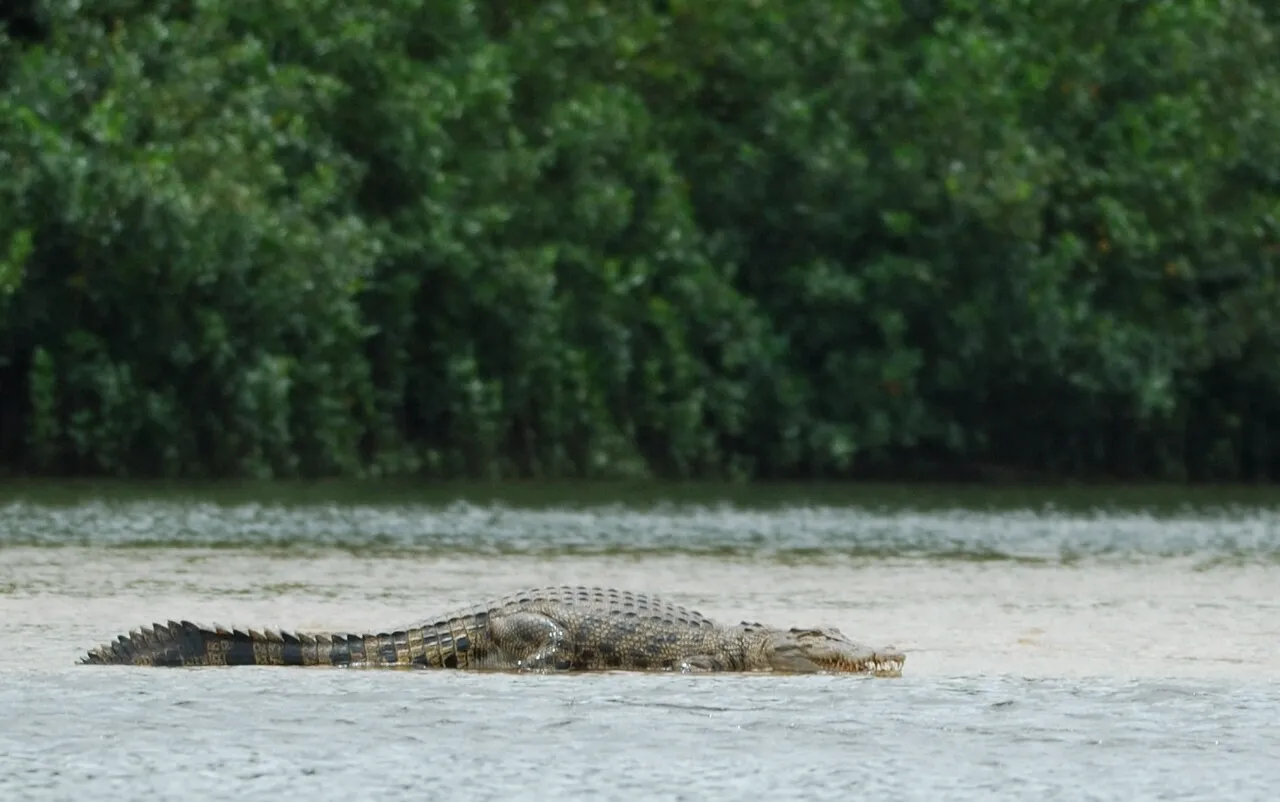
The saltwater crocodile is the largest living reptile. Adult males can exceed five metres and 500 kilograms, and a few individuals over six metres have been reliably measured. As the name suggests, it tolerates seawater: it is based in estuaries, tidal rivers and mangrove swamps but sometimes travels hundreds of kilometres across open sea between islands.
Its range, the widest of any crocodilian, stretches from India's east coast through Southeast Asia and New Guinea to northern Australia and islands of the western Pacific. Australians call it the 'saltie', and warning signs are a familiar sight on northern rivers and beaches.
Saltwater crocodiles have the strongest bite force ever measured in a living animal and will attack buffalo, cattle and people that come too close to the water. Yet females are attentive parents, guarding nests and carrying hatchlings gently in their jaws.
Unregulated hunting for skins in the mid-twentieth century nearly wiped the species out in many areas. Protection in Australia and elsewhere led to a remarkable recovery, making the saltie both a conservation success story and a challenge in how people live alongside a large predator.
2. Name and classification
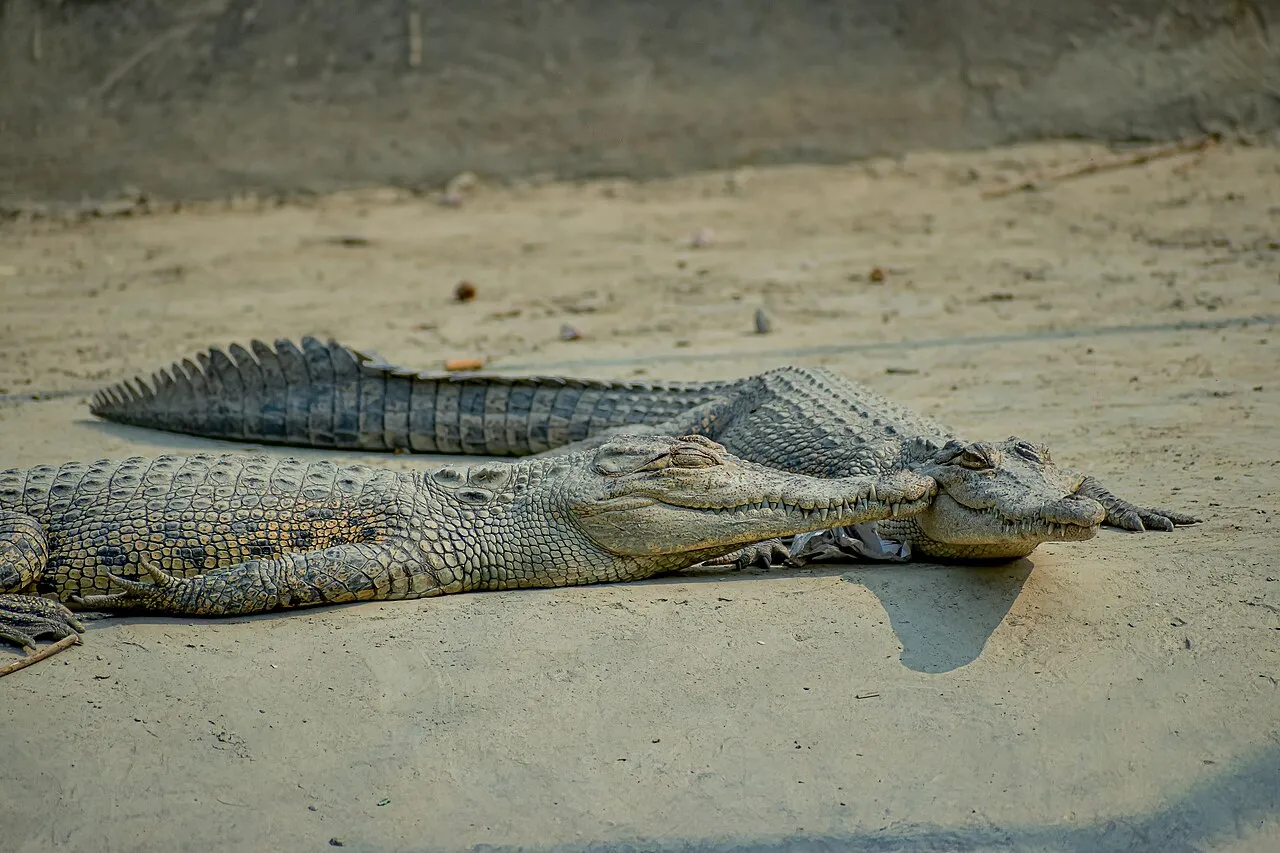
The saltwater crocodile, Crocodylus porosus, belongs to the family Crocodylidae within the order Crocodylia. It was described in 1801 by the German naturalist Johann Gottlob Schneider. The species name porosus, Latin for 'full of pores' or 'rough', is thought to refer to the ridges on the snout and the bumpy skin. Other English names include estuarine crocodile and Indo-Pacific crocodile.
Living crocodilians fall into three groups: the true crocodiles (Crocodylidae), with pointed snouts and lower teeth visible when the mouth is closed; the alligators and caimans (Alligatoridae), with broad, rounded snouts; and the gharials (Gavialidae), with extremely slender snouts. The saltie is a true crocodile.
Subspecies have been proposed in the past but are not generally recognised today. Genetic studies show regional differences, blurred by ocean dispersal, and hybridisation with the closely related Siamese crocodile has been documented in Southeast Asia.
3. Evolution
Crocodilians descend from the archosaurs, the same group that produced dinosaurs. Remarkably, their closest living relatives are not lizards or turtles but birds. Crocodilians and birds are the two surviving archosaur lineages, and both have a fully four-chambered heart.
Crocodile relatives flourished in many forms from the Triassic onward, including slender land runners, flippered marine species and giants over ten metres long. The last common ancestor of living crocodilians appeared in the Late Cretaceous, and the lineage survived the mass extinction that ended the age of dinosaurs.
The genus Crocodylus probably arose around the Miocene and spread through the tropics, though whether it originated in the Indo-Pacific or Africa is still debated. The saltie's tolerance of seawater allowed it to colonise a vast area, and some researchers suggest early Crocodylus spread between continents through similar ocean voyages.
Crocodiles are often called living fossils, but modern species have kept evolving; the basic body plan has simply proved extremely successful, and today's species are relatively recent branches.
4. Range and habitat
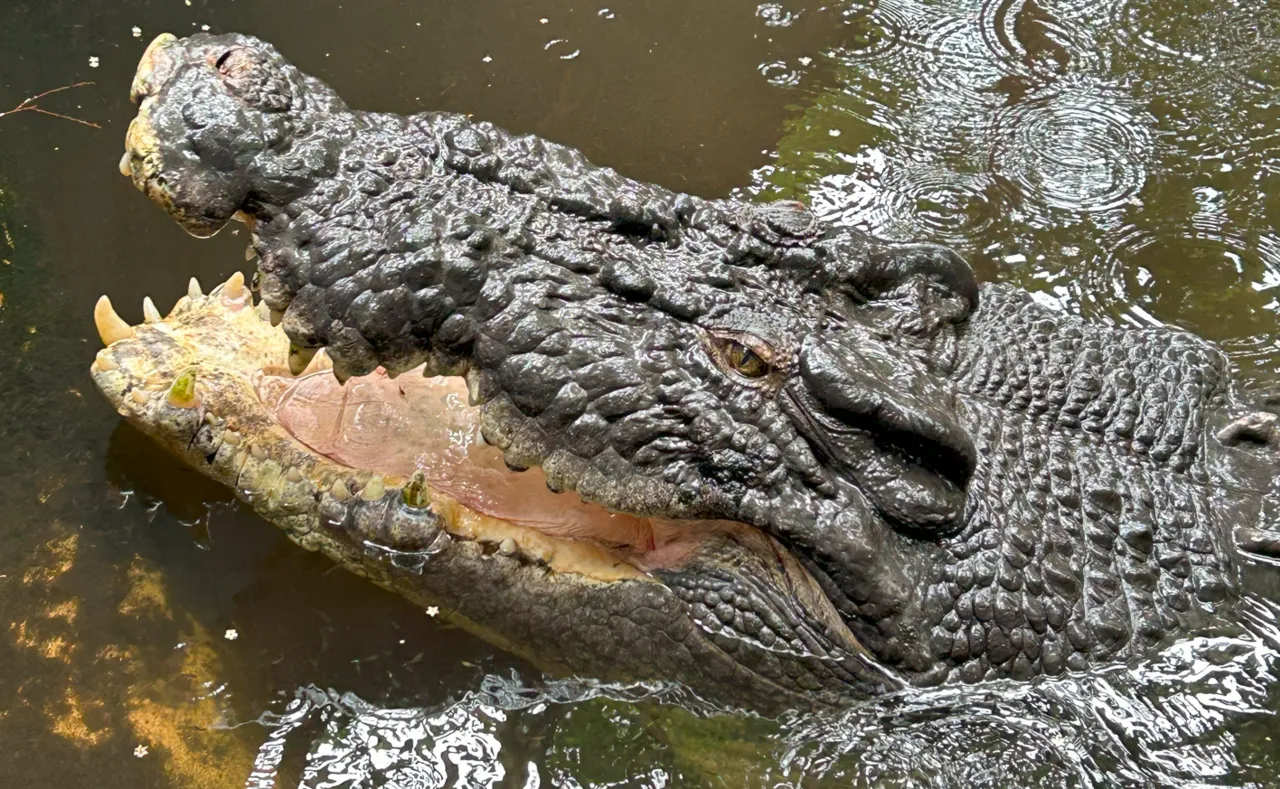
Saltwater crocodiles have the widest distribution of any crocodilian. The range begins on the east coast of India, Sri Lanka and the Sundarbans mangroves of Bangladesh, continues through Myanmar, parts of Thailand, Malaysia, Indonesia, the Philippines and Papua New Guinea to northern Australia, and extends east to the Solomon Islands and Vanuatu.
Numbers vary enormously within this range. Northern Australia and New Guinea hold large populations, while in Indochina, including Thailand, Vietnam and Cambodia, hunting and habitat loss have eliminated the species or left only a handful. It disappeared from the Seychelles long ago.
Typical habitats are estuaries, tidal rivers, mangrove swamps and coastal wetlands. Despite the name, salties spend much of their time in brackish or fresh water and may travel more than 100 kilometres inland along rivers. In Australia they are common in floodplains and freshwater swamps that fill during the wet season.
They are also capable ocean travellers. Satellite tracking has recorded crocodiles moving more than 500 kilometres in about 25 days by riding surface currents, waiting until the current turns in their favour to save energy. This explains occasional sightings on islands far from known populations.
5. Body
| Measurement | Males | Females |
|---|---|---|
| Length | usually 4–5 m, occasionally over 6 m | usually 2.5–3.5 m |
| Weight | usually 400–1,000 kg | usually 80–150 kg |
| Teeth | around 60–70 | same |
| Bite force | among the highest ever measured | - |
Sexual size difference is extreme. Males keep growing slowly throughout life, and old males can be several times heavier than females. One of the largest reliably measured individuals, a male captured in the Philippines in 2011, was just over six metres long. Larger animals are often claimed but rarely measured properly.
The snout is broad and heavy, with a pair of ridges running from the eyes along its length. Unlike most crocodiles, salties have very small or no nuchal scutes, the large scales behind the head, giving the neck a smooth appearance. Juveniles are pale tan with bold black markings; adults darken to grey or olive.
Bony osteoderms beneath the back scales form armour. Every scale carries tiny dome-shaped sensory organs that detect minute pressure changes and vibrations in water. In alligators these are mostly confined to the face; in true crocodiles they cover the whole body.
Salt-excreting glands on the tongue let salties maintain their internal salt balance in seawater. Such glands are found in true crocodiles but largely lacking in alligators, and are especially well developed in this species.
Eyes, nostrils and ears are arranged along the top of the head, so the crocodile can watch and breathe while almost completely submerged. A transparent third eyelid protects the eyes underwater, and a flap at the back of the throat seals the airway so the crocodile can open its mouth underwater without drowning.
Bite-force measurements of large salties recorded around 16,000 newtons. The muscles that open the jaws, by contrast, are weak; a person can hold a crocodile's mouth shut with their hands.
6. Behaviour and ecology
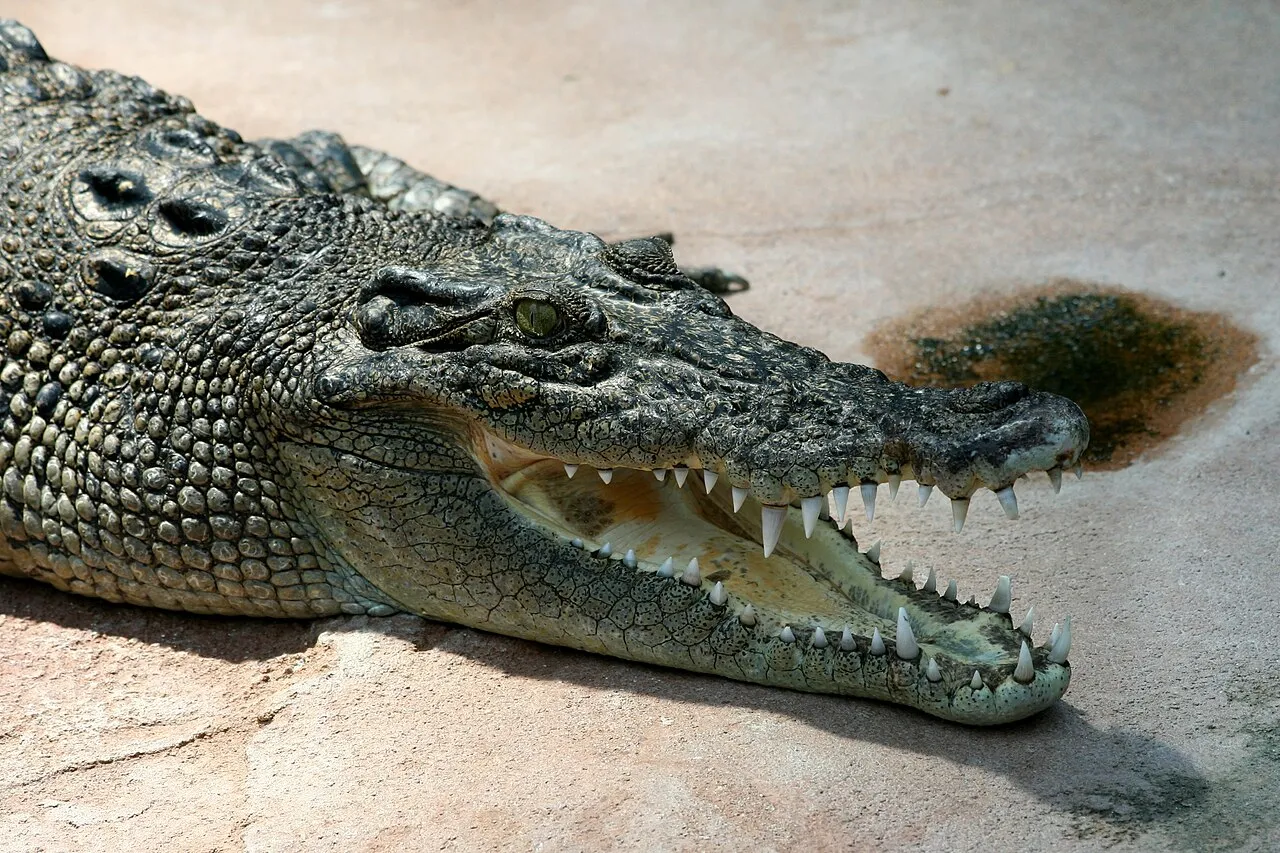
AngMoKio · CC BY-SA 2.5
As ectotherms, saltwater crocodiles spend much of the day managing body temperature: basking on riverbanks in the morning, gaping to shed heat or slipping into the water when it gets too hot. They hunt most actively at night and around dawn.
Adult males defend stretches of river or coastline against other males. Territorial fights can be brutal, and big males sometimes lose limbs or parts of their tails. Young males are often pushed out by dominant animals and forced to seek new rivers or travel along the coast, which drives much of the species' long-distance movement. Females generally occupy smaller ranges.
Thanks to a low metabolic rate, salties need to eat relatively rarely and can survive weeks or months after a big meal. They normally surface to breathe every few minutes but can remain submerged for over an hour when resting.
In monsoonal northern Australia, behaviour shifts with the seasons. In the dry season crocodiles concentrate in remaining rivers and billabongs; when floodplains fill in the wet season they disperse widely. Activity drops when water temperatures fall.
In water, side-to-side sweeps of the tail produce bursts of more than 20 km/h. On land a crocodile can lift its belly off the ground in a 'high walk' and sprint short distances when necessary.
7. Diet and feeding
Diet changes dramatically with size. Hatchlings eat insects, small crabs, shrimp, tadpoles and small fish. Juveniles graduate to fish, crabs, frogs, snakes, waterbirds and small mammals. Adults can tackle almost anything: fish, turtles, monitor lizards, monkeys, wild pigs, deer, kangaroos, water buffalo, cattle, horses and even sharks have all been recorded as prey.
The classic technique is ambush. Submerged with only eyes and nostrils showing, the crocodile waits near a drinking spot, then explodes from the water to seize an animal and drags it under to drown. It may perform the 'death roll', spinning rapidly to subdue prey or tear off chunks of flesh.
Crocodiles cannot chew, so small prey is swallowed whole while larger prey is torn apart with rolling and head-shaking. Stones are often found in their stomachs; suggested functions include grinding food and helping with buoyancy and balance. Extremely acidic stomach fluids digest much of the bone and shell.
Salties also scavenge and may stash a large carcass underwater to eat later.
8. Reproduction and life cycle
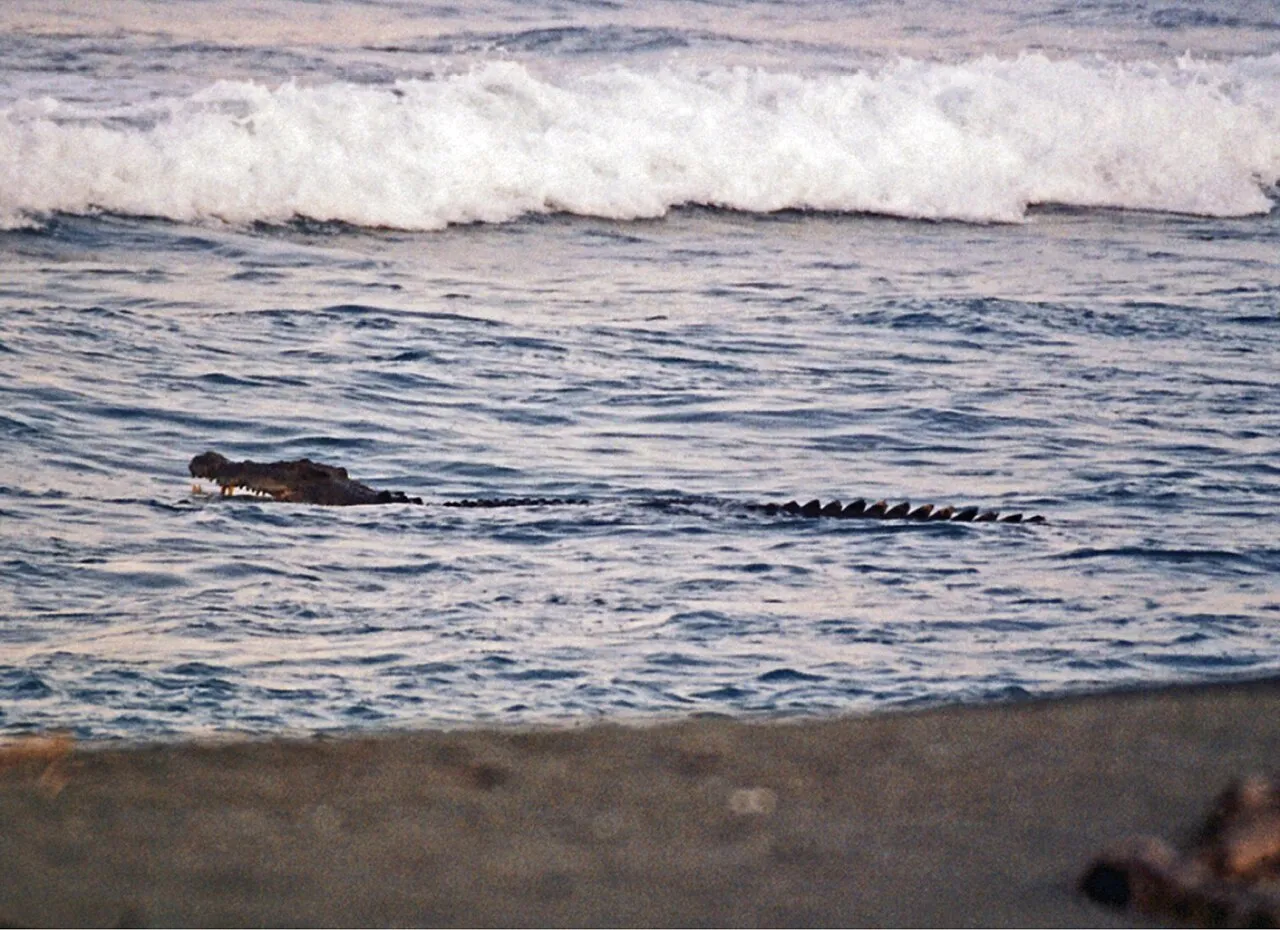
Brown R, Siler C, Oliveros C, Welton L, Rock A, Swab J, Van Weerd M, van Beijnen J, Rodriguez D, Jose E, Diesmos A · CC BY 3.0
Breeding takes place mainly in the wet season, roughly November to March in northern Australia. Males court females with low rumbling calls and by vibrating their bodies so that droplets dance on the water's surface.
The female scrapes together grass, reeds and mud into a large mound nest on a riverbank or in a swamp. Heat from decomposing vegetation keeps the eggs warm. A typical clutch is 40–60 eggs, and the female guards the nest for nearly three months, attacking intruders.
Sex is determined by nest temperature rather than chromosomes. Temperatures around 31–32°C produce mostly males, while cooler or warmer nests produce mostly females, raising concerns about how climate change might skew sex ratios.
| Stage | Duration / number | Notes |
|---|---|---|
| Clutch | usually 40–60 eggs | laid in a vegetation mound |
| Incubation | about 80–90 days | temperature sets sex |
| Hatchlings | about 25–30 cm | mother carries them to water in her mouth |
| Early life | first months | stay in a group near the mother |
| Maturity | females about 10–12 years, males about 16 | males mature later |
| Lifespan | several decades, possibly 70+ | reliable data are scarce |
When ready to hatch, the young chirp inside their eggs; the mother hears them, opens the nest and carries the hatchlings to the water in her jaws. Despite this care, floods drown many nests, and monitor lizards, birds, large fish and other crocodiles eat many young. Fewer than one percent of hatchlings are estimated to reach adulthood.
9. Intelligence, communication and special abilities
Crocodiles were long dismissed as primitive, instinct-driven animals, but research reveals more complex behaviour. Salties remember when and where prey comes to drink and turn up at the right place for seasonal food, such as spawning fish or migrating bats. Some individuals learn boat schedules or the spots where anglers clean their catch.
Communication is varied. Hatchlings call from inside the egg and give high-pitched distress calls to summon the mother. Adults growl and hiss, slap their heads on the water's surface and emit low-frequency vibrations underwater to signal territory and courtship.
Special abilities include salt glands for life in seawater, current-assisted long-distance travel, whole-body pressure sensors and the strongest measured bite of any animal. Studies also suggest their blood contains potent immune compounds, which may explain why serious wounds sustained in dirty water rarely become infected.
10. Predators and survival
Richard.Fisher · CC BY 2.0
Adult salties have almost no natural enemies besides humans, though they occasionally die in fights with tigers, large sharks or bigger crocodiles. In the Sundarbans and Southeast Asia there are accounts of tigers and crocodiles killing each other, with neither consistently dominant.
The vulnerable stages are egg and hatchling. Eggs are taken by monitor lizards, wild pigs and people, or drowned by floods; hatchlings are eaten by herons, egrets, raptors, large fish, snakes and other crocodiles. Mothers therefore guard nests and stay near their young for weeks or months after hatching.
Today people have the greatest influence on crocodile populations. Commercial hunting is regulated in most countries, but mangrove destruction, entanglement in fishing nets and retaliatory killing after conflicts remain serious threats in some regions.
11. Relationship with humans
People and saltwater crocodiles have shared rivers and coasts for millennia, in a relationship mixing reverence, fear, exploitation and conflict.
11.1. Hunting and recovery
The belly skin of the saltwater crocodile, with few osteoderms and an even scale pattern, is prized as premium leather. In the decades after the Second World War, intensive hunting across Australia and Southeast Asia reduced many populations to a small fraction of their former size.
Australia's states and territories banned hunting in the early 1970s. Over the following decades, Northern Territory numbers rebounded to an estimated 100,000 or more, approaching pre-hunting levels by some assessments. Rising conflict with people led to management programmes that capture and remove problem crocodiles from populated areas.
Today much crocodile leather comes from farms rather than wild hunting. In Australia and Papua New Guinea, eggs are collected from the wild and raised on farms ('ranching'); supporters argue that payments for eggs give landowners an incentive to protect crocodiles and wetlands, while critics raise animal-welfare concerns.
11.2. Attacks on people
Saltwater crocodiles are among the few animals that may regard humans as prey. Australia records a handful of attacks in a typical year, while regions where many people bathe, wash and fish in rivers, such as parts of Indonesia, Malaysia, Papua New Guinea and the Solomon Islands, suffer considerably more, though reliable statistics are lacking in many places.
A famous story claims that crocodiles killed hundreds of Japanese soldiers on Ramree Island in Myanmar during the Second World War, but many historians consider the account greatly exaggerated or poorly supported.
In crocodile country, obey warning signs, keep well back from the water's edge, and avoid repeatedly using the same spot to fetch water or camp, because crocodiles can learn human routines.
12. Conservation
Globally, the saltwater crocodile is listed as Least Concern by the IUCN because of its wide range and large populations in Australia and New Guinea. The total is estimated in the hundreds of thousands, though survey effort varies so much between countries that precise figures are elusive.
Regionally the picture differs sharply. Northern Australia's populations have recovered strongly, while in several Indochinese countries the species is virtually or functionally extinct in the wild, and habitat loss and conflict continue in parts of India, Sri Lanka and the Philippines.
International trade is regulated by CITES. Most national populations are on Appendix I, prohibiting commercial trade, but those of countries with established management programmes, including Australia, Papua New Guinea and Indonesia, are on Appendix II, allowing permitted trade.
Main threats include:
- destruction of mangroves and coastal wetlands for aquaculture, farming and urban development
- drowning in fishing nets
- retaliatory killing and poaching
- inbreeding in small, isolated populations
- sea-level rise and changing nest temperatures linked to climate change
13. In zoos and crocodile parks
Saltwater crocodiles are displayed in zoos and crocodile parks around the world. Their size and aggression demand deep, spacious pools, heating to maintain water temperature, basking areas and double barriers for keeper safety. Adult males usually have to be housed alone.
Some parks in Australia and Southeast Asia take in 'problem' crocodiles removed from populated areas. Such facilities provide education and tourism, but practices like feeding shows that make crocodiles leap for meat are criticised for treating animals as spectacle, and welfare groups continue to raise concerns about cramped conditions and slaughter on farms.
Keeping a baby crocodile as a pet is extremely dangerous and in most places requires strict licensing or is banned outright. A saltie outgrows any home within a few years and lives for decades.
14. Saltwater crocodiles in culture
- For many Aboriginal Australian groups, crocodiles appear as creator ancestors or clan totems and feature in rock art.
- In Timor-Leste, a creation story tells that the island itself is the body of an old crocodile, and people traditionally address crocodiles respectfully as 'grandfather'.
- Some communities along Papua New Guinea's Sepik River practise initiation scarification that mimics crocodile scales on the back and chest, symbolising the transfer of the crocodile's power.
- The 1986 film Crocodile Dundee and the television work of Australian wildlife presenter Steve Irwin made salties famous worldwide.
- Northern Australian settings have spawned a whole sub-genre of crocodile horror films.
- The phrase 'crocodile tears', meaning fake sorrow, comes from an old European belief that crocodiles weep while eating their victims. Crocodiles do produce tears to lubricate their eyes, and tearing during feeding has actually been observed.
15. Trivia
- In northern Australia, salties turn up not only in estuaries but in inland wetlands hundreds of kilometres from the sea.
- An easy way to tell crocodiles from alligators: with the mouth closed, a crocodile's fourth lower tooth is visible, while an alligator's is hidden by the upper jaw.
- Underwater, salties can slow their heart rate dramatically to conserve oxygen.
- A special valve system in the crocodile heart lets it divert blood away from the lungs while diving.
- Australian tourism even offers 'cage of death' style experiences, lowering visitors in a clear enclosure beside a large crocodile.
- A crocodile's teeth are replaced many times over its life.
Wild animals are not pets. Catching, trading or keeping them is illegal in most places. If you find an injured wild animal, call your local wildlife rescue centre.
FAQ
Do saltwater crocodiles really live in the sea?
Mostly they live in estuaries, mangroves and rivers, both brackish and fresh, but they tolerate seawater and can travel hundreds of kilometres on ocean currents.
How do you tell a crocodile from an alligator?
Crocodiles have narrower snouts and the fourth lower tooth shows when the mouth is closed; alligators have broad, rounded snouts that hide the lower teeth.
How big was the largest saltwater crocodile?
One of the largest reliably measured, a male caught in the Philippines in 2011, was just over six metres. Larger claims exist but mostly lack proper measurements.
Photo credits
Photos are freely licensed images from Wikimedia Commons. Authors and licenses are listed below.
- SaltwaterCrocodile('Maximo').jpg — Obtained from Molly Ebersold of the St. Augustine Alligator Farm · Public domain
- Captivated Saltwater Crocodiles of Sundarbans 01.jpg — Fabian Roudra Baroi · CC BY-SA 4.0
- Cassius The Salt-Water Crocodile.png — Felix Frost-Savage · CC BY-SA 4.0
- Crocodile Crocodylus-porosus amk2.jpg — AngMoKio · CC BY-SA 2.5
- Crocodylus porosus foraging in surf at Maconacon - ZooKeys-266-001-g104-bottom.jpg — Brown R, Siler C, Oliveros C, Welton L, Rock A, Swab J, Van Weerd M, van Beijnen J, Rodriguez D, Jose E, Diesmos A · CC BY 3.0
- Female croc.jpg — Richard.Fisher · CC BY 2.0