TailVille
At a glance
Rough ranges for supplies, food and electricity in Korea (USD is approximate). Purchase or adoption fees are not included.
Families with children, homes with other gentle pets, and people who work from home and want an affectionate shadow.
People who are out most of the day, or who can't accommodate a big, shedding cat and its larger equipment.
1. Overview
The Ragdoll is a large, blue-eyed, semi-longhaired breed with pointed colouring. Many relax completely when picked up, flopping like a cloth doll, which is where the name comes from. Like all house cats it is Felis catus.
Although the breed only dates from 1960s America, its gentle nature, size and striking looks have made it one of the most popular cats in the world, and it has long ranked near the top of registration figures in the United States and Britain.
Often held up as the ultimate dog-like cat for its devotion to people and low aggression, the Ragdoll also needs more space and bigger equipment than most cats, and owners must watch for a breed-specific heart disease mutation and bladder stones. This article leaves general cat information to the main cat article and focuses on the Ragdoll's origins, appearance, temperament, care, inherited disease and what to check before buying.
2. Name and origin
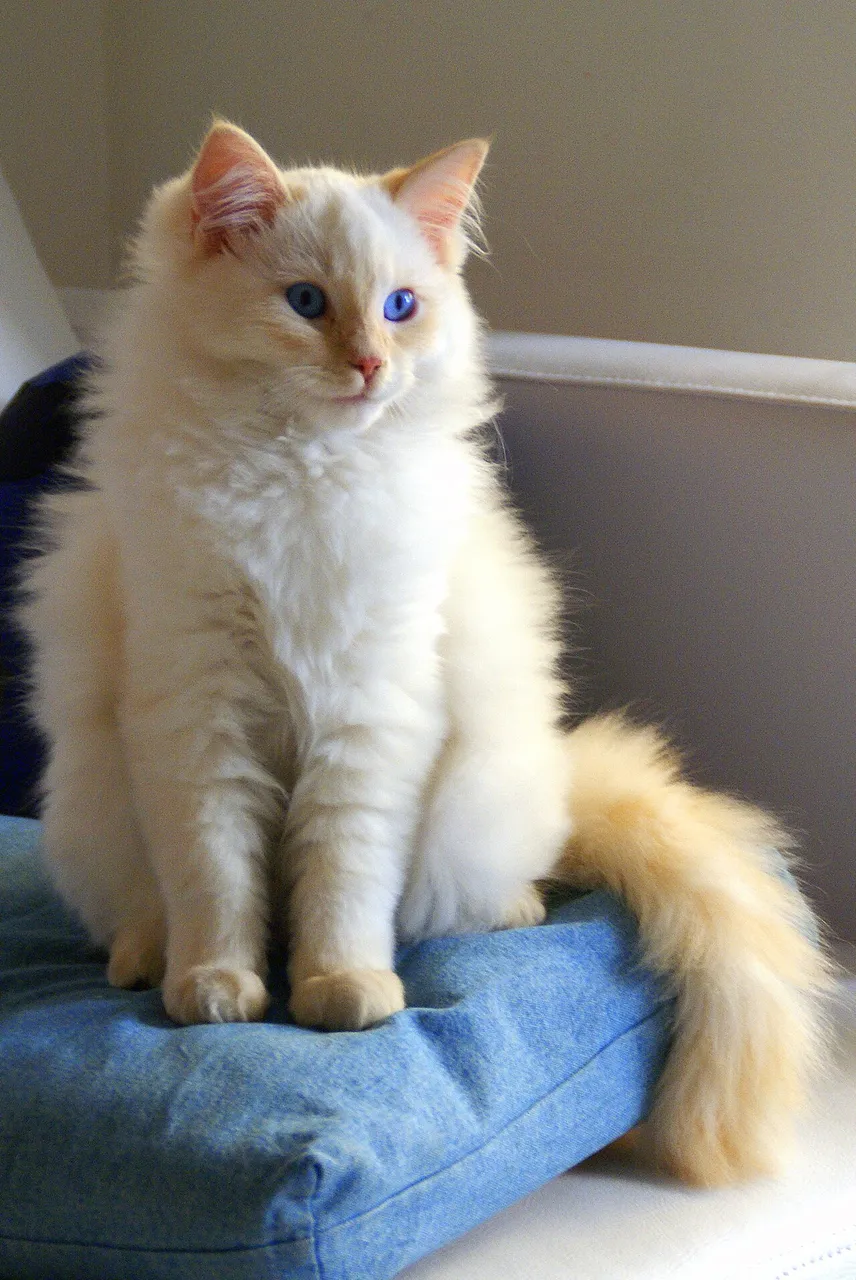
Cássia Afini · CC BY 2.0
2.1. Ann Baker and Josephine
The Ragdoll's story begins in 1960s Riverside, California. Ann Baker, a Persian breeder, took an interest in a white longhaired female called Josephine, who belonged to a neighbour, and in her kittens. Josephine lived a semi-feral life; she is sometimes guessed to have had Birman or Angora-type ancestry, but her background is unknown.
Baker selected gentle, pointed kittens from Josephine's litters, and cats with names such as Daddy Warbucks and Fugianna are said to form the foundation of the early lines. Baker also made claims with no scientific basis whatsoever, for instance that Josephine's offspring had been genetically altered after a car accident and could not feel pain, or that they carried genes from outer space. These stories survive as the breed's best-known myths.
2.2. Splits and recognition
In the early 1970s Baker founded her own registry, the International Ragdoll Cat Association (IRCA), and trademarked the Ragdoll name in an attempt to keep tight control over breeding and sales. Some breeders, notably Denny and Laura Dayton, broke away, wrote up a breed standard and led the push for recognition by mainstream registries.
TICA, the CFA, Britain's GCCF and Europe's FIFe all went on to recognise the Ragdoll. Sources give somewhat different years for each, so consult official registry records if you need exact dates. Some cats descended from Baker's lines were developed separately into another breed, the Ragamuffin.
3. History and popularity in Korea
Ragdolls started to become well known in Korea in the 2010s. Their blue eyes, luxurious coats and reputation as 'cats that like to be held' spread on social media, and they have stayed near the top of the pedigree market ever since. At first many were imported because there were few local catteries, but domestic breeding has since grown.
Korean owners usually describe cats by colour and pattern together, as in 'seal point', 'blue bicolour' or 'seal mitted'. Because Ragdolls take a long time to mature and are born almost white, many owners are surprised by how different their adult cat looks from the kitten they brought home.
Critics also point to cats being given up after owners bought on looks alone, underestimating the space a big cat needs in an apartment and the amount of shedding involved.
4. Appearance and breed standard
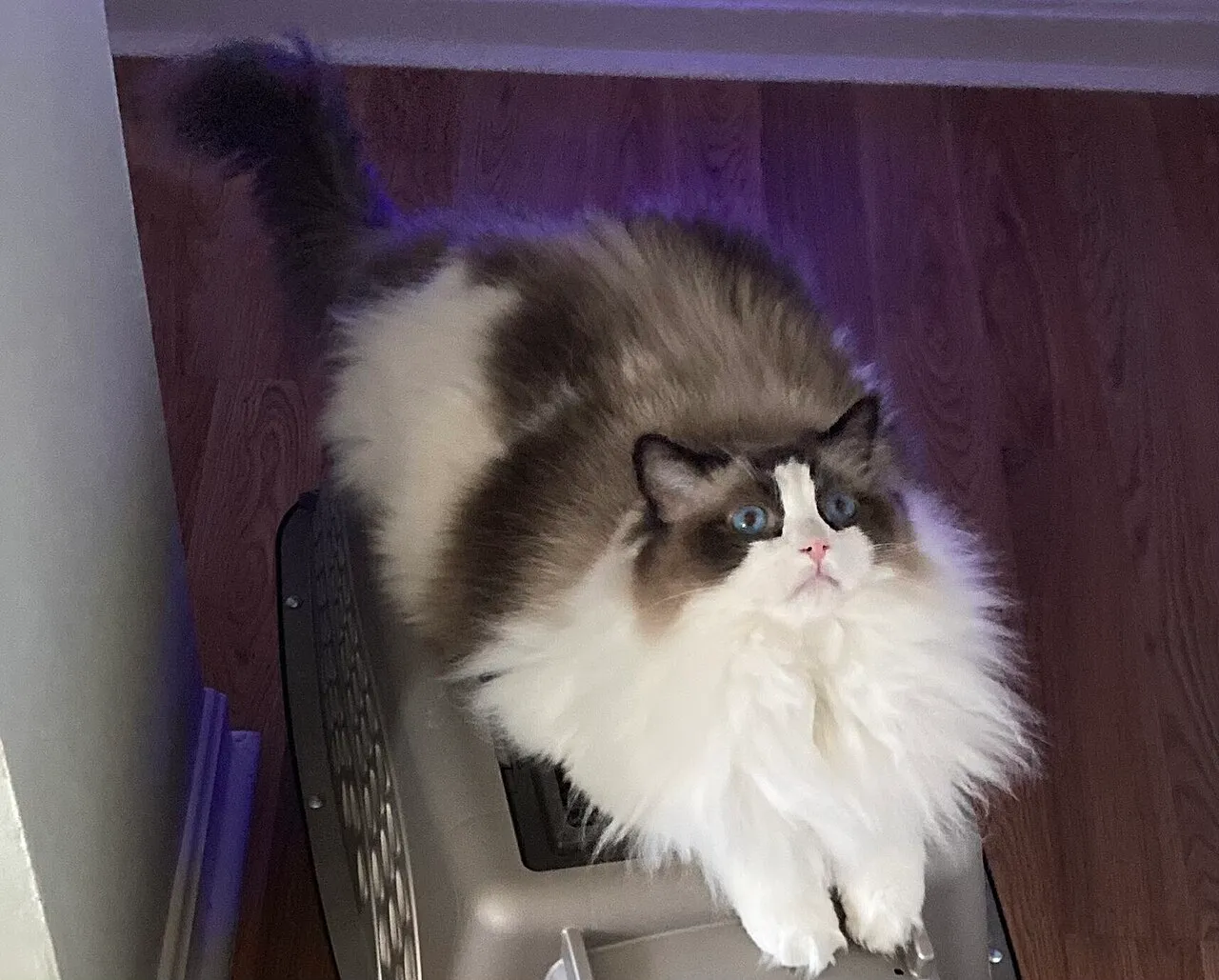
Paul to my Linda · CC BY-SA 4.0
Ragdolls are big, long-bodied, heavy-boned cats, and males in particular are large and weighty. The silky semi-long coat has relatively little undercoat, so it mats less than many longhairs.
| Feature | Description |
|---|---|
| Weight | Males about 6–9 kg, females about 4.5–6.5 kg |
| Build | Large and long with a broad chest and solid bone; a loose belly pouch is common |
| Head | Broad modified wedge with rounded contours and a medium nose |
| Ears | Medium, round-tipped, tilted slightly forward |
| Eyes | Large, oval and always blue |
| Tail | Long and plumed |
| Coat | Semi-long, with a full ruff and britches |
| Colours | Seal, blue, chocolate, lilac, red, cream, tortie and lynx (tabby) points, among others |
The coat comes in three main patterns:
| Pattern | Description |
|---|---|
| Colourpoint | Darker face, ears, legs and tail with no white |
| Mitted | Colourpoint plus white front 'mittens', white hind 'boots' and a white stripe from chin to belly |
| Bicolour | An inverted white V on the face, with white legs and underside |
Kittens are born almost white; point colour appears over the first weeks and deepens over two to three years, because the pigment gene is temperature-sensitive and only works on cooler parts of the body. Full size and coat length take until about three or four years old.
5. Temperament
The Ragdoll is regularly named among the gentlest and most people-focused of all breeds. Many meet their owners at the door, follow them from room to room and come when called, which is how they earned the 'puppy cat' label.
They generally accept being handled, and many go limp and relaxed when picked up. Not every Ragdoll does, however; the trait depends on genetics, early socialisation and individual personality.
They tend to prefer floors, sofas and beds to high perches, rarely use their claws in play and so usually get on well with children. Their voices are soft and quiet, and loud demanding is uncommon.
The flip side of loving people so much is loneliness when left alone for long hours. They can also be rather trusting and slow to avoid danger, which makes unsupervised outdoor access particularly risky.
6. Who it suits and who it doesn't
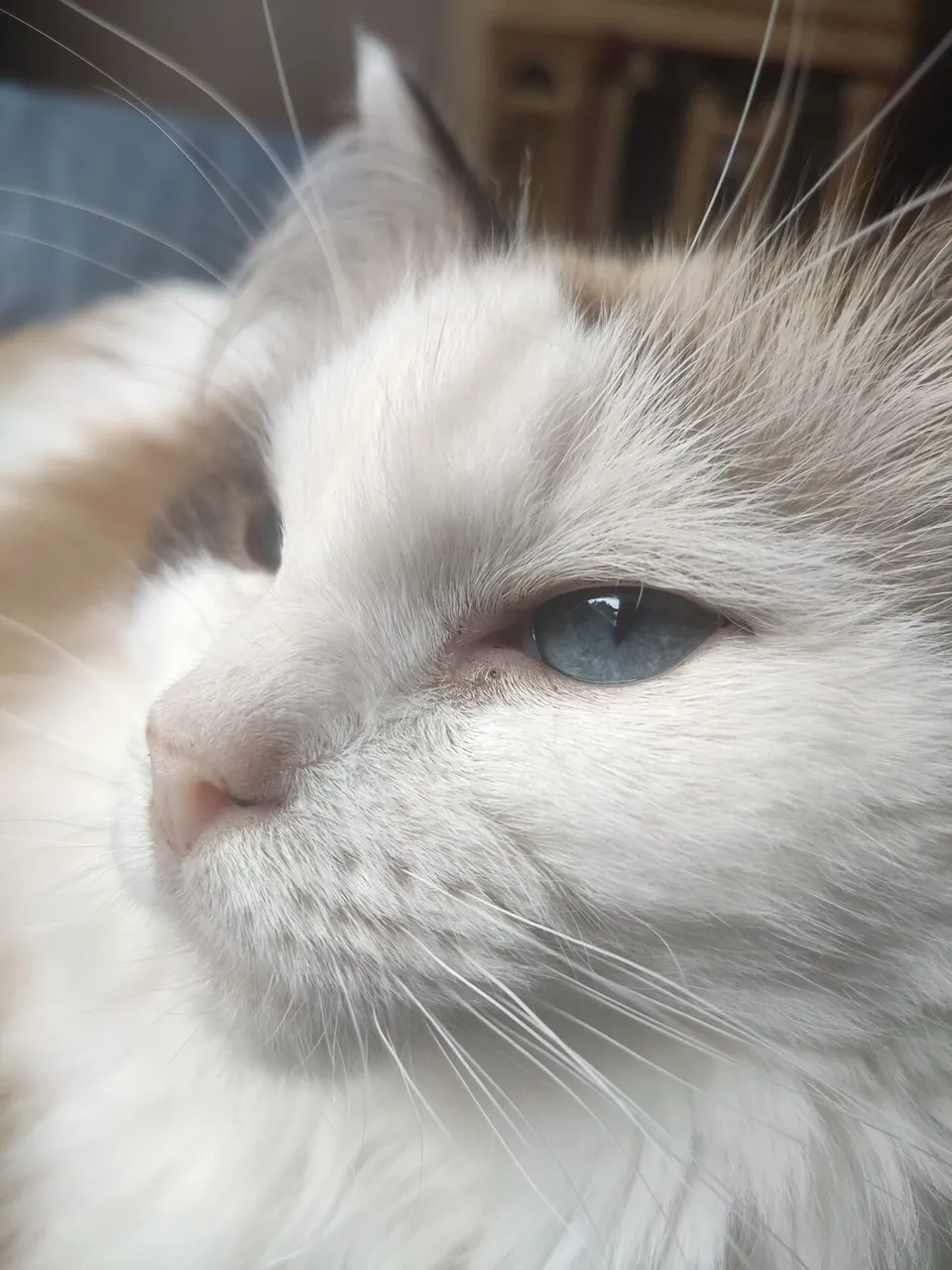
BigBlobfish · CC0
- Suits: people who work from home, or households where someone is usually around
- Suits: homes with children, gentle dogs or other cats
- Suits: owners with space for a big cat tree and litter box who will comb regularly
- Doesn't suit: singles who are out most of the day, unless they consider two cats or changes in routine
- Doesn't suit: homes that can't tolerate shedding or include allergy sufferers
- Doesn't suit: anyone wanting a high-energy climber and acrobat
7. Exercise and play
Ragdolls are only moderately active, but a big body still needs regular exercise. Because they won't do much on their own, owners need to schedule play.
- Interactive games: many enjoy wand toys, rolling balls and fetch; some bring toys back to be thrown again.
- Time: two 10–15 minute sessions a day as a baseline, more for kittens.
- Space: a cat tree of about 1.2–1.5 m with broad platforms is plenty. Designs that let a heavy cat step down rather than leap are kinder to joints.
- Bonding time: for a Ragdoll, quiet contact such as stroking, chatting and simply sitting together matters as much as play.
- Harnesses: their calm nature means some adapt to a harness, but approach the outdoors cautiously.
8. Coat and hygiene
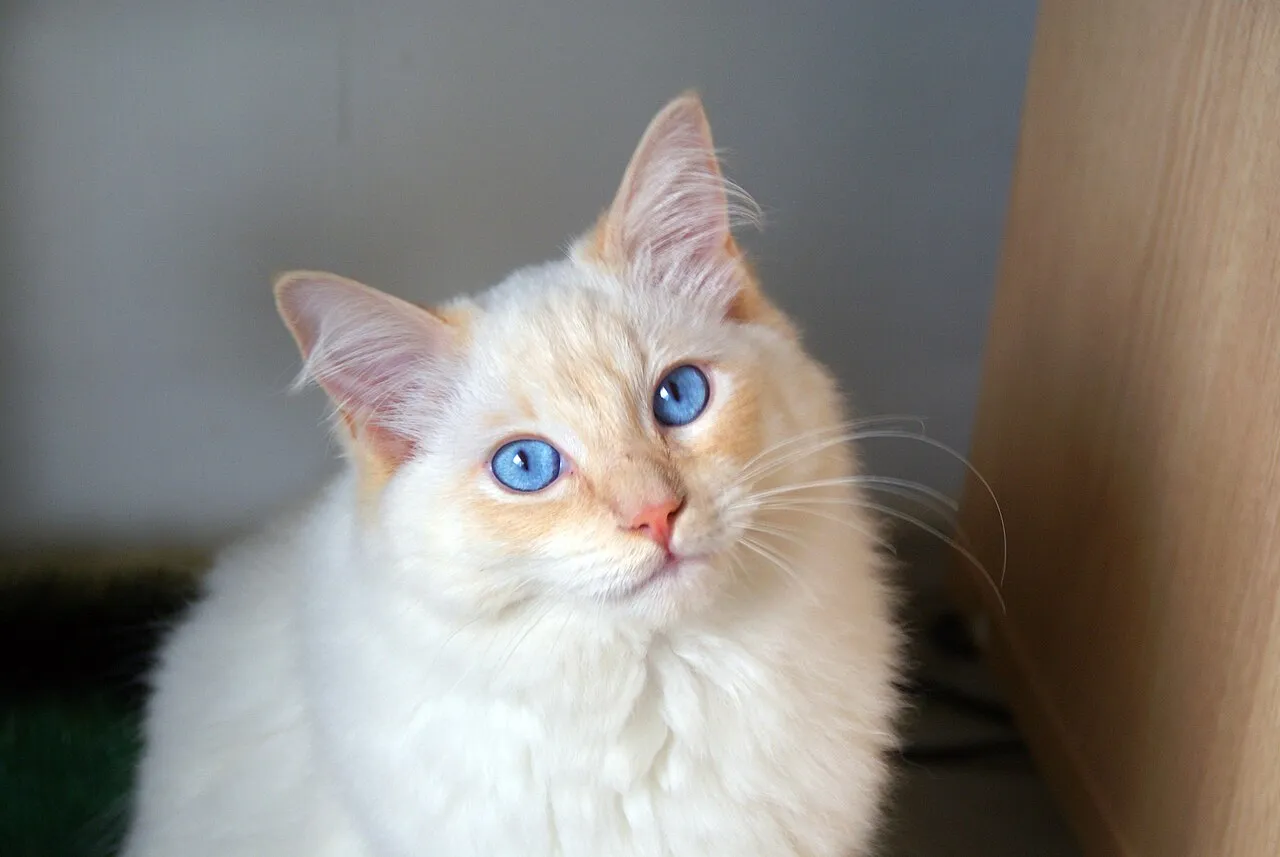
Cássia Afini from São Paulo, Brazil · CC BY 2.0
The coat is long but low in undercoat, so it doesn't mat like a Persian's. Still, comb two or three times a week and daily during the spring and autumn moults.
- Mat hot spots: armpits, belly, behind the ears, the ruff and the britches
- Tools: work out tangles with a wide-toothed comb, then finish with a fine one, combing right down to the skin rather than skimming the surface.
- Rear hygiene: britches are easily soiled, so a sanitary trim around the rear can help.
- Bathing: not routinely needed, but if the coat gets greasy or dirty, use a cat shampoo and dry completely with a dryer. Allow plenty of time; it's a lot of cat to dry.
Some develop tear staining, so wipe around the eyes once or twice a week, and trim claws every two to three weeks.
9. Diet and weight
As a slow-maturing large breed, the Ragdoll needs careful nutrition both while growing and as an adult.
| Item | Guideline |
|---|---|
| Daily energy (neutered 6 kg adult) | About 250–320 kcal, adjusted by body condition |
| Growth | Kitten food until about twelve months, then switch based on growth and shape |
| Feeding | Two or three measured meals; free-feeding risks obesity |
| Water | Include wet food, place bowls around the home, consider a fountain |
| Treats | Under 10% of calories |
The big frame and thick coat hide extra weight well. The loose belly flap, the primordial pouch, is normal anatomy; don't confuse it with fat, and check by feeling the ribs and spine.
Bladder stones and lower urinary tract disease are reported relatively often in the breed, so hydration matters. Smaller urine clumps or frequent trips to the litter box warrant a prompt vet visit.
10. Inherited disease and health
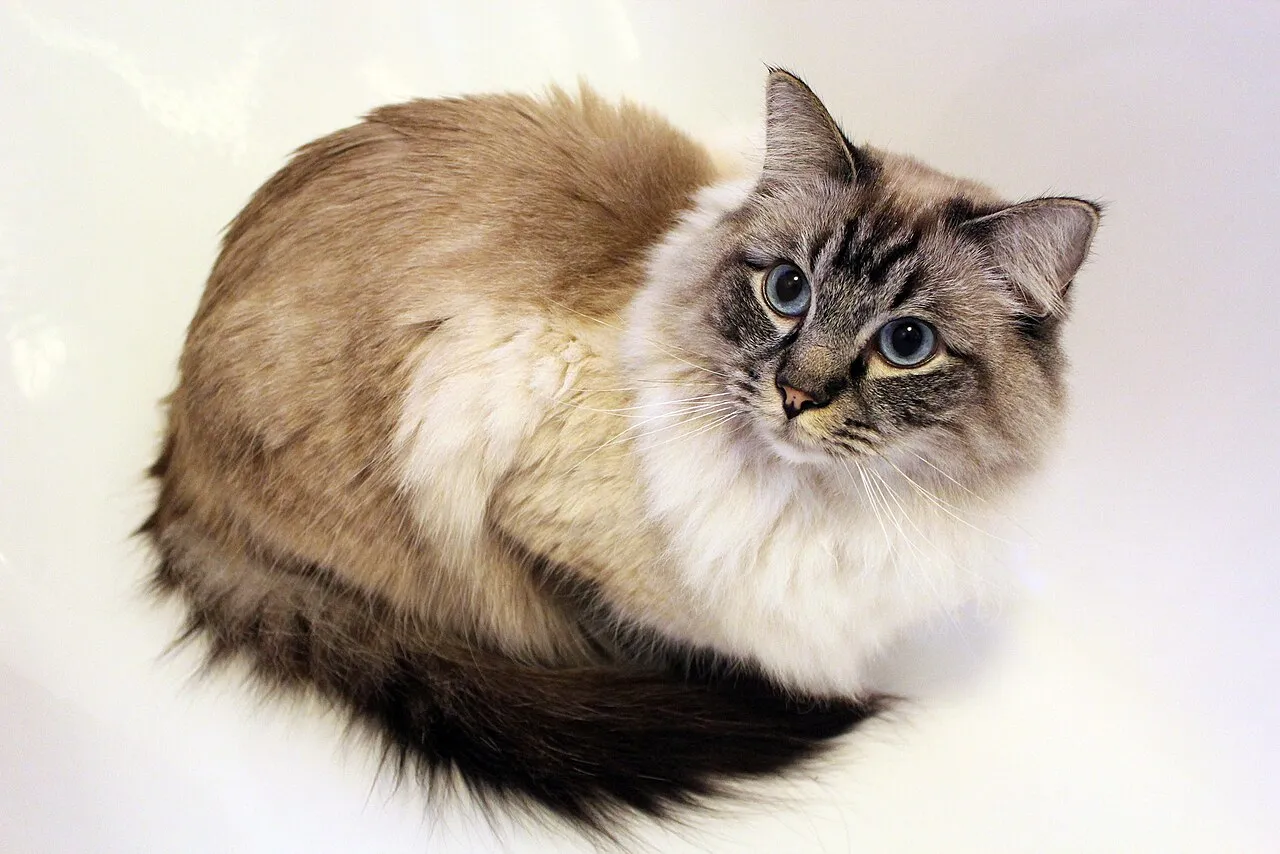
Ragdolls are generally considered healthy, but the conditions below are important to know. Diagnosis and treatment must come from a vet.
10.1. HCM and the MYBPC3 mutation
In Ragdolls a specific variant in the MYBPC3 gene, which codes for a heart muscle protein, has been linked to hypertrophic cardiomyopathy. Often written R820W, it is specific to Ragdolls and differs from the mutation found in Maine Coons.
- Inheritance: dominant. Cats with two copies have been reported to develop disease earlier and more severely; cats with one copy may or may not develop it.
- Testing: a DNA test from a cheek swab or blood sample is available. A negative result doesn't rule out HCM from other causes, so periodic heart scans in adulthood are still recommended.
- Signs: none at first; later rapid breathing, lethargy, fainting, or hind-leg paralysis from a clot
- Management: medication slows progression and reduces clot risk. Regularly counting sleeping breaths at home helps catch problems early.
Responsible breeders share their cats' test results and do not breed from cats with two copies.
10.2. Bladder stones and urinary disease
Ragdolls are reported to be relatively prone to bladder stones, particularly calcium oxalate. Stones irritate the bladder wall, causing inflammation and bleeding, and in males can block the urethra, which is life-threatening.
- Signs: frequent litter box trips with small amounts of urine, blood in the urine, urinating outside the box, frequent licking of the genitals
- Emergency: a male straining with no urine coming out needs immediate veterinary care.
- Prevention: plenty of water, wet food, a healthy weight, stress management and periodic urine tests
10.3. Other things to watch
- Obesity: easy to develop in a large, laid-back breed.
- Feline infectious peritonitis (FIP): not breed-specific, but reported more often in young cats from multi-cat catteries. Treatment options have improved recently, so contact a vet promptly if you suspect it.
- Dental disease: regular brushing and dental checks are needed.
- Pain: the claim that Ragdolls don't feel pain is false. They feel it like any cat and, being placid, may show it less, so watch for behaviour changes.
11. Life course and lifespan
Ragdoll lifespans are usually quoted at around 12–17 years. They mature slowly, but once grown many stay healthy for a long time.
| Stage | Age | What to know |
|---|---|---|
| Newborn | 0–4 weeks | Born nearly white; points gradually appear |
| Kitten | 1–6 months | Socialisation; get used to being held and groomed |
| Adolescent | 6 months–2 years | Neutering; rapid growth in length, pattern darkens |
| Late growth | 2–4 years | Size, coat and colour reach maturity |
| Adult | 4–9 years | Weight control, periodic heart scans, urine tests |
| Senior | 10+ years | Kidney, thyroid and joint checks; twice-yearly exams |
Big cats can feel their joints more with age. Offer low, cushioned resting places instead of high perches in later life, and lower the litter box entry.
12. Costs
Rough Korean prices; they vary by clinic, region and individual cat.
| Item | Rough cost | Notes |
|---|---|---|
| Purchase price | Hundreds of thousands to several million won | Depends on pattern, colour, pedigree and cattery; imported lines cost more |
| Starter equipment | 400,000–800,000 won | Large cat tree, large litter box, big carrier |
| Vaccines and neutering | 300,000–700,000 won | Anaesthesia may cost a little more for big cats |
| HCM DNA test | Tens of thousands to over 100,000 won | Check parents' results first |
| Food, litter, supplies | 70,000–140,000 won a month | A big cat eats and uses more |
| Heart scan | 100,000 to several hundred thousand won | Periodic screening in adulthood |
| Grooming | Tens of thousands of won per visit if needed | Sanitary trims, mat removal |
Everything gets bigger and pricier for a large cat: carriers, litter boxes and cat trees. Buying for adult size from the start usually saves money in the end.
13. Before you get one
- DNA results: always check the parents' MYBPC3 (HCM) test results. Be cautious with sellers who can't show them or claim Ragdolls are too healthy to need testing.
- Parents' temperament: the breed's gentleness is strongly inherited, so meet the parents.
- Kitten colour: kittens look very different from adults. Pattern (colourpoint, mitted or bicolour) can be told fairly early, but final colour and markings take years.
- Age: kittens under two months can't be sold in Korea, and many Ragdoll breeders release kittens at 12–16 weeks for socialisation and growth.
- Seller and environment: check animal sales registration and conditions, and ask about any history of infectious disease in the cattery, such as FIP or ringworm.
- Contract: get written terms for what happens if inherited or infectious disease is found.
- Shelters and rescues: Ragdolls are sometimes surrendered for growing too big or shedding too much. Adopting an adult lets you know the personality and size in advance.
14. In popular culture
In the English-speaking world the Ragdoll has long been a regular on lists of the most affectionate cats and best breeds for first-time owners. Blue eyes and pointed coats photograph beautifully, so Ragdolls often model for cat food and homeware adverts and interior photography.
In the internet era, several Ragdolls have become social media stars with huge followings, and videos of them flopping in their owners' arms or trailing them around the house have done much to shape the breed's image.
The strange tales spread by founder Ann Baker, such as immunity to pain or genes from space, are still retold as some of the oddest stories in the cat world.
15. Trivia
- The Ragdoll is one of the largest breeds, though usually a little lighter than the Maine Coon.
- It is often confused with the Birman, which shares the blue eyes and points but is smaller and must have four white gloves.
- Because the pigment is temperature-sensitive, body colour can look slightly darker in cold seasons.
- The Ragamuffin, an offshoot of Ragdoll lines, is a separate breed that accepts many non-pointed colours and patterns.
- Some Ragdolls learn simple dog-like behaviours such as coming when called or retrieving toys.
Health notes are general information. If something seems wrong, contact a vet who treats this species.
🍽️ Can my dog or cat eat this? →
FAQ
Do all Ragdolls really go limp when held?
Many relax when held, but not every individual does. Temperament depends on genetics and early socialisation, so meeting the parents helps.
How is a Ragdoll different from a Birman?
Both are blue-eyed pointed cats, but Ragdolls are larger and come in colourpoint, mitted and bicolour patterns, whereas every Birman must have four white 'gloves'.
Do Ragdolls shed a lot?
Less undercoat means fewer mats, but spring and autumn moults are substantial. Comb two or three times a week and keep a good vacuum handy.
Photo credits
Photos are freely licensed images from Wikimedia Commons. Authors and licenses are listed below.
- Ragdoll from Gatil Ragbelas.jpg — Simone Johnsson · CC BY-SA 2.0
- Flame point Ragdoll.jpg — Cássia Afini · CC BY 2.0
- Pansy cat.jpg — Paul to my Linda · CC BY-SA 4.0
- Ragdoll Cat Face.jpg — BigBlobfish · CC0
- Ragdoll cat DSC07500 (4021848667).jpg — Cássia Afini from São Paulo, Brazil · CC BY 2.0
- Ragdoll Kater, drei Jahre alt, RAG n 21 seal-tabby-colourpoint, Januar 2015.JPG — BlackIceNRW · CC BY-SA 3.0