TailVille
At a glance
Rough ranges for supplies, food and electricity in Korea (USD is approximate). Purchase or adoption fees are not included.
People who enjoy playing with and training a lively little dog and accept heavy shedding and regular brushing.
Not suited to homes with young children, thin-walled flats where the dog would be alone for long hours, or anyone sensitive to dog hair.
1. Overview
The Pomeranian is a tiny spitz with a huge double coat, a fox-like face and a tail that fans over its back. Adults usually weigh 1.5 to 3.5 kg, but the breed carries the confidence and curiosity of the northern spitz family it came from, the same broad family as sled dogs. All that coat makes it look much bigger than it is, hence nicknames like fluffball and walking teddy.
In Korea its popularity shot up from the 2010s, and it now sits with the Maltese and Poodle among the top breeds. Behind the cute face come some practical challenges: a lot of barking, a lot of shedding, collapsing windpipes and slipping kneecaps, and coat loss linked to very short teddy bear clips. This article covers what is specific to the Pomeranian; general dog care is in the main Dog article.
2. Name and origin
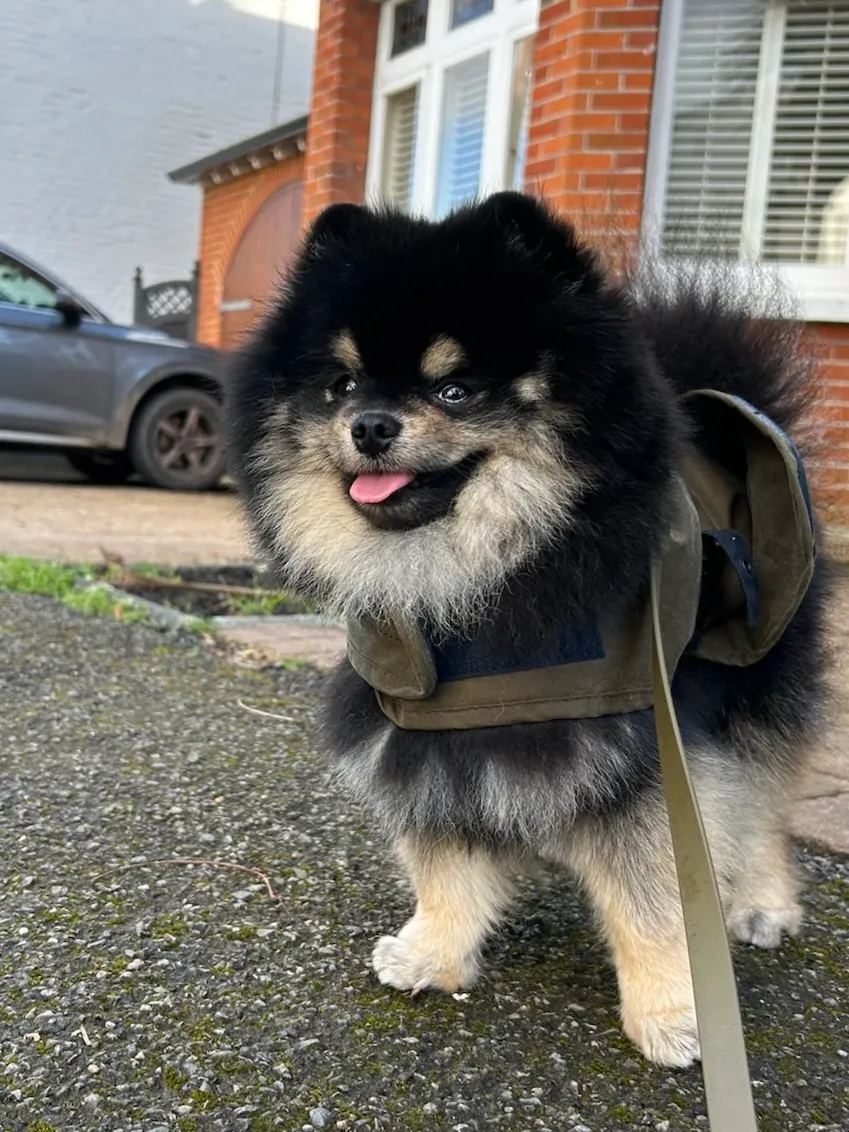
Anousk · CC BY-SA 4.0
The name comes from Pomerania, the Baltic coastal region that straddles today's north-eastern Germany and north-western Poland. The region and its neighbours were home to much larger white and cream spitz dogs that pulled sledges, watched sheep and guarded homes. Dogs of this type reached the British royal court in the eighteenth century, and when Queen Victoria fell for small Pomeranians in the nineteenth century and bred them herself, the push to shrink the breed accelerated. It is often said that dogs weighing over 10 kg became roughly today's size within a few decades.
Classification depends on the registry. The FCI does not treat the Pomeranian as a separate breed; it is the smallest size of the German Spitz, the Zwergspitz or Toy, under a German standard in Group 5, Spitz and Primitive types. The American Kennel Club and the UK Kennel Club recognise it as its own breed in the Toy Group, and the AKC has listed it since the late nineteenth century.
3. History and popularity in Korea
Pomeranians were kept in Korea in the 1990s and 2000s but were never as common as Maltese or Shih Tzus. That changed in the 2010s, when photos of internet-famous Pomeranians abroad spread on social media and Poms clipped into short, round teddy bear shapes became a sensation. Since then the breed has regularly appeared among the top three in Korean registration data and preference surveys.
The sudden boom had side effects. Mass breeding expanded to meet demand, and sellers began charging premiums for rare colours such as cream, white, black or blue and for short, round baby face types. Some owners who had not expected the shedding and barking later gave their dogs up. Anyone considering a Pom should weigh temperament and care workload before looks.
4. Appearance and breed standard
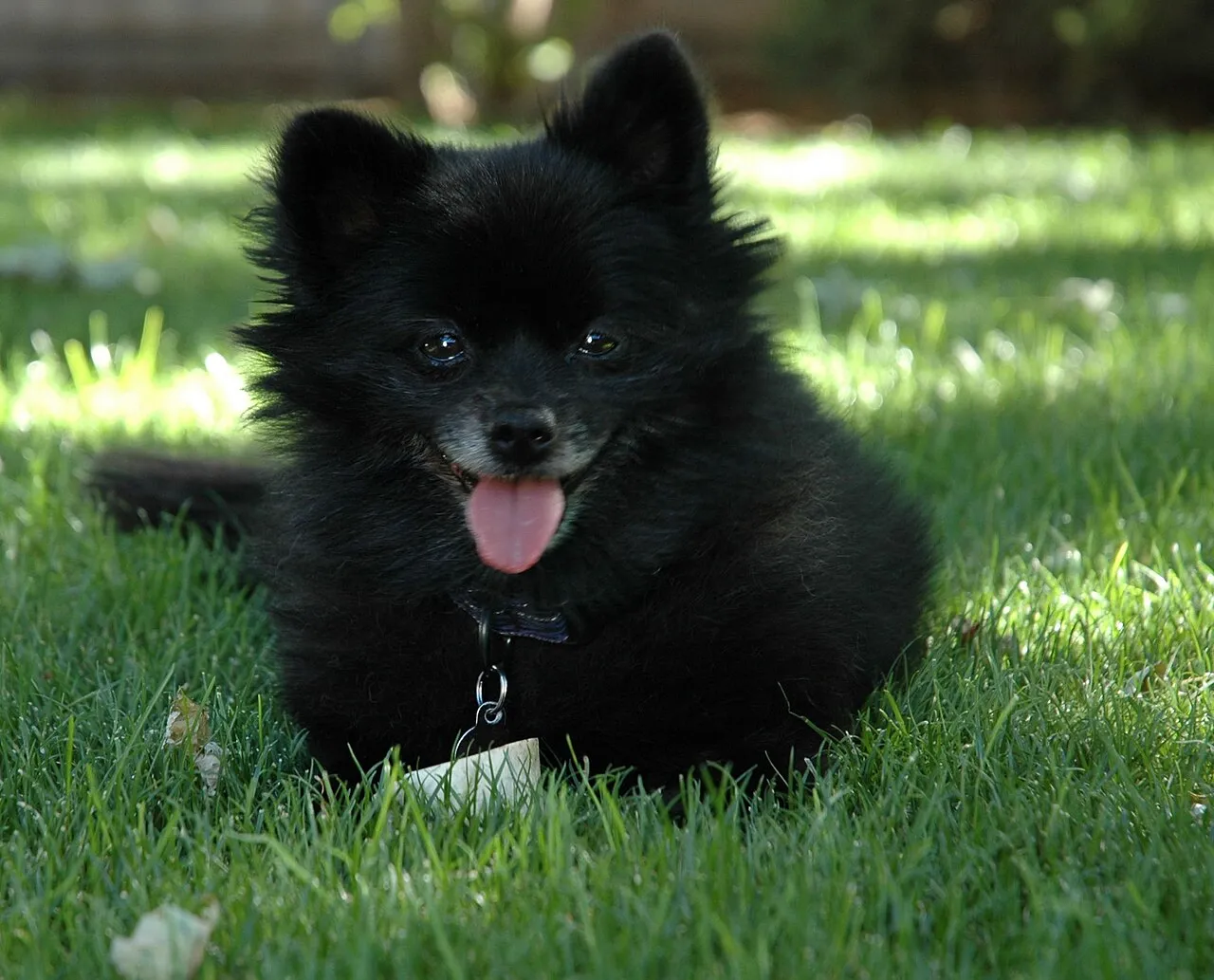
Sarah Jones · CC BY-SA 2.0
The Pomeranian has a true double coat: a short, dense undercoat and a longer, harsh outer coat. The undercoat props the guard hairs up so the coat stands off the body, and a thick frill or ruff circles the neck and chest like a mane. The small ears stand erect and the heavily plumed tail lies flat over the back.
| Item | AKC standard (approx.) | FCI Zwergspitz (approx.) | Notes |
|---|---|---|---|
| Weight | 3-7 lb, ideal 4-6 lb | in proportion to height | Korean pets often 2-4 kg |
| Height | not specified | about 18-22 cm | individuals vary |
| Coat | double, abundant ruff | double | short clips are not part of any standard |
| Colour | orange, cream, black, sable, parti and many more | orange, cream, black, white and others | orange, cream and white popular in Korea |
Orange and red are the most common colours, but sable, black and tan, chocolate, blue, beaver and merle all occur. Merle is controversial: breeding two merles together sharply increases the risk of deafness and eye defects, and registries disagree on whether to accept it. Puppy coat colour often changes considerably as the dog matures.
5. Temperament
The Pomeranian is often described as a big dog's confidence in a tiny body. It is lively and inquisitive, eager to investigate new places and objects and delighted to play with its people. It learns tricks easily, but the independent, opinionated streak of the spitz family means it usually knows exactly what it wants.
Barking is the trait owners mention most. Spitz breeds were watchdogs, and Poms tend to react instantly to unfamiliar sounds, people and dogs. Their bark is high and piercing, which can be a real problem in apartments. Many will also challenge dogs many times their size, so walks need care. Early, positive exposure to sounds, people and dogs, plus consistent rewards for quiet behaviour, makes a big difference. Poms are affectionate with their families, but many dislike rough handling by children.
6. Who it suits and who it doesn't
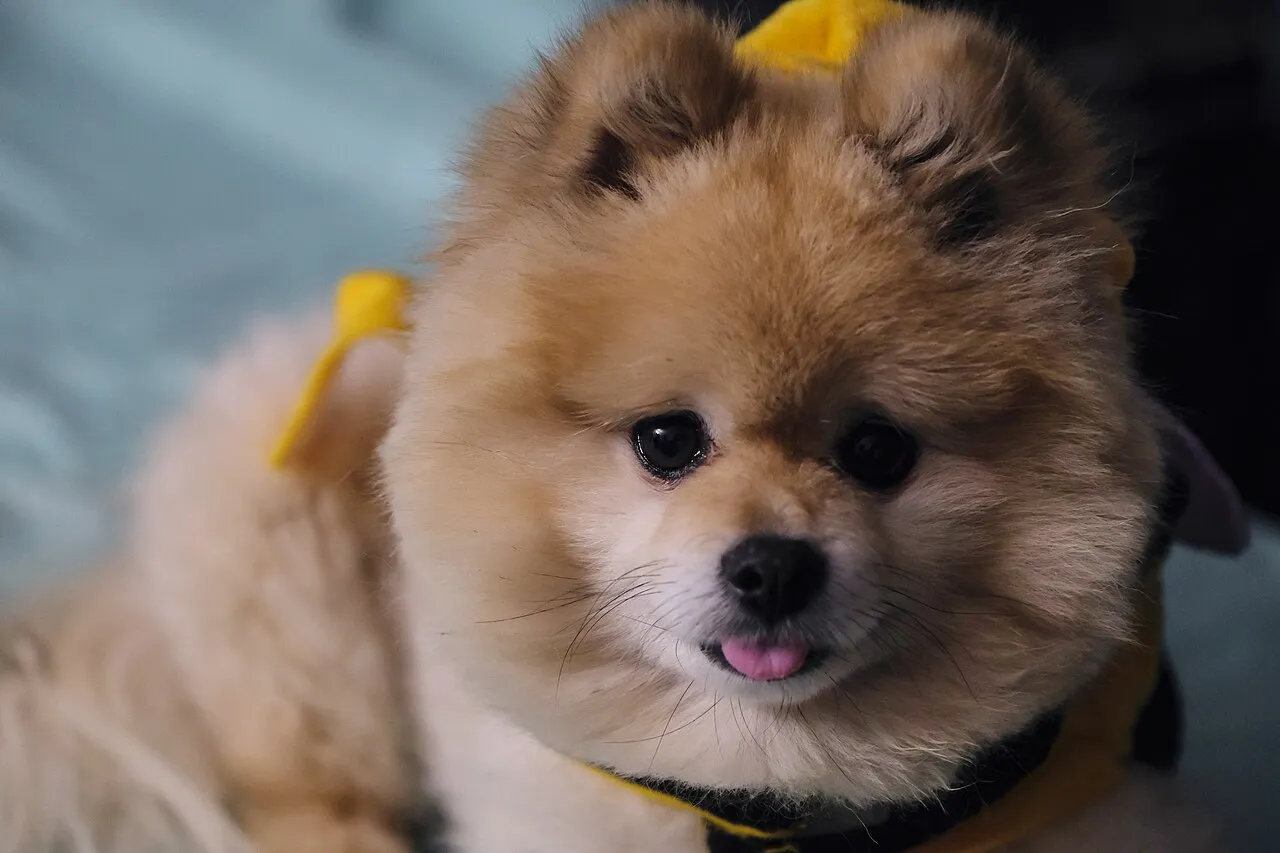
Chuck895 · CC BY-SA 4.0
- Good fit: people who enjoy playing with and training a bold, expressive little dog
- Good fit: owners who accept shedding and can brush several times a week
- Good fit: homes with reasonable soundproofing and owners willing to put real time into barking training
- Poor fit: anyone wanting a dog that barely sheds, or people sensitive to household dust
- Poor fit: families with young children likely to carry or handle a tiny dog roughly
- Poor fit: apartment dwellers with thin walls who would leave the dog alone for long days
Of all the toy breeds, the Pomeranian is one of the furthest from the idea that small means easy. Plenty of owners say the workload rivals that of a medium-sized dog.
7. Exercise and play
Pomeranians have more stamina than you would think and do well with two walks of 20 to 30 minutes plus indoor play. They love short bursts of speed, chasing balls and shaking toys with great enthusiasm. Walks also help with barking and nervousness, so let your Pom stroll somewhere with plenty of sounds and smells to process.
A few precautions apply. First, the breed has a fragile windpipe, so use a harness rather than a collar and teach loose-lead walking so the dog does not strain against it. Second, the leg bones are fine, and front-leg fractures from jumping off sofas or beds are a well-known accident; use pet steps and be careful not to drop a wriggling Pom. Third, the double coat copes well with cold but poorly with heat, so skip midday walks in summer and go early in the morning or after sunset.
8. Coat and hygiene
Pomeranians shed a lot. Hair comes out steadily all year, and once or twice a year the undercoat blows out in a major moult that leaves clouds of fluff with every brush stroke. Brush three or four times a week with a pin brush and a metal comb, and daily during a moult, making sure to reach the undercoat. Brushing only the top layer lets the undercoat pack down, trapping moisture and irritating the skin.
Be careful with very short clips like the teddy bear cut that became fashionable in Korea. Shaving a double-coated dog close to the skin can lead to post-clipping alopecia, where hair grows back very slowly or not at all. Pomeranians are also known for Alopecia X, sometimes called black skin disease, a non-inflammatory hair loss of uncertain cause with symmetrical loss of body coat and darkening skin. Many groomers and vets recommend scissor trims that leave a layer of undercoat rather than clipper shaves.
A bath every three to four weeks is plenty, and the coat must be dried thoroughly down to the skin. Keep up with tear stains, teeth and anal glands as with any toy breed.
9. Diet and weight
All that coat makes it easy to miss weight gain in a Pomeranian. Slide your hand under the fur to check that the ribs are easy to feel and that there is a slight waist from above, and weigh your dog monthly. For a 2.5 kg adult, about 180 kcal a day is a rough starting point, though individuals vary widely.
Young puppies are extremely vulnerable to low blood sugar. A tiny puppy under 1 kg can be in danger after only a few hours without food, so feed about four times a day, and if a puppy goes limp or starts trembling, rub a little honey or syrup on its gums and call a vet immediately. Adults usually eat twice a day. Excess weight worsens both tracheal collapse and patellar luxation, so for this breed weight control is airway and joint care. Foods with omega-3 fatty acids may help the coat, but choose supplements with your vet.
10. Inherited conditions and health
With its tiny frame and unusual coat, the Pomeranian's main problems involve the airway, joints and skin. Knowing the signs helps with early detection.
10.1. Tracheal collapse
The C-shaped rings of cartilage around the windpipe weaken, so the airway flattens as the dog breathes. Pomeranians are one of the breeds most often affected. The classic sign is a honking, goose-like cough triggered by excitement, drinking or pressure from a collar. As it progresses, exercise tolerance drops and episodes of breathlessness with bluish gums can occur. It is diagnosed with X-rays or fluoroscopy and managed with weight loss, a harness, cough suppressants and airway medicines; severe cases may be treated with a tracheal stent.
10.2. Kneecaps and fractures
Patellar luxation is common in Pomeranians; repeated hopping on a hind leg is a reason to see a vet. The forearm bones are also very slender, so jumping from heights or being dropped can easily break them. Fractures in very small dogs can be slow to heal and may need surgery and a long recovery.
10.3. Other conditions
- Alopecia X: symmetrical, non-itchy hair loss over the trunk, tail and backs of the thighs, with darkening skin. Hormonal diseases such as hypothyroidism and Cushing's syndrome are ruled out first. It does not usually harm general health, but the coat often never fully returns.
- Mitral valve disease: common in seniors; when it coexists with tracheal collapse, a cough can have either cause, so proper work-up is needed.
- Hypoglycaemia: especially in puppies and very small adults.
- Open fontanelle: some Poms have a soft spot on the skull that never fully closes, so protect the head from knocks.
- Dental disease and retained baby teeth: a small jaw crowds the teeth and tartar builds quickly.
11. Life stages and lifespan
Pomeranians typically live about 12 to 16 years, long even by toy-breed standards.
| Stage | Age | Key points |
|---|---|---|
| Puppy | 0-12 months | watch blood sugar, socialisation, the puppy uglies when baby coat drops (roughly 4-8 months) |
| Young adult | 1-3 years | adult coat comes in; barking habits set |
| Adult | 3-8 years | weight, teeth and windpipe, yearly check-up |
| Senior | 9+ years | heart, airway and joints, check-ups twice a year |
As the puppy coat falls out and the adult coat grows in, many Poms go through an awkward, patchy phase owners call the puppy uglies or monkey stage. It is normal, though some groomers advise against shaving during this period in case it disrupts the adult coat.
12. Costs
Rough 2026 Korean figures; purchase price excluded.
| Item | Approx. cost (KRW) | Notes |
|---|---|---|
| Initial supplies | 300,000-600,000 | harness, crate, pin brush, comb, pet steps |
| First vet visits, vaccines, registration | 200,000-500,000 | core shots, rabies, microchip |
| Food and treats | 30,000-60,000 per month | small portions |
| Grooming and baths | 40,000-90,000 per session | every 6-8 weeks; scissor cuts cost more |
| Parasite prevention | 10,000-30,000 per month | heartworm, fleas and ticks |
| Annual check-up | 150,000-400,000 | more in old age |
| Kneecap or fracture surgery | 1.5-4 million or more | depends on case and clinic |
| Tracheal stent | can run to several million | offered at some referral hospitals |
The shedding also adds hidden household costs such as a good vacuum, an air purifier and lint rollers.
13. Before you get one
Labels like baby face, micro and rare colour can multiply the price of a Pomeranian puppy. Breeding for ever shorter faces and ever smaller bodies can raise the risk of tracheal collapse, misaligned teeth, open fontanelles and hypoglycaemia. And a round-faced, fluffy puppy is no guarantee of the adult it will become.
- Check the parents, especially the mother's size, health and temperament
- Get knee checks, heart auscultation, and vaccine and deworming records
- With a merle puppy, make sure both parents were not merle
- Confirm licensing, a written contract and refund or guarantee terms
- Avoid sellers offering puppies under two months or hiding an auction background
Quite a few Poms end up in shelters because of shedding and barking. Adopting an adult means the coat and personality are already formed, so you know what you are getting. Remember to register your dog once it is home.
14. The Pomeranian in culture
European royalty and artists have a long record of keeping Pomeranians. Beyond Queen Victoria, stories link spitz-type dogs to Mozart and to Michelangelo, who supposedly had one at his side while working, though for anecdotes this old the exact breed is impossible to confirm.
It is often told that of the handful of dogs that survived the sinking of the Titanic in 1912, two were Pomeranians, small enough for their owners to carry into lifeboats. In the 2010s an American Pom named Boo, clipped into a teddy bear shape, became a social media star billed as the cutest dog in the world, and he is widely credited with spreading the short teddy clip in Korea and elsewhere.
15. Trivia
- In Korea the breed is usually shortened to Pome, and white Poms are sometimes called mini Samoyeds; both are spitz breeds, which explains the resemblance.
- Under the FCI system the Pomeranian shares a breed with the larger German Spitz varieties, including the Keeshond, separated only by height.
- Crosses such as the Pomsky, a Husky mix, have had their moment, but mating breeds of very different sizes can be dangerous for the mother.
- Underneath all that fluff the body is very slight; many owners are startled at how small their dog looks soaking wet in the bath.
- Poms are often joked about as chatty, and many really do use a wide range of yips, grumbles and body language to make their opinions known.
Health notes are general information. If something seems wrong, contact a vet who treats this species.
🍽️ Can my dog or cat eat this? →
FAQ
Is a teddy bear cut safe for a Pomeranian?
Shaving close to the skin can stop the coat growing back properly. Many groomers and vets recommend a scissor trim that leaves a layer of undercoat.
My Pom makes a honking cough. Is that normal?
It is a classic sign of tracheal collapse, especially if excitement or collar pressure sets it off. See a vet; weight control and a harness are the first steps.
My puppy's coat suddenly looks patchy.
Around four to eight months the puppy coat drops out before the adult coat grows in. It is usually normal, but see a vet if there is itching or skin change.
Photo credits
Photos are freely licensed images from Wikimedia Commons. Authors and licenses are listed below.
- Pomeranian.JPG — Blackoranges · Public domain
- Black-tan-pom.jpg — Anousk · CC BY-SA 4.0
- Pomeranian.jpg — Sarah Jones · CC BY-SA 2.0
- Tanpomeranian.jpg — Chuck895 · CC BY-SA 4.0