TailVille
At a glance
Rough ranges for supplies, food and electricity in Korea (USD is approximate). Purchase or adoption fees are not included.
People who are home a lot, including small households and retirees, who want a small, affectionate dog by their side.
Not ideal for those out most of the day, homes where barking is a problem, or anyone unwilling to keep up with grooming and eye care.
1. Overview
The Maltese is a toy dog with a long, pure white coat set off by dark eyes and a black nose. Most weigh roughly 2 to 4 kg, and unlike many breeds it was never meant to hunt, herd or guard. For as far back as records go, its job has been to keep people company, and it still behaves that way: a Maltese usually wants to be in the same room as its owner, ideally on the same cushion.
In South Korea the Maltese has been one of the most common breeds for decades and regularly sits at or near the top of pet registration figures. Its small size made it the default apartment dog, but the breed also brings its own set of challenges, including barking, separation anxiety, tear staining and kneecap problems. This article focuses on what is specific to the Maltese; general dog care is covered in the main Dog article.
2. Name and origin
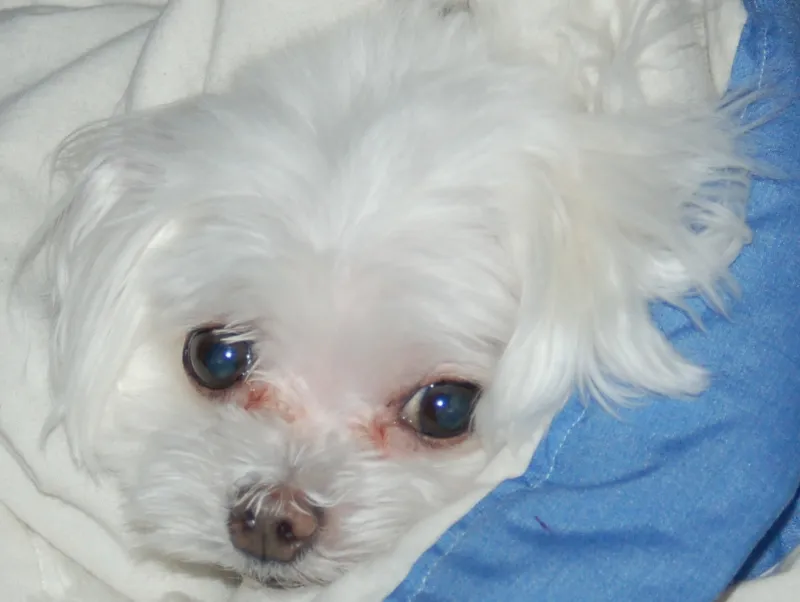
Lmcelhiney · CC BY-SA 4.0
The name points to Malta, the Mediterranean island nation, although historians still argue over whether ancient references to the little dogs of Melita meant Malta itself or another place with a similar name, such as the island of Mljet off the Croatian coast. What is clear is that small white lapdogs were prized around the Mediterranean more than two thousand years ago, and pottery and writings from the Greek and Roman world are often cited as showing dogs of this type.
The Maltese is usually grouped with the bichon family, alongside the Bichon Frise, Bolognese, Havanese and Coton de Tulear. The modern breed was largely shaped in Britain, and the dog show boom of the late nineteenth century fixed its look. The FCI lists Italy as the country responsible for the standard and places the breed in Group 9, Companion and Toy Dogs, while the American Kennel Club puts it in the Toy Group. The AKC has recognised the breed since the late 1800s, making it one of the older breeds on its books.
3. History and popularity in Korea
The Maltese spread through Korean homes in the 1980s and 1990s, when apartment living took off and dogs began moving from the yard into the living room. A small white dog that did not leave hair on every surface fitted the new indoor lifestyle perfectly, and together with the Yorkshire Terrier and the Shih Tzu it became one of the defining small breeds of that era.
The Maltese still appears at or near the top of Korean registration data and owner surveys, alongside the Poodle and the Pomeranian. Decades of demand also brought a great deal of careless commercial breeding, and older Maltese are sadly common in Korean shelters. That makes the breed a good candidate for adoption, but it also means that quality varies enormously from one breeder or pet shop to the next.
4. Appearance and breed standard

Alfredo Borba · CC BY-SA 4.0
Pure white is the only accepted colour; a light ivory tinge is tolerated, but lemon or tan patches are faults. The coat is single, with little or no undercoat, so it falls straight and silky and will reach the floor if left to grow. The eyes are round and dark, and the nose and eye rims should be black.
| Item | FCI standard (approx.) | AKC standard (approx.) | Notes |
|---|---|---|---|
| Height | males 21-25 cm, females 20-23 cm | not specified | pets vary widely |
| Weight | 3-4 kg | under 7 lb, 4-6 lb preferred | Korean pets are often 2-5 kg |
| Coat | long, straight, single | long, flat, silky | curl or woolliness is a fault |
| Colour | pure white, ivory tinge allowed | white | patches are faults |
The body is slightly longer than tall, and the plumed tail curls over the back. In Korea most pet Maltese are kept in short puppy cuts with a rounded face, so they look quite different from long-coated show dogs. So-called teacup Maltese under 2 kg are a marketing label rather than a recognised size, and very tiny dogs tend to have more health problems.
5. Temperament
The Maltese is known for being affectionate and people-focused. It follows its family from room to room and loves being held or curled up against someone. It is bright and picks up basic training readily, but owners who laugh off bad manners because the dog is small often end up with a little tyrant. Small dog syndrome is largely learned: if growling or barking gets a dog scooped up and comforted, it quickly concludes that the tactic works.
Maltese are alert and tend to bark at doorbells and footsteps in the corridor. They can be reserved with strangers at first but usually warm up quickly if well socialised. Their strong attachment makes them one of the breeds most prone to separation anxiety. They generally get on with other dogs, though rough play with much larger dogs can injure them, so choose playmates carefully.
6. Who it suits and who it doesn't
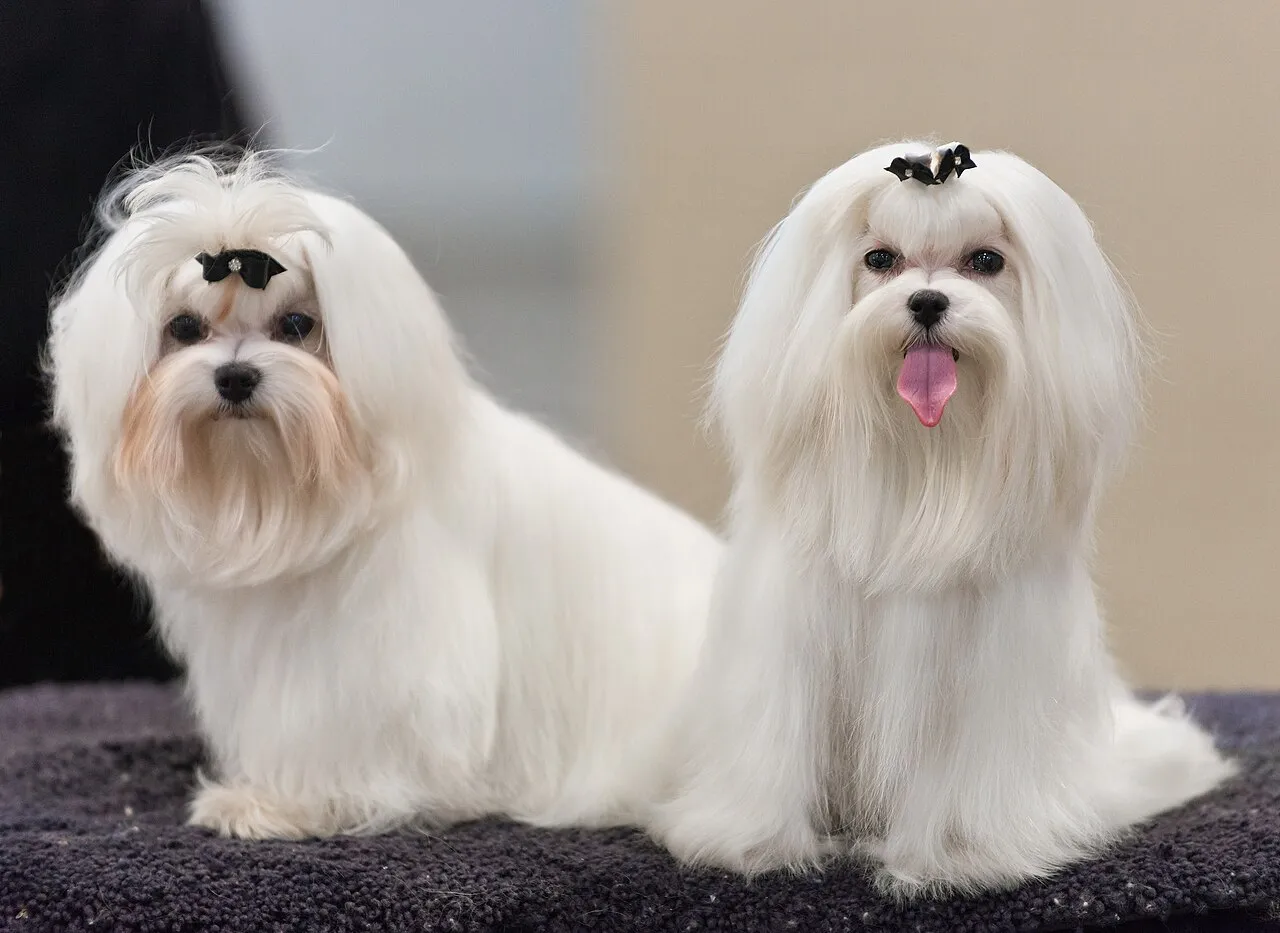
SheltieBoy · CC BY 2.0
- Good fit: someone who is home a lot and wants a dog that stays close all day
- Good fit: small households and retirees who can offer short walks and steady indoor play rather than long runs
- Good fit: owners who do not mind regular grooming and daily face cleaning
- Poor fit: households empty most of the day, or homes where barking would cause trouble with neighbours
- Poor fit: families with toddlers who may carry and drop a tiny dog
- Poor fit: anyone expecting a non-shedding dog to be low maintenance
Low shedding is only half true. Less hair ends up on the floor, but the shed hair stays trapped in the coat and mats unless it is brushed out. People with dog allergies sometimes react less to a Maltese, but no breed is guaranteed allergy-free.
7. Exercise and play
A Maltese does not need much exercise, but it does need some. Two walks of 15 to 30 minutes a day are usually plenty, and slow, sniff-heavy walks tend to satisfy more than brisk marches. For this breed, walks matter more for socialisation and stress relief than for burning energy, and Maltese that never leave the flat are often the most anxious and vocal.
Indoors, fetch with soft toys, food-hiding games and short trick sessions work well. The breed's joints are delicate, so repeatedly jumping off sofas and beds strains the kneecaps and spine; steps or ramps and rugs on slippery floors help. Hot asphalt can burn paw pads in summer, and such a small body loses heat quickly in winter, so use a coat or shorten walks in the cold. A harness puts less pressure on the windpipe than a collar.
8. Coat and hygiene
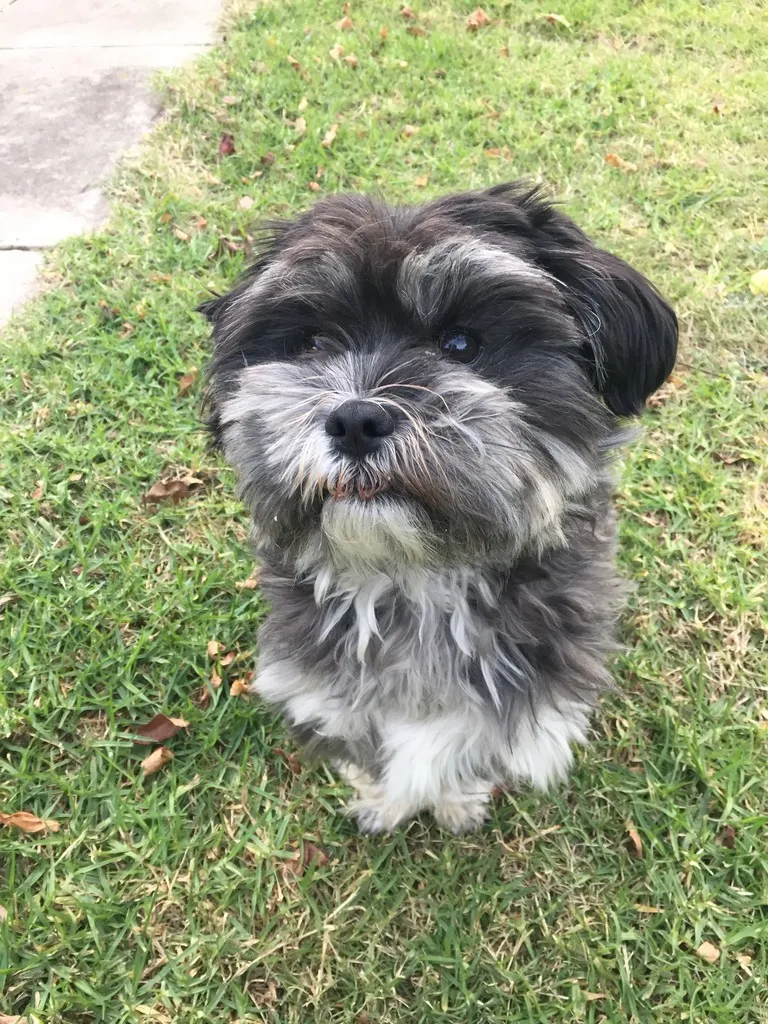
Alice Batt · CC BY-SA 4.0
Coat and eyes are the heart of Maltese care. A long coat needs daily brushing, and even a short pet cut should be brushed three or four times a week to stop mats forming behind the ears, in the armpits and around the groin. Many Korean owners book a professional groom every four to eight weeks and tidy paw pads and the area around the bottom at home in between. Bathing every two to four weeks is typical, and the coat must be dried right down to the skin to avoid dermatitis.
Tear staining is the classic Maltese complaint. Pigments in tears called porphyrins dye the white fur reddish brown. Causes include narrow or blocked tear ducts, hairs or lashes rubbing the eye, allergies and conjunctivitis. Wipe the eye area once or twice a day with lukewarm water and keep the hair there short; if tearing suddenly increases or the dog paws at its eyes, see a vet before reaching for cosmetic fixes, and avoid supplements of unknown content that may contain antibiotics.
Toy breeds have a full set of teeth crammed into a tiny jaw, so tartar builds up fast. Daily brushing is ideal, and retained baby teeth are common enough that they should be checked around six to seven months of age.
9. Diet and weight
Being tiny, a Maltese needs very little food. A 3 kg adult typically needs somewhere around 200 kcal a day, but activity and neutering make a big difference, so start from the chart on the bag and adjust by body shape. Small-bite kibble is easier to chew, and two meals a day is standard for adults.
Very young puppies, especially under three to four months, are prone to hypoglycaemia. A skipped meal combined with cold or stress can leave a puppy limp and trembling and, in severe cases, cause seizures, so feed three or four small meals a day. In adults the problem flips to obesity: an extra 500 g on a 3 kg dog is more than 15 percent of its body weight and adds strain on the joints, windpipe and heart. Sharing bits of human food is a common route to both obesity and pancreatitis, so keep treats under about 10 percent of daily calories. Many Maltese are picky eaters, which tempts owners to switch foods often; when you do, mix the old and new over at least a week.
10. Inherited conditions and health
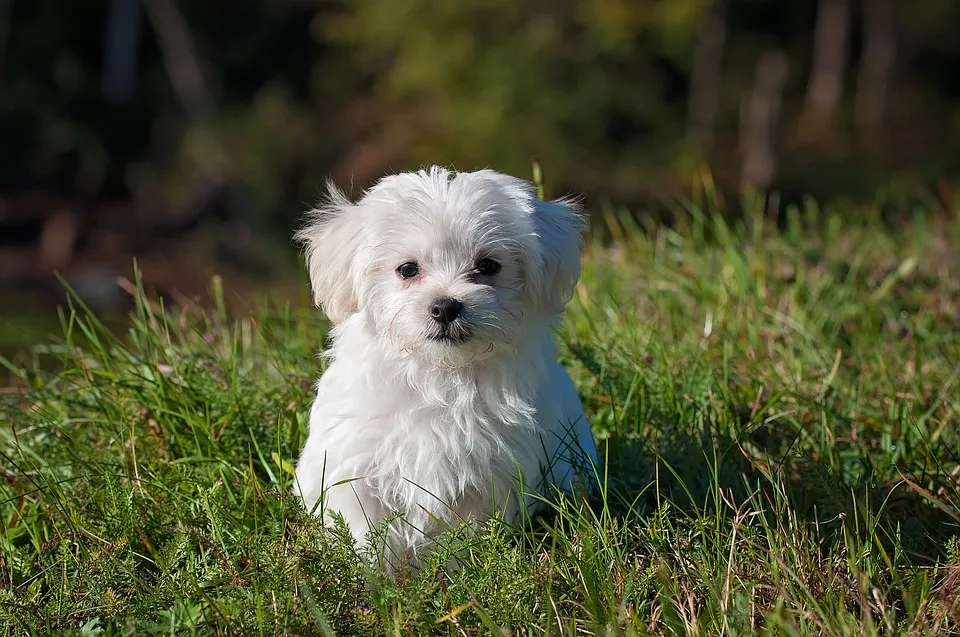
Pezibear at Pixabay · CC0
The Maltese is generally long-lived, but several conditions common in toy breeds turn up often. The notes below are for awareness only; diagnosis and treatment belong with your vet.
10.1. Patellar luxation
The kneecap slips out of its groove, usually towards the inside. It is one of the most common orthopaedic problems in Korean toy breeds. The classic sign is a dog that suddenly hops on one hind leg for a few steps and then walks normally again. It is graded from 1 to 4; mild cases are managed with weight control, non-slip floors and muscle-building exercise, while advanced cases may need surgery. Ask for knee checks on the parents and the puppy.
10.2. Mitral valve disease
The mitral valve thickens and stops sealing properly, so blood leaks backwards. It is the classic heart disease of older small dogs. Early on there are no symptoms and it is often first found as a murmur at a routine check. As it progresses, coughing, tiring easily and faster breathing at rest appear. From around age seven, ask for heart auscultation at every check and imaging if needed, and count your dog's sleeping breathing rate at home so changes are noticed early.
10.3. Tracheal collapse and others
- Tracheal collapse: weak cartilage lets the windpipe flatten, causing a goose-honk cough. Excitement, collar pressure and obesity make it worse.
- Portosystemic shunt: a congenital vessel lets blood bypass the liver, so toxins are not filtered. Poor growth, odd behaviour after meals and drooling are warning signs, and blood tests can raise suspicion.
- White dog shaker syndrome: generalised tremors seen mostly in young small white dogs, reported in the Maltese.
- Inflammatory brain disease such as GME: reported relatively often in toy breeds. Sudden seizures, wobbling or a head tilt need urgent attention.
- Dental disease: affects most toy dogs to some degree after age three and can damage the jaw or affect overall health.
11. Life stages and lifespan
Most Maltese live around 12 to 15 years, and well-kept dogs reaching 16 or more is not unusual.
| Stage | Age | Key points |
|---|---|---|
| Puppy | 0-12 months | socialisation (3-14 weeks), vaccines, watch for low blood sugar, check retained baby teeth |
| Young adult | 1-3 years | peak energy; barking and separation habits set in |
| Adult | 3-7 years | weight and dental care, yearly check-up |
| Senior | 8+ years | heart checks, bloodwork, eyes, teeth and joints, check-ups every six months |
Older Maltese often develop cloudy eyes from nuclear sclerosis or cataracts, lose teeth, sleep more and lose interest in walks. Barking at night for no clear reason or getting lost in familiar rooms can signal canine cognitive dysfunction.
12. Costs
Figures below are rough 2026 ranges for Korea and vary by region, clinic and groomer. Purchase price is excluded.
| Item | Approx. cost (KRW) | Notes |
|---|---|---|
| Initial supplies | 300,000-600,000 | bed, crate, harness, bowls, pee pad tray, brushes |
| First vet visits, vaccines, registration | 200,000-500,000 | several core shots, rabies, microchip |
| Food and treats | 30,000-70,000 per month | small portions |
| Grooming | 40,000-80,000 per session | every 4-8 weeks |
| Parasite prevention | 10,000-30,000 per month | heartworm, fleas and ticks |
| Annual check-up | 150,000-400,000 | rises in old age |
| Kneecap surgery | 1.5-3 million or more per leg | depends on grade and clinic |
Grooming is a steady ongoing cost, and heart medication and dental work often push bills up sharply in later years. Insurance taken out young, or a dedicated savings pot, is worth considering.
13. Before you get one
Because demand is so high, many Maltese puppies are still born in mass breeding facilities, sold through auctions and passed on to pet shops. Puppies from that route are more likely to have been separated from their mothers too early, to lack socialisation, or to arrive with parvovirus, distemper or bad knees. If you buy a puppy, check:
- that you can meet the parents and see clean conditions with dogs that are relaxed around people
- that the breeder holds a licence and provides a written contract and health papers
- vaccination and deworming records, plus knee and heart checks
- that the puppy is not being sold younger than two months
- extra caution with sellers pushing teacup or micro dogs at premium prices
Shelters and rescue groups also have many Maltese. Adult and senior dogs come with a known personality and health picture. In Korea you can search the national animal protection system or local shelters, and every dog over two months must be registered.
14. The Maltese in culture
Small white dogs have long stood for wealth and refinement. Portraits of European noblewomen from the Renaissance onward often show a little white dog in their arms, and many of these are read as Maltese or their ancestors. There are also stories of Elizabethan ladies carrying tiny white dogs in their sleeves.
In Korea the Maltese has been the stock image of the family house dog in dramas, variety shows and advertising, and many celebrities have introduced their own Maltese on television. On social media, round-faced Maltese photos are a genre of their own. The Maltipoo, a Maltese and Poodle cross, has also become common, but it is a crossbreed rather than a recognised breed.
15. Trivia
- Maltese hair keeps growing much like human hair, so show dogs often have their coat wrapped in paper to stop it breaking.
- The pinkish brown staining on white fur comes from saliva as well as tears. A dog with brown feet is often licking them a lot, which can point to allergies or stress.
- Pink skin shows through the coat, and nose pigment can fade in winter, a harmless change often called winter nose.
- Korean internet slang jokes that Maltese never hold back, giving the breed a feisty reputation, but plenty of well-trained, well-socialised Maltese are calm.
- Their bark is loud and sharp for their size, so in apartments it pays to teach a puppy early to stay relaxed about doorbells and delivery noises.
Health notes are general information. If something seems wrong, contact a vet who treats this species.
🍽️ Can my dog or cat eat this? →
FAQ
Can Maltese tear stains be removed?
Find the cause first, such as narrow tear ducts or hair rubbing the eyes. Daily wiping and keeping the hair short help a lot, though some dogs always stain a little. A sudden increase deserves an eye exam.
Are Maltese good for people with allergies?
Some people react less because little hair is shed onto floors, but allergens are also in dander and saliva. Spend time with Maltese before deciding.
Why do Maltese bark so much?
They are alert and attached to their owners, so sounds and strangers set them off. Picking the dog up when it barks reinforces it; reward quiet behaviour and desensitise gradually to trigger sounds.
Photo credits
Photos are freely licensed images from Wikimedia Commons. Authors and licenses are listed below.
- 1AKC Maltese Dog Show 2011.jpg — SheltieBoy · CC BY 2.0
- Lucy McElhiney.jpg — Lmcelhiney · CC BY-SA 4.0
- Maltese Dog 1.jpg — Alfredo Borba · CC BY-SA 4.0
- 01 AKC Maltese Dog Show 2013.jpg — SheltieBoy · CC BY 2.0
- Male Maltese Shih tzu Dog.jpg — Alice Batt · CC BY-SA 4.0
- Dog-1123016 960 720.jpg — Pezibear at Pixabay · CC0