TailVille
At a glance
Rough ranges for supplies, food and electricity in Korea (USD is approximate). Purchase or adoption fees are not included.
Experienced owners who can walk a lot every day, train consistently and want a deeply loyal companion.
First-time owners with frequent visitors, homes with small children or cats, or anyone who can't walk several times a day.
1. Overview
The Jindo is Korea's native dog from Jindo County in South Jeolla Province, the island of Jindo and its surrounding islets. It is a sturdy, medium-sized spitz with pricked ears, a curled or upright tail and a solid coat, most often fawn or white. Jindo dogs on the island were designated a natural monument in 1962, and a dedicated law supports the preservation of the breed, so many Koreans regard it as something like a national dog.
Jindos are intelligent and quick to make decisions. They are deeply devoted to their own family yet slow to accept strangers and unfamiliar animals. They are famous for their homing instinct, illustrated by a dog who walked hundreds of kilometres back to her original owner, for their loyalty, and for a fastidiousness that makes many refuse to toilet indoors. This article leaves general dog care to the main dog article and focuses on the breed's history, legal status, temperament, the realities of living indoors with one, and the very large number of Jindo mixes in shelters.
2. Name and origin
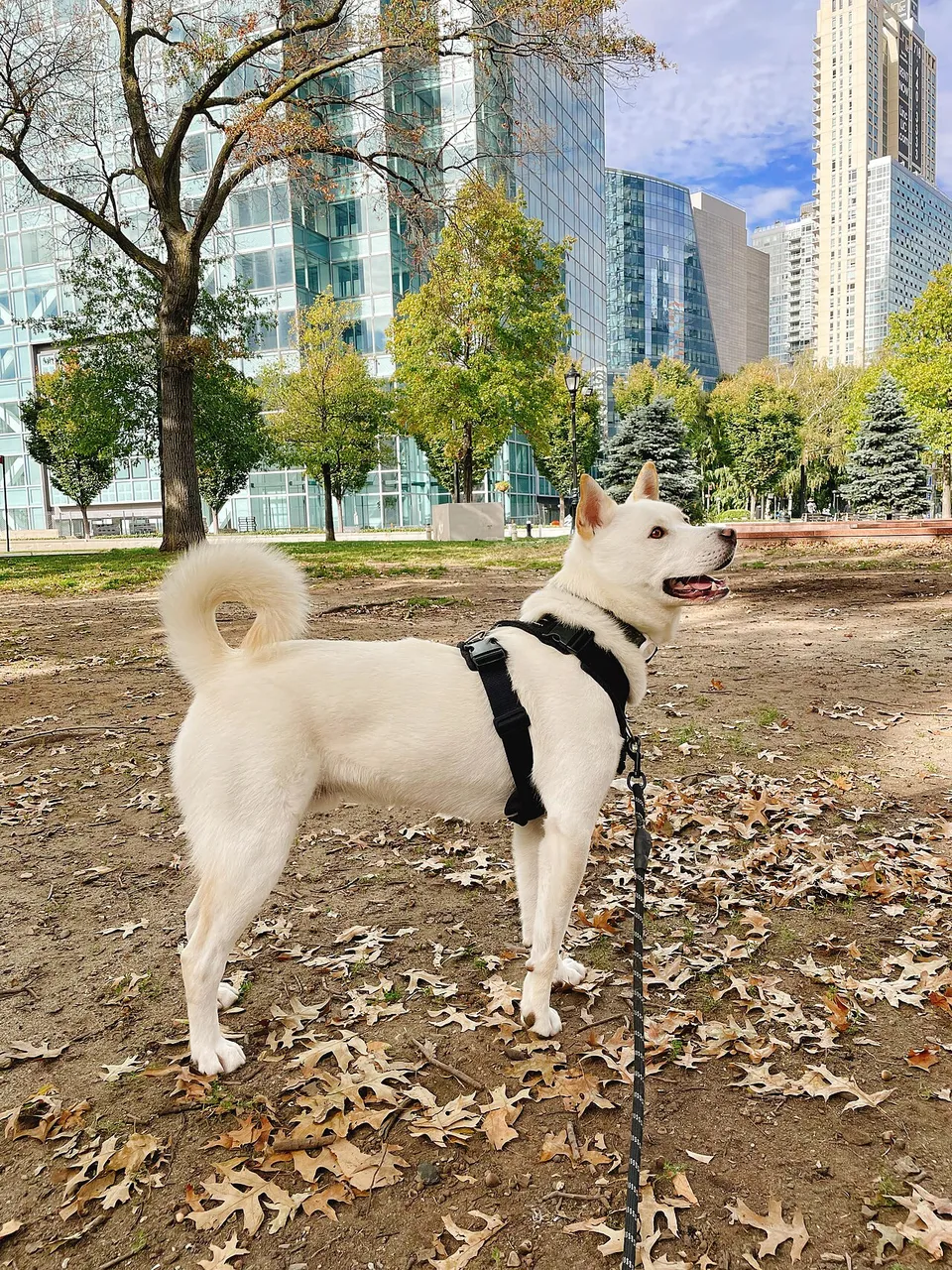
Corncheese21 · CC BY-SA 4.0
2.1. Name and spelling
The name simply means the dog of Jindo. Standard Korean spelling adds a linking consonant, jindotgae, but the law, natural-monument documents and local organisations have long used jindogae, so both spellings circulate for the same dog. In English it is called the Korean Jindo, Jindo dog or simply Jindo.
2.2. Theories of origin
There is no reliable record of when or how the Jindo became established on the island. The most widely accepted view is that ancient native dogs of the Korean peninsula survived in relatively pure form thanks to island isolation. Other stories link them to military or herding dogs brought during the Mongol invasions of Goryeo, to state horse ranches on Jindo in the Joseon era, or to dogs arriving through southern sea trade. None has decisive evidence, so the honest summary is that several theories exist.
What is clear is that island life limited mixing with outside dogs, and islanders who used them for hunting and guarding preserved a consistent type and temperament over a long period.
2.3. Natural monument status and recognition
The Jindo was designated a natural monument in 1962, originally numbered 53. Since 2021 Korea has stopped putting designation numbers first, but 'Natural Monument No. 53' is still widely quoted. The designation is generally understood to cover pedigree-managed Jindo dogs within Jindo County, not every Jindo-looking dog born elsewhere.
In the late 1960s a law on the protection and promotion of the Korean Jindo dog provided a basis for registering and managing pedigrees on the island. Internationally, the breed was listed by the FCI around 2005 as a Korean breed in Group 5 (spitz and primitive types), and registries such as the UKC also accept it. Within Korea, Jindo County, several preservation societies and kennel clubs issue pedigrees under their own standards, so check which body issued any certificate you are shown.
3. Jindos in Korean life
For generations Jindos lived as yard dogs on farms in Jindo and the south, guarding homes and helping with hunting. Local stories celebrate their courage against wild animals, and the image of a dog that opens its heart only to its owner became a Korean ideal of loyalty. In the late twentieth century, books, films and broadcasts made the Jindo a national symbol, and Jindos have been reported at the presidential residence and various public institutions.
Reality is more complicated than the image. As apartment living became the norm, many people came to see a medium-to-large Jindo as hard to keep indoors, and in the countryside plenty of Jindo mixes still spend their lives on short chains. Jindo mixes are among the most common dogs in Korean shelters, yet commentators repeatedly note low domestic adoption rates, blamed on their size and a reputation for being fierce. As a result, many have been adopted overseas through rescue groups, especially to North America.
More recently, owner communities have grown that share practical ways to live well with a Jindo indoors and challenge the stereotypes.
4. Appearance and breed standard
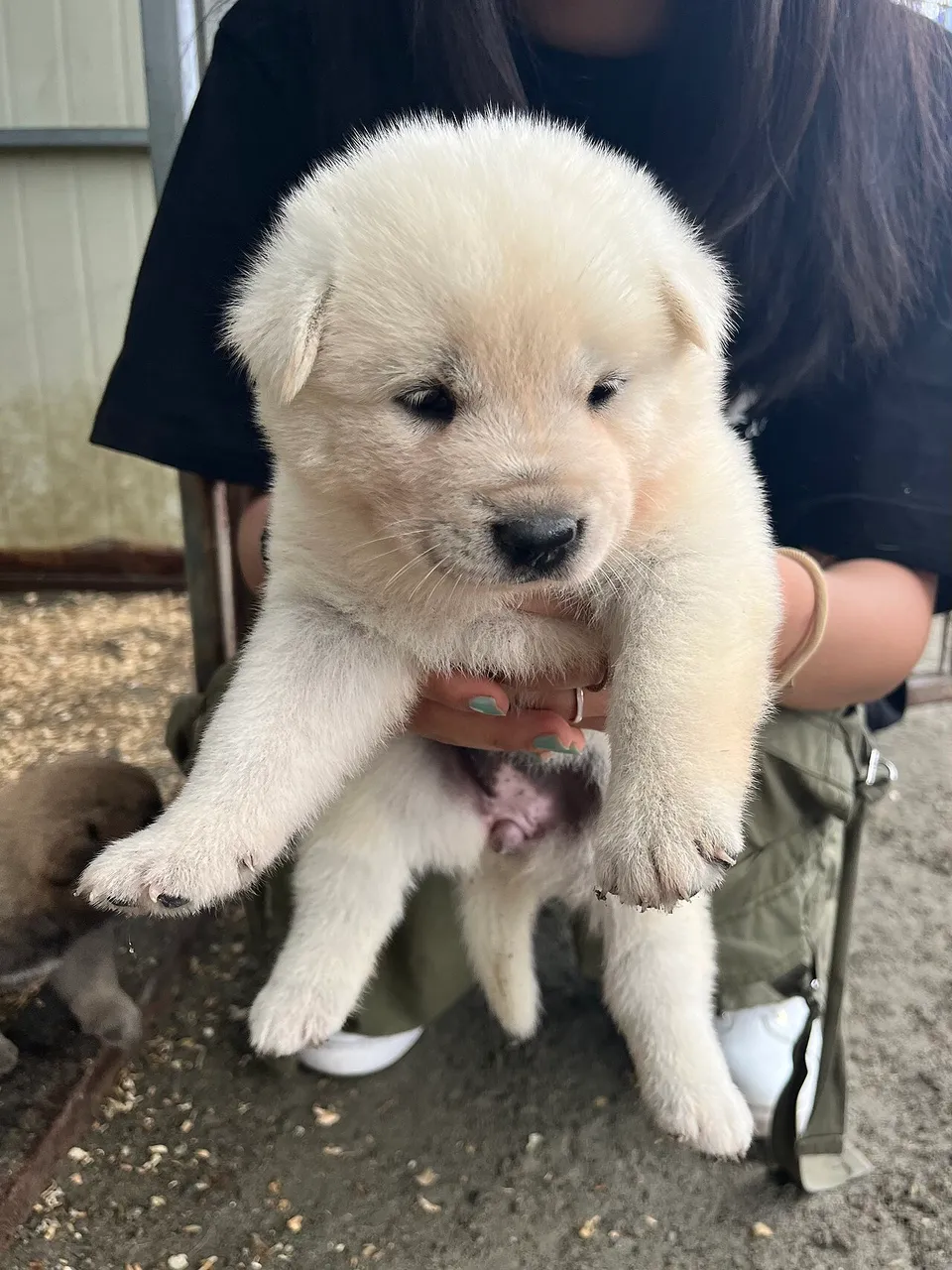
The Jindo is a balanced, medium-sized spitz. Seen from the front the head is roughly octagonal, the triangular ears stand firmly with a slight forward tilt, and the dark brown eyes are almond to triangular. Both the curled tail and the upright, sickle-shaped tail are accepted.
| Trait | Typical standard | Notes |
|---|---|---|
| Height | Males 50–55 cm, females 45–50 cm | Varies slightly by registry |
| Weight | Males 18–23 kg, females 15–19 kg | |
| Build | A compact type with height and length about equal, and a slightly longer type | Some registries name the two types |
| Coat | Harsh outer coat over a soft, dense undercoat | |
| Ears | Erect, tilted slightly forward | Often floppy in puppies |
| Tail | Curled or upright |
Colours are usually described as:
- Hwanggu: fawn or red-gold, the most common.
- Baekgu: white to cream, the other classic colour.
- Heukgu: black.
- Jaegu: greyish.
- Hogu: brindle, tiger-striped.
- Neunbagi: black and tan, the tan spots above the eyes giving a 'four-eyed' look.
Black noses, lips and eye rims are generally preferred. Exact accepted colours and details differ between registries, so treat this as a guide.
5. Temperament
Four words capture the Jindo temperament: loyal, independent, wary and clean.
- Loyal: Jindos often bond most deeply with one main carer. The saying that a Jindo only ever follows its first owner is an exaggeration, though; adult Jindos adopted into new homes do form strong bonds once trust is built.
- Independent: they think for themselves. They learn quickly but lose interest in pointless repetition and resist or shut down under heavy-handed training.
- Wary: strangers are not accepted on sight. With visitors, a Jindo may keep its distance and watch, and some react strongly to intrusions into their territory. They bark less than many terriers, but the warning bark is deep and loud.
- Prey drive: cats, chickens and small animals may be seen as quarry. A Jindo raised with a cat may live peacefully with it yet still chase unfamiliar cats outdoors.
- Other dogs: same-sex conflict, especially between entire males, is common, and many dislike busy dog parks full of strangers.
- Clean: they strongly avoid soiling their living space, and many never accept indoor pads, toileting only outside.
These traits earn the Jindo a reputation as a difficult dog, but with consistent rules and mutual respect it becomes an exceptionally steady companion.
6. Who it suits and who it doesn't
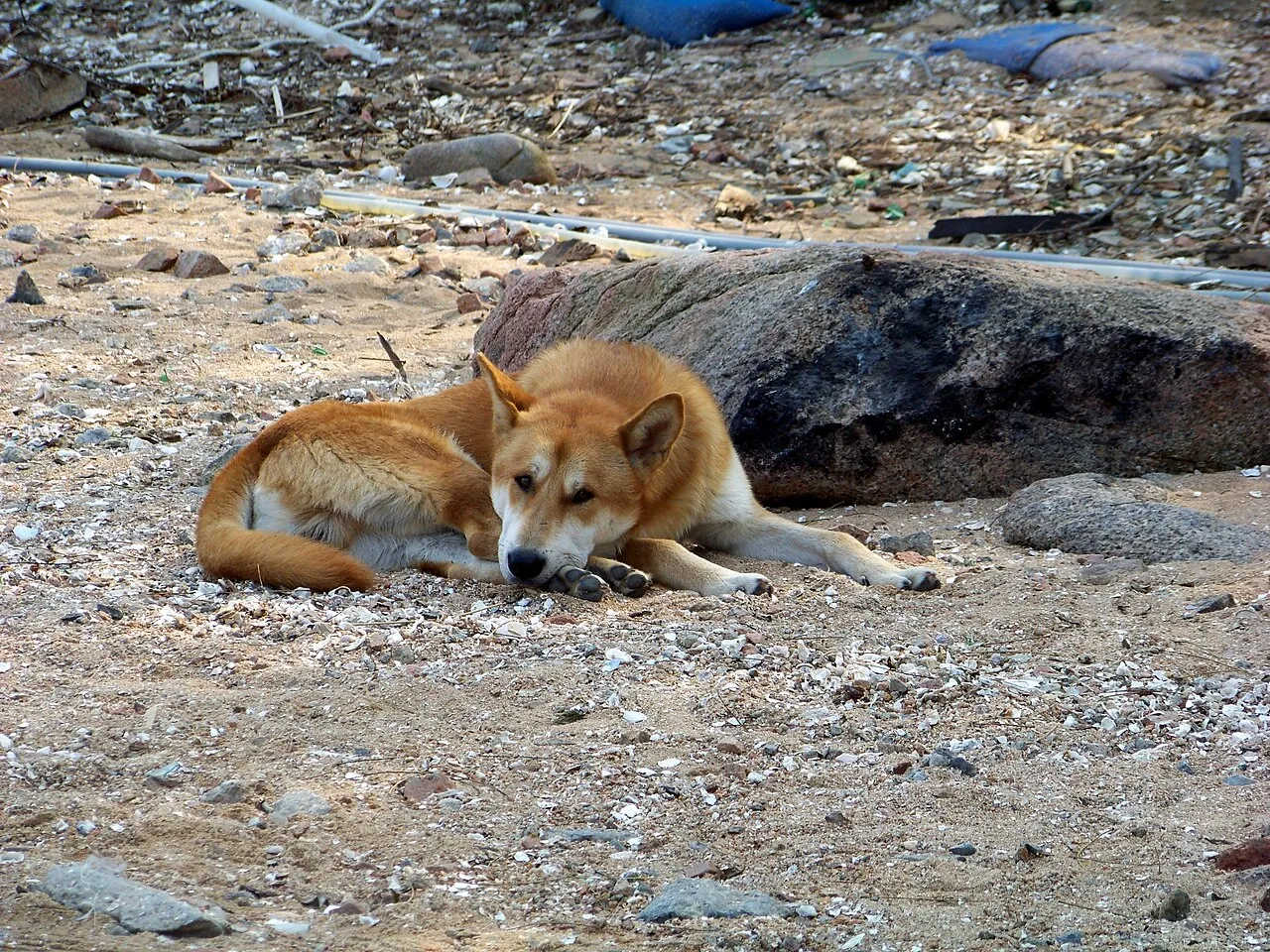
bein_korean · CC BY 2.0
- Good fit: experienced owners who train with consistent rules
- Good fit: people who can walk two or three times a day in any weather
- Good fit: quiet households without a stream of visitors
- Good fit: anyone who enjoys slowly building a deep bond of trust
- Poor fit: first-time owners unwilling to work with a trainer
- Poor fit: homes with cats or small pets, unless introductions are very careful
- Poor fit: people who want a dog to mingle at dog cafés and parks
- Poor fit: anyone planning to keep the dog chained in a yard purely as a guard
Neither 'Jindos belong in yards' nor 'Jindos can't live in apartments' is right. What matters more than space is the time and consistency the owner can offer.
7. Exercise and play
Jindos combine stamina with explosive speed. Adults generally need 1.5 to 2 hours of walking and activity a day, and dogs that toilet only outdoors need at least two or three outings. Time to sniff and explore satisfies them more than simply covering distance.
- Equipment: these strong, supple dogs often slip collars. Use a well-fitted harness, ideally with a backup clip connecting harness and collar.
- Off-lead play: prey drive and independence make perfect recall unlikely; only let them loose inside high, secure fencing.
- Brain games: scent work, hidden treats and short trick sessions. Offer new challenges rather than endless repetition.
- Hiking: many Jindos love hill walks with their owners. Keep the lead short where wildlife may appear.
- Seasons: very cold-tolerant and often delighted by snow, but vulnerable to heatstroke at midday in summer; walk early and late.
An under-exercised Jindo is likely to dig, chew, attempt escapes and bark at every noise.
8. Coat and grooming
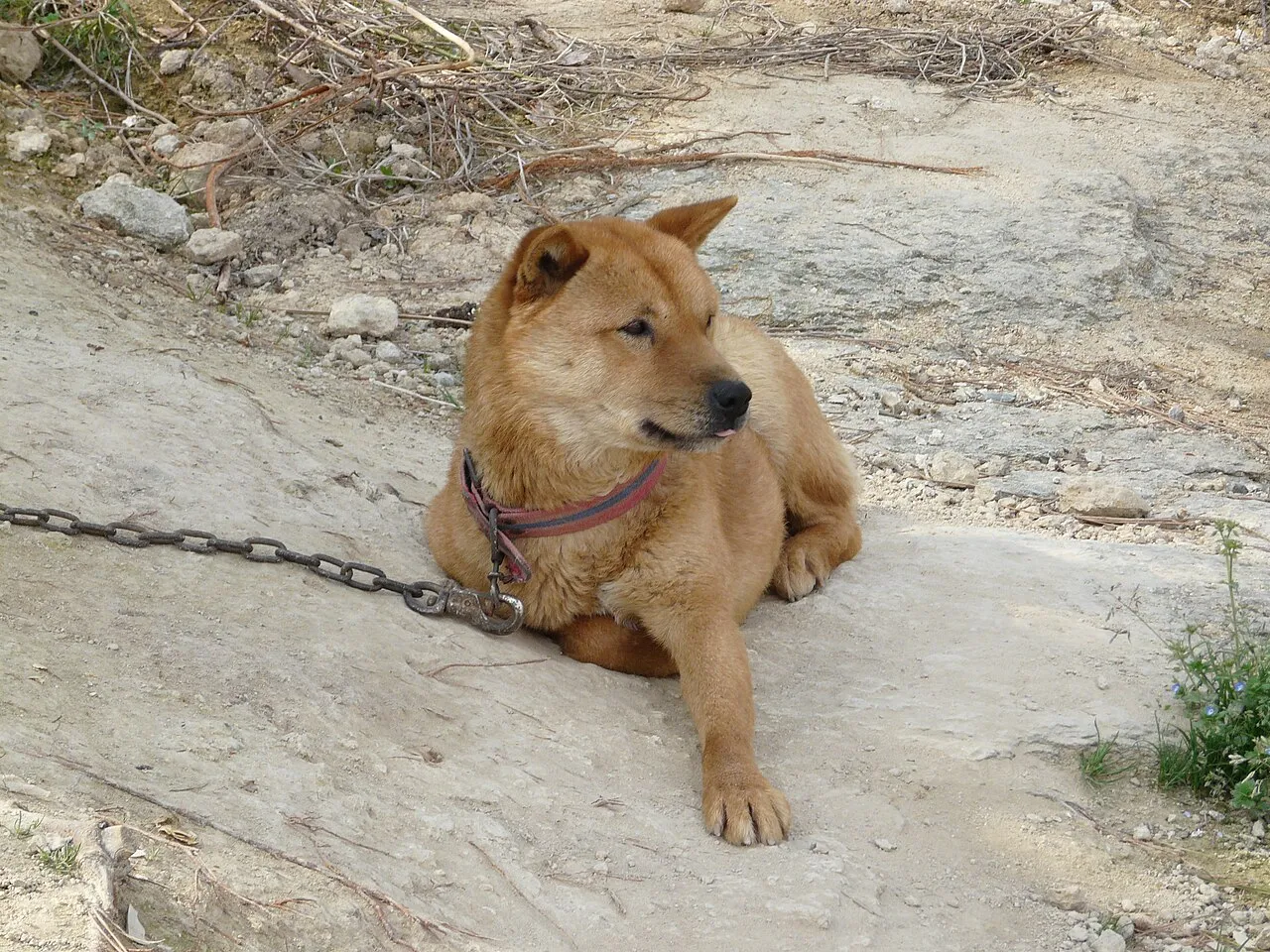
myself (User:Piotrus) · CC BY-SA 3.0
Jindos have little body odour and keep themselves clean, so routine care is easy. In spring and autumn, however, the undercoat comes out all at once, and indoor owners should brace for weeks of hair.
- Brushing: two or three times a week, daily during moults, using an undercoat rake followed by a slicker brush.
- Bathing: every one to two months is plenty. The dense undercoat dries slowly, so blow-dry right down to the skin to avoid hot spots.
- Clipping: shaving isn't recommended; the double coat also shields against summer sun and heat.
- Ears and feet: upright ears ventilate well, but some Jindos get ear infections, so check weekly. After outdoor adventures, look over paw pads and check for ticks.
- Nails and teeth: frequent walking wears nails down, but dewclaws still need trimming. Brush teeth daily if you can.
Some Jindos dislike handling as much as Shibas do, so practise touching paws, ears and mouth with rewards from puppyhood.
9. Diet and weight
Jindos are often described as light eaters for their size. Some are picky, leaving food or eating more or less with mood and weather. On the other hand, yard dogs raised on table scraps can become overweight and strain their kidneys and heart with salty food.
- Food: a complete medium-breed diet in two meals a day; a medium-to-large-breed puppy food during growth.
- Portions: start from the bag's chart and adjust so the ribs are easy to feel and a waist is visible from above.
- Fussy eaters: piling on toppers tends to deepen the refusal. Leaving the bowl down for 15–20 minutes at set times can help.
- Avoid: salty soups and stews, seasoned meat and cooked bones. The rural habit of feeding leftovers is a fast route to health problems.
- Water: for outdoor dogs, keep bowls in shade so they don't tip over or heat up in summer, and refresh often.
A sudden drop in appetite, or weight loss despite eating well, warrants a vet visit.
10. Inherited conditions and health
Long bred in fairly natural conditions, the Jindo is generally regarded as a healthy breed. Unlike Western breeds with decades of health surveys, however, it has been studied relatively little, so it would be wrong to say it has no inherited problems. The issues below are commonly mentioned by vets; diagnosis and treatment belong with your own vet.
10.1. Hypothyroidism
Cause: insufficient thyroid hormone, reported relatively often in spitz breeds including the Jindo.
Signs: lethargy and more sleep, weight gain without eating more, symmetrical hair loss on the flanks, thickened dark skin, seeking warmth, recurrent skin and ear infections.
Tests: blood hormone levels, interpreted carefully because other illnesses can lower them.
Management: lifelong daily hormone tablets usually restore normal life, with periodic blood tests to adjust the dose.
10.2. Skin disease and ear infections
Causes: environmental or food allergies, moist dermatitis where trapped undercoat holds damp after a moult, and parasites such as ticks and fleas.
Signs: itching, paw licking, red patches, weeping hot spots, scratching ears or head-shaking, smelly ears.
Management: thorough de-shedding during moults, complete drying after baths and consistent parasite prevention are the foundation. If problems recur, discuss allergy testing and diet with your vet.
10.3. Other conditions and outdoor risks
| Condition | What happens | Prevention and checks |
|---|---|---|
| Hip dysplasia | Reported in some dogs; hind-leg stiffness and arthritis | Weight control, X-rays |
| Entropion | Eyelid rolls inward and irritates the eye | Eye exam, surgery if needed |
| Heartworm | Spread by mosquitoes; very common in outdoor dogs | Monthly preventive, yearly test |
| Tick-borne disease | Babesia and others; anaemia and fever | Parasite prevention, tick checks after walks |
| Heatstroke | Risky for dogs chained in direct summer sun | Shade, airflow, water, no midday exertion |
Rural Jindos chained in yards are frequently left with untreated heartworm or tick-borne infections. Wherever your Jindo lives, monthly parasite prevention is the foundation of its health.
11. Life stages and lifespan
Jindos typically live 12 to 15 years, and well-cared-for dogs sometimes longer.
| Stage | Age | Focus |
|---|---|---|
| Puppy | 0–6 months | Golden window for socialisation with people, dogs and sounds |
| Adolescent | 6 months–2 years | Wariness and territoriality sharpen; conflicts with other dogs may begin |
| Adult | 2–8 years | Temperament settles; consistent exercise and weight control |
| Senior | 9+ years | Joint, thyroid and heart checks; gentler walks; watch for cognitive change |
The socialisation period from about 3 to 14 weeks matters even more for Jindos than for many breeds. Puppies who spend it in a cramped space with little human contact are far more likely to become over-guarded or aggressive towards strangers and dogs. In old age, failing hearing or sight can make a startled dog snap, so make a noise before approaching.
12. Costs
Rough 2026 ranges in Korean won. At around 20 kg, a Jindo costs more in food and medication than a small dog.
| Item | Approximate cost | Notes |
|---|---|---|
| Initial supplies, vaccines, registration | 800,000–1,800,000 | Excluding purchase; large crate, harness, gates |
| Outdoor kennel | Hundreds of thousands to millions | If building a run and fencing |
| Food | 50,000–100,000 a month | |
| Treats and supplies | 20,000–50,000 a month | |
| Parasite prevention | 20,000–40,000 a month | Depends on weight |
| Bathing and coat care | 50,000–100,000 per visit | Including moult season |
| Pet insurance | 30,000–70,000 a month | |
| Professional training | Tens of thousands to over 100,000 per session | Several sessions may be needed for reactivity |
Budget around 150,000–280,000 won a month for basics, and set aside money for a trainer, as many Jindo owners benefit from professional help with socialisation and behaviour.
13. Laws and the Jindo protection act
Jindos are covered by Korea's Animal Protection Act like any other dog: dogs two months or older kept in homes must be registered, and on outings they need a leash or harness, an ID tag with the owner's contact details, and their waste picked up. The Jindo is not one of the breeds designated as dangerous under that act. Since the 2024 amendments, however, a dog that injures a person or animal can be designated dangerous after a temperament assessment, which is one more reason to prioritise socialisation and safe management with a wary breed.
The Jindo also has its own statute, the Act on the Protection and Promotion of the Korean Jindo Dog, alongside Jindo County ordinances. These are generally understood to provide for:
- registration and pedigree management of Jindo dogs kept in Jindo County
- restrictions on bringing other breeds into the county, to protect purebred lines
- procedures for taking pedigree-managed Jindos off the island
- evaluation of dogs, breeding support and research
The text of the law, its enforcement rules and local ordinances can change, and specific permit requirements, transfer procedures and penalties are beyond what this article can state definitively. If you plan to obtain a Jindo from the island, take one off it, or move to or visit Jindo with another dog, check with Jindo County and the official Korean law database first. Ordinary Jindos and Jindo mixes born and kept elsewhere are generally understood to fall under the general Animal Protection Act rules rather than this special law.
Outside Korea, Jindos are subject to normal local dog laws. Some landlords, insurers and housing associations restrict guarding or spitz-type breeds, so check before you adopt.
14. Before you get one
- Consider adoption first: Jindos and Jindo mixes are among the most common dogs in Korean shelters. With an adult you know the size and temperament, and dogs with foster records show whether they have adapted to indoor life.
- Ask about the individual: how does the dog react to strangers, other dogs, cats and children, and does it toilet indoors?
- Check the pedigree issuer: if buying a pedigree Jindo, find out which organisation issued the papers and whether the parents can be verified. Some sellers charge premiums simply for a 'natural monument bloodline' label.
- Puppy upbringing: puppies raised with their mother and littermates and handled by people grow into steadier adults. Avoid puppies raised in cramped cages without human contact.
- Lifestyle check: can you walk two or three times a day, manage the dog safely in shared lifts and corridors, and get the whole family to follow the same rules?
- If keeping outdoors: provide a fenced area rather than a short chain, a shaded, weatherproof shelter, and daily walks and interaction.
- Getting a dog from Jindo Island: as noted in the laws section, transfer procedures may apply, so contact Jindo County first.
15. Jindos in popular culture
The most famous Jindo story dates from the early 1990s, when a white Jindo, Baekgu, sold to a family in Daejeon, turned up months later at her elderly former owner's home on Jindo, roughly 300 km away. The story was widely reported and retold in children's books, animation and school readers, making 'Baekgu who came home' the symbol of Jindo loyalty and homing instinct. A statue honouring her is said to stand in Jindo County.
Jindos often appear in Korean dramas, films and adverts as the embodiment of the faithful dog, and they are presented as a national animal in promotional material and events. Jindo County has run tourism programmes such as a Jindo theme park and dog performances, while overseas, rescued Jindo mixes on social media have made 'Korean Jindo' a familiar name.
16. Trivia
- Owners' tales of Jindos who flatly refuse puppy pads are a staple of Korean forums. A Jindo used to outdoor toileting may hold on all day in the rain, so walks are a health necessity, not a choice.
- Attempts were reportedly made to use Jindos as military or police dogs, but their attachment to one handler fitted poorly with working-dog systems where handlers change.
- The tail's height and curl shift with mood; a tense or frightened Jindo may let its tail uncurl and drop.
- White and fawn parents can produce puppies of various colours, so coat colour alone says nothing about purity.
- Among overseas owners of rescued Jindo mixes, tales of fence-clearing leaps and escapes are a favourite topic.
Health notes are general information. If something seems wrong, contact a vet who treats this species.
🍽️ Can my dog or cat eat this? →
FAQ
Can a Jindo live in an apartment?
Yes, if you can handle several long walks a day, a dog that may only toilet outside, heavy moults and alert barking. Practise calm waiting on a short lead for lifts and corridors.
What colours do Jindos come in?
Fawn (hwanggu) and white (baekgu) are most common, but there are also black, grey, brindle and black-and-tan 'four-eyed' Jindos. Registries differ slightly in which colours they accept.
Do Jindo mixes act like Jindos?
Mixes vary, but many show Jindo traits such as wariness, cleanliness and escape skills. When adopting, ask shelter staff about that individual dog's behaviour with people and animals.
Photo credits
Photos are freely licensed images from Wikimedia Commons. Authors and licenses are listed below.
- Jindo at dog show.jpg — Jindodogs · CC BY-SA 4.0
- Jindo wiki.jpg — Corncheese21 · CC BY-SA 4.0
- White Jindo Puppy.jpg — Jindodogs · CC BY-SA 4.0
- Korean Jindo dog.jpg — bein_korean · CC BY 2.0
- Jindo 024.JPG — myself (User:Piotrus) · CC BY-SA 3.0