TailVille
At a glance
Rough ranges for supplies, food and electricity in Korea (USD is approximate). Purchase or adoption fees are not included.
Experienced owners who can offer several hours of play a day and enjoy a lively, clownish personality.
Homes with toddlers, people sensitive to smells, or anyone without a nearby ferret vet and a healthy vet budget.
1. Overview
The ferret is a carnivorous mammal of the weasel family, Mustelidae, domesticated from the European polecat. Long, supple and short-legged, with small rounded ears and a bushy tail, it spent centuries working for people as a rabbit hunter and rat catcher before becoming the lively, people-oriented pet it is today.
An awake ferret is a perpetual-motion machine: exploring every corner, stealing socks and keys to stash behind the sofa, and hopping sideways to invite play. Then it collapses into a sleep so deep that ferrets often total 14 to 18 hours a day. Many learn their names, come when called and walk on a harness, which is why they are sometimes compared with small dogs.
They also need a high-protein meat diet, carry a natural musky odour, and from middle age are prone to costly illnesses such as adrenal disease and insulinoma. This article covers the ferret's origins and names, anatomy, colours and patterns, behaviour, housing, diet, health, breeding, costs, legal status around the world and its place in culture.
2. Name and classification
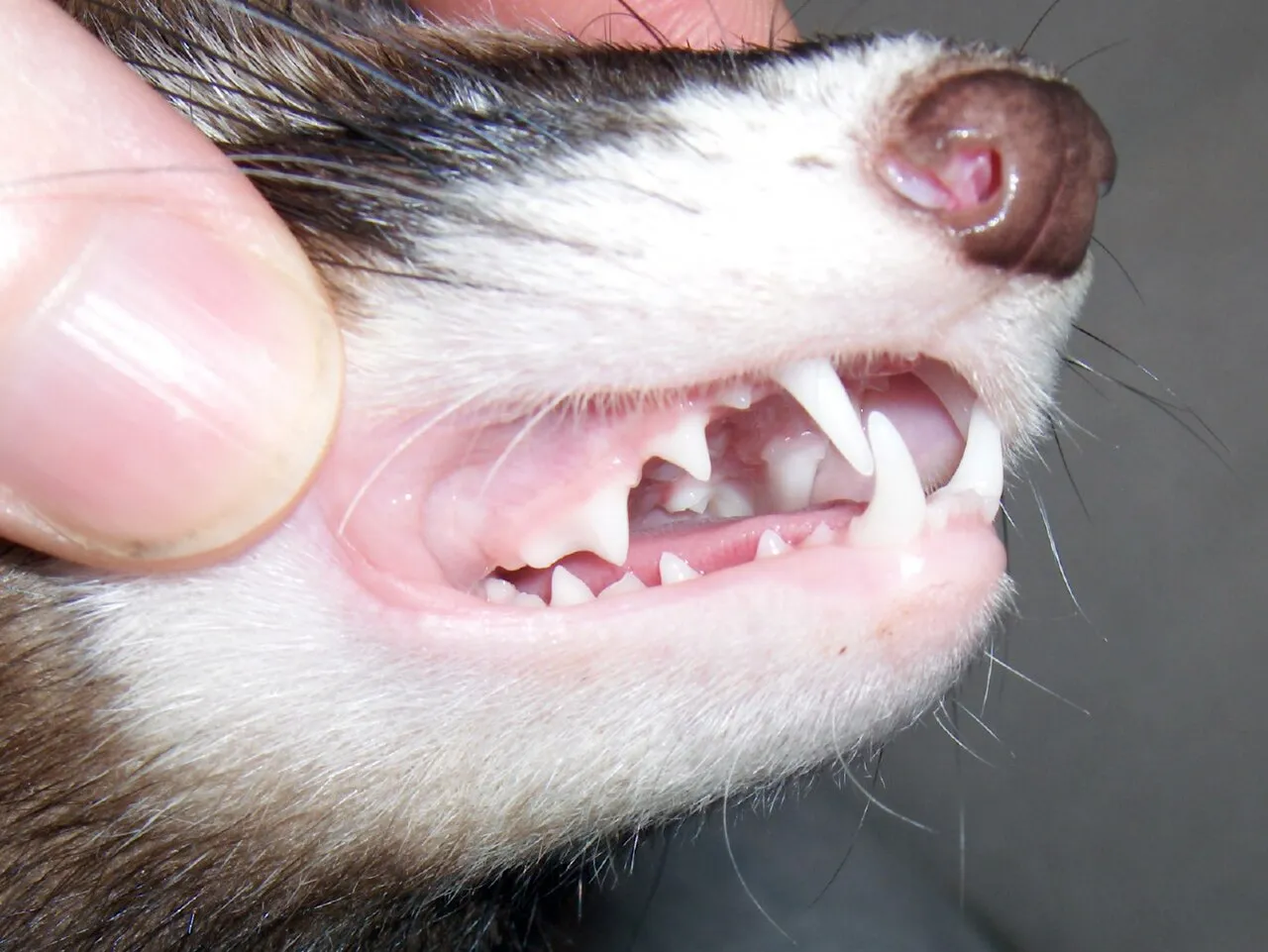
Erlendaakre · Public domain
2.1. Scientific name and ancestry
The ferret is usually written Mustela furo, though some authorities treat it as a subspecies of the European polecat, Mustela putorius furo. Genetic studies point to the European polecat as the main ancestor, with some suggesting a contribution from the steppe polecat as well.
Its genus also includes weasels, stoats and mink, and the wider family Mustelidae takes in otters, badgers, martens and wolverines, which explains the family resemblance many people notice between ferrets and otters.
2.2. Where the name comes from
The English word is generally traced through Old French to Latin furittus, little thief, from fur, thief, which suits an animal that steals and hoards everything it can carry. The scientific name furo shares the same root.
Ferret keepers have a vocabulary of their own. A male is a hob, a female a jill and a baby a kit; a neutered male is a gib and a spayed female a sprite. A group of ferrets is traditionally called a business.
2.3. Not to be confused with the black-footed ferret
The black-footed ferret, Mustela nigripes, of the North American Great Plains is a separate wild species, not a feral pet. It depends on prairie dogs for food and was feared extinct until a small population was rediscovered in Wyoming in 1981. Captive breeding and reintroduction have slowly rebuilt its numbers, and in 2020 a female cloned from cells preserved decades earlier was born as part of the recovery effort.
3. History
Exactly when and where ferrets were domesticated is unclear, but they have probably lived with people for at least 2,000 years. Classical writers describe polecat-like animals being sent into burrows to flush out rabbits, and the Greek geographer Strabo recorded their use against plagues of rabbits on Mediterranean islands.
In medieval Europe, ferreting, sending a ferret down a warren so that bolting rabbits could be netted, was widespread, and ferrets also earned their keep killing rats in granaries and aboard ships. Ferreting survives as a country pursuit in parts of Britain to this day.
In the late 19th century New Zealand imported ferrets, stoats and weasels to control introduced rabbits. The predators went feral and turned on native ground-nesting birds such as kiwi, an ecological disaster still cited as a warning about introducing species.
From the mid-20th century ferrets became important in medical research, above all for influenza, because they catch human flu strains and develop similar symptoms. As pets they took off in the United States in the 1970s and 1980s with the rise of large commercial breeding farms, and their popularity spread to Europe, Japan and South Korea.
Many pet ferrets in North America and East Asia come from a small number of big farms that neuter and descent kits before sale, and animals from some American farms carry small dot tattoos in one ear that identify their origin.
4. Body and anatomy
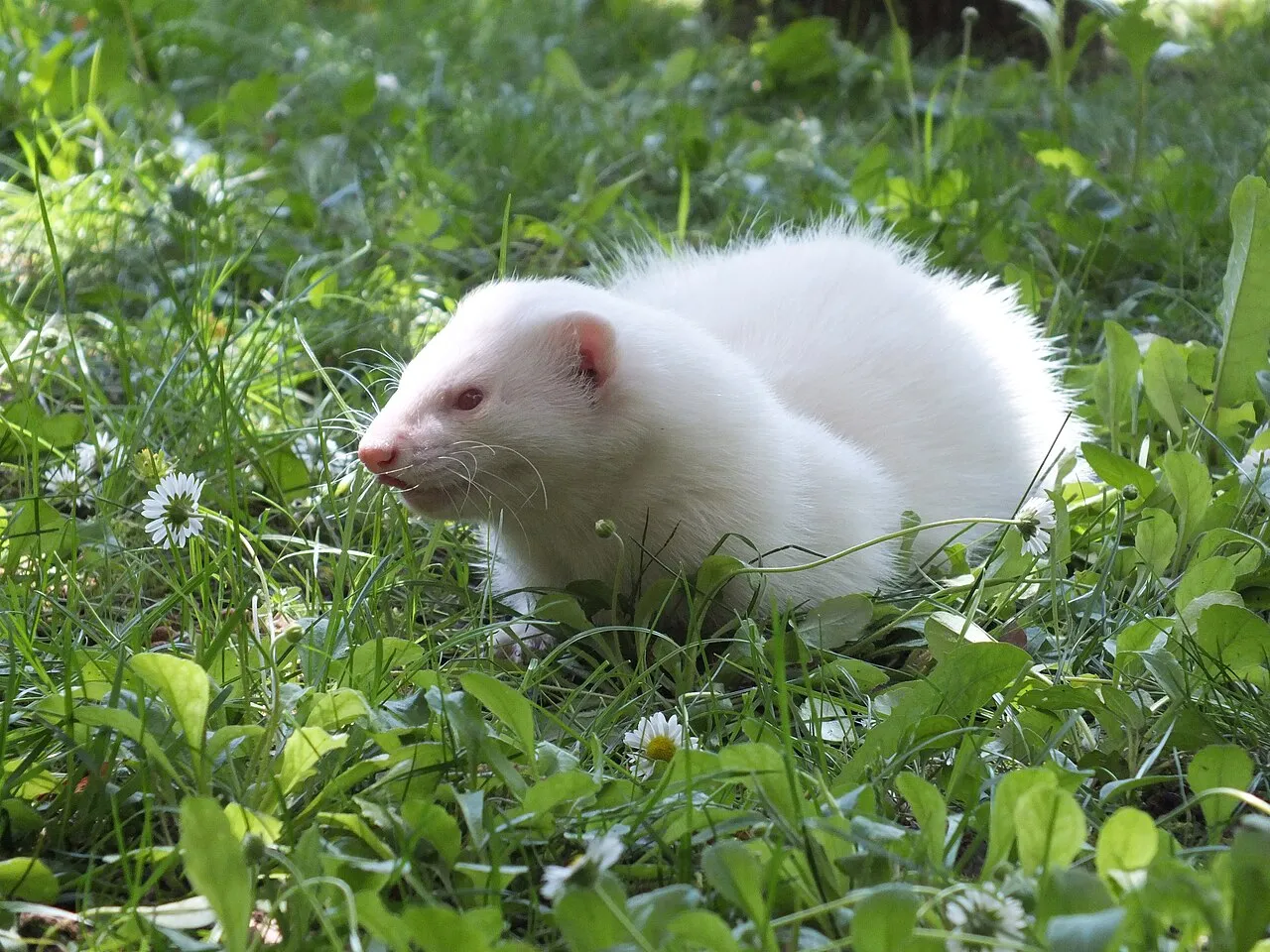
Luciano Bernardi · CC BY-SA 3.0
4.1. Size and skeleton
Ferrets measure 35–50 cm from nose to rump with a 7–10 cm tail. The sexes differ markedly: hobs weigh 1–2 kg, often nearly twice as much as jills at 0.7–1 kg. Weight also shifts with the seasons, as many ferrets put on fat and a thick coat in autumn and slim down again in spring.
Their spine is extraordinarily flexible, letting them turn around inside a narrow tunnel, and if the head fits through a gap, the rest of the body usually follows. That talent made them superb hunters and makes them experts at vanishing behind appliances.
4.2. Teeth and digestion
An adult ferret has 34 teeth, including long, sharp canines and shearing cheek teeth typical of a carnivore. Unlike rodent and rabbit teeth they do not keep growing, so tartar build-up and fractured canine tips become common problems with age.
The gut is short and has no caecum, so food passes through in about three to four hours. Ferrets digest fibre and carbohydrate poorly and need to eat little and often. They also tend to imprint on the smell of foods eaten while young, so offering a range of proteins before about six months of age makes later diet changes much easier.
4.3. Senses and scent glands
Ferrets are short-sighted, but their eyes are tuned for dim burrows and pick up movement well in low light. Smell and hearing do most of the work, and a ferret on the trail of a scent zigzags with its nose to the floor. Red-eyed albinos tend to see even less well.
The anal glands either side of the rectum can release a strong-smelling spray when a ferret is frightened, while sebaceous glands throughout the skin produce the characteristic musky scent. Descenting removes the anal glands but not the skin odour, and entire hobs smell far more strongly during the breeding season.
4.4. Coat and temperature
The coat combines a soft, pale undercoat with darker guard hairs and is moulted in spring and autumn. Normal body temperature is around 38–40°C, higher than ours, and with almost no sweat glands ferrets struggle to cool down. Panting helps only a little, which makes heat one of the greatest environmental dangers they face.
5. Colours and patterns
Ferrets are described by colour and pattern rather than by breed. Common names, based on standards used by organisations such as the American Ferret Association, include the following.
| Name | Appearance | Notes |
|---|---|---|
| Sable | Dark brown guard hairs, cream undercoat, face mask | The most common, close to the wild type |
| Black sable | Near-black guard hairs | Very dark mask |
| Champagne | Light tan, diluted sable | Soft, warm tone |
| Cinnamon | Reddish brown | Relatively uncommon |
| Chocolate | Milk-chocolate brown | |
| Albino | All white with red eyes | Weaker eyesight |
| Dark-eyed white | White coat, dark eyes | Higher reported rate of deafness |
Patterns include standard (clear mask and darker legs), roan (white hairs mixed through), point or Siamese (pale body with darker legs and tail), mitt (white feet), blaze (a white stripe from forehead to neck) and panda (an entirely white head).
Blaze, panda and dark-eyed white ferrets have a relatively high rate of congenital deafness, linked to a genetic mechanism resembling Waardenburg syndrome in people. Deaf ferrets live perfectly happy lives, but they startle easily and may nip if touched unexpectedly, so stamp lightly on the floor or move into view before handling. Long-haired angora ferrets also exist but are uncommon.
6. Behaviour
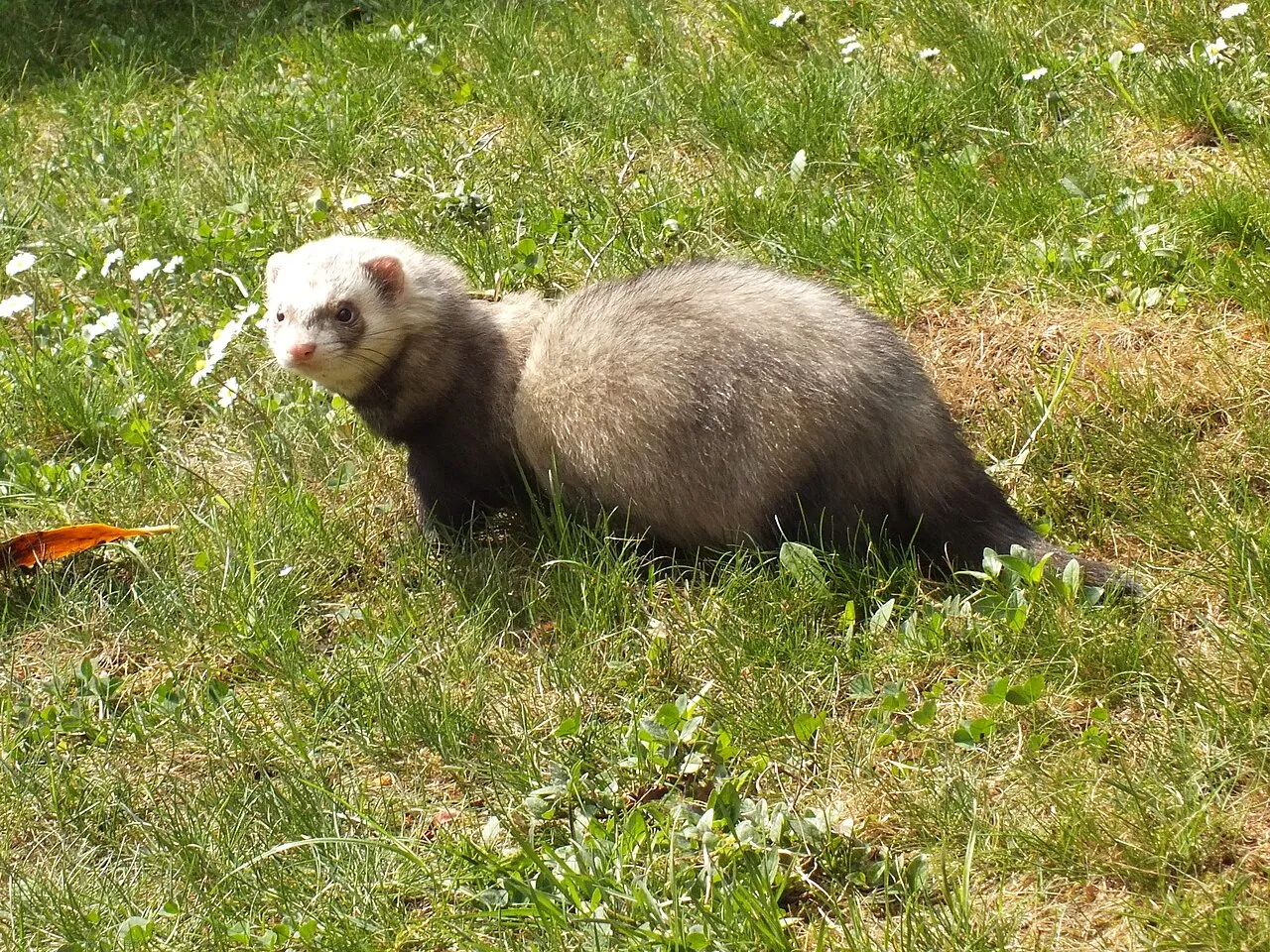
Luciano Bernardi · CC BY-SA 3.0
6.1. How the wild ancestor lives
The European polecat lives alone along woodland edges, farmland and riverbanks, hunting rabbits, rodents, frogs and birds. It borrows burrows dug by other animals and is mostly active at night and dusk. Polecats carry surplus prey back to a den, and the domestic ferret's habit of hoarding stolen objects in one hidden spot echoes that instinct.
6.2. Behaviour at home
Unlike their solitary ancestors, pet ferrets are highly social with people and with each other. They lean towards dusk activity but adapt their schedule to their household remarkably well. After a few hours of explosive energy they fall into a sleep so deep that they can be lifted and jostled without waking, which alarms many first-time owners.
Burrowing, hiding, stealing and squeezing into small spaces are all hard-wired. Ferrets love tunnelling under blankets, and a dig box filled with rice, shredded paper or plastic balls provides hours of fun. Young ferrets nip a lot during play; ferret skin and fur shrug it off, but human hands do not, so consistent, gentle training from kithood is important.
6.3. Reading the signals
- War dance: arched back, open mouth and frantic sideways and backwards hopping, an invitation to play.
- Dooking: a soft, clucking chuckle made while happily exploring or playing.
- Hissing: anger, frustration or squabbling with another ferret.
- Screeching: a piercing cry of pain or terror that always needs checking.
- Bottle-brush tail: fur fluffed out from surprise or intense excitement.
- Rubbing and crawling along the floor: picking up a new scent, or simple contentment.
- Yawning when scruffed: a reflexive response associated with relaxation.
- Backing into a corner: about to toilet, the moment to pop them in a litter tray.
- Lying flat with legs splayed: cooling off or completely relaxed.
Mother ferrets carry kits by the scruff, and most ferrets go limp when gently scruffed. It is a useful hold for nail trims and ear cleaning, but it should never be used as punishment or prolonged.
7. Life stages
A ferret's development and life stages look roughly like this.
| Stage | Age | What happens |
|---|---|---|
| Newborn | 0–3 weeks | About 6–12 g, nearly hairless, eyes and ears sealed |
| Nursing | 3–5 weeks | Teeth erupt and solid food begins, eyes open at around 4–5 weeks |
| Weaning | 6–8 weeks | Weaned and playing hard, usually rehomed from 8 weeks |
| Adolescent | 2–6 months | Peak nipping and boundless curiosity |
| Sexual maturity | 4–12 months | Matures in the first breeding season, usually spring |
| Adult | 1–3 years | Settled personality, generally the healthiest years |
| Middle age | 3–5 years | Adrenal disease, insulinoma and other illnesses begin to appear |
| Senior | from about 5 years | Muscle loss, more sleep, more tumours and heart disease |
The typical lifespan is six to ten years, though disease means many pet ferrets fall at the lower end. Regular check-ups from middle age, including blood glucose tests, catch common problems early.
Signs of ageing include weak back legs and a shuffling gait, hair loss on the tail or body, much more sleep and shorter play sessions, and muscle wastage that makes the spine stand out. Lower the hammocks, put soft beds at floor level and add easily digested wet food to keep an older ferret comfortable.
8. Housing
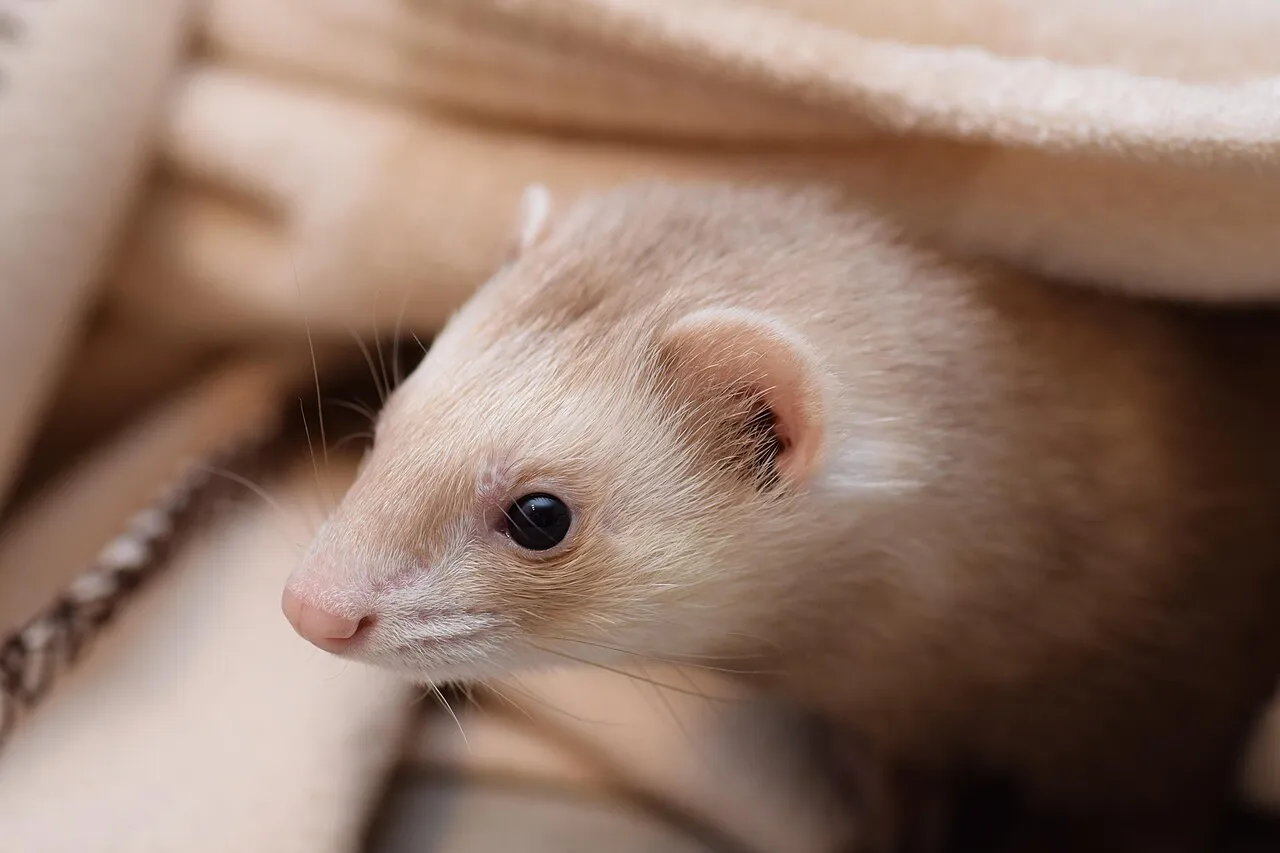
Aurélien Mora · CC BY-SA 4.0
8.1. The cage
A multi-level cage of at least 90 × 60 × 90 cm makes a good base. The cage is for sleeping and for safety while you are out; real activity happens outside it. Bar spacing must be narrow enough that a ferret cannot push its head through, and wire shelves should be covered so feet cannot slip through.
Furnish it with hammocks, a sleep sack, soft blankets, a litter tray fixed in a corner, and bowls that clip onto the bars, because ferrets delight in flipping dishes over.
8.2. Play space and ferret-proofing
Ferrets need at least three to four hours a day outside the cage, which makes ferret-proofing essential.
- Block every gap of around 5 cm or more, especially behind fridges, washing machines and dishwashers and around plumbing under sinks
- Check recliners and sofa beds before using them, as their mechanisms are notorious for crushing ferrets
- Keep washing machine and dryer doors shut and look inside before every load
- Remove soft rubber and foam: door seals, earbud tips, erasers, sponges, rubber slippers
- Keep toilet lids down and never leave a bath full
- Store cleaning products, medicines and cables out of reach
- Secure windows and insect screens
Ferrets often get along with cats and calm dogs, but hamsters, rabbits, guinea pigs and birds are prey to them and must never share space.
8.3. Temperature and environment
Keep ferrets at 15–24°C. They are very heat-sensitive: be cautious above 27°C, and as temperatures approach 30°C heatstroke can develop quickly. Air conditioning is effectively essential in hot summers, and frozen water bottles and cooling tiles are a sensible backup in case of power cuts.
They tolerate cool conditions better but should be kept out of drafts, with plenty of blankets to burrow into in winter. Ferret hormones respond to day length, and some vets believe long hours of artificial light may contribute to adrenal disease, so giving them a properly dark rest period at night is a good idea.
8.4. Shopping list
- A multi-level cage of at least 90 × 60 × 90 cm
- Two or more hammocks, a sleep sack and blankets
- A corner litter tray with paper or wood pellet litter (avoid clumping clay and scented litter)
- Bowls that clip to the bars, or a water bottle
- A ferret harness and lead
- Tunnels, a dig box and hard plastic balls, never soft rubber toys
- Nail clippers, ear cleaner and a mild ferret shampoo
- A carrier
- Boards, baby gates and draught excluders to block gaps
9. Diet
Ferrets are obligate carnivores, built to live on meat alone. The usual staple is a ferret food or high-quality kitten food with roughly 32–40% animal protein, 15–20% fat and very little fibre. Look for named meats such as chicken, turkey or lamb at the top of the ingredient list and few plant ingredients such as corn, wheat or peas.
Because food passes through them so fast, ferrets eat many small meals a day. Most owners therefore leave dry food available at all times, and long periods without food are particularly dangerous for ferrets with insulinoma.
| Category | Examples | Notes |
|---|---|---|
| Staple | Ferret food, high-protein kitten food | Available at all times |
| Natural and raw | Cooked or raw chicken, quail, whole prey such as mice | Requires careful research on balance and hygiene |
| Treats | Freeze-dried meat, cooked egg, meat purées | Small amounts, ideal for training |
| Avoid | Fruit, vegetables, cereal snacks, sugary treats | Poorly digested, linked to insulinoma risk |
Raw and whole-prey diets are closer to what ferrets evolved to eat, but calcium-to-phosphorus balance, nutrients such as taurine and bacterial contamination all need careful management. Switch gradually and with advice from a vet or experienced keeper.
Do not feed sugary treats or fruit, grapes and raisins, milk or dairy, chocolate, caffeine or xylitol, onion or garlic, grain- or vegetable-heavy dog food, or cooked bones. Fresh water must always be available; offering both a bowl and a bottle often increases intake.
10. Health and disease
Among small pets, ferrets demand some of the closest attention to health. Several diseases are very common from around three or four years old, so find a vet with real ferret experience before you need one and plan regular check-ups.
10.1. Vaccination
Canine distemper is close to 100% fatal in ferrets. The virus can be carried by dogs and even brought home on shoes, so vaccination is essential. Rabies vaccination is recommended or legally required in many places.
Available ferret vaccines and schedules differ between countries and clinics, so follow your vet's advice. Vaccine reactions are uncommon but do occur, so it is wise to wait at the clinic for around 30 minutes after each injection.
10.2. Common conditions
| Condition | Cause | Main signs | Prevention and response |
|---|---|---|---|
| Adrenal disease | Excess adrenal sex hormones (early neutering and light exposure are suspected factors) | Hair loss starting at the tail, itching, swollen vulva, straining to urinate in males | Hormone implants or surgery; urinary blockage in males is an emergency |
| Insulinoma | Pancreatic tumours causing low blood sugar | Staring, drooling, pawing at the mouth, weak back legs, seizures | Regular glucose tests, medication or surgery, no sugary treats |
| Lymphoma | Cancer of the lymphatic system | Weight loss, enlarged lymph nodes, lethargy, laboured breathing | Early diagnosis, discuss chemotherapy |
| Foreign bodies | Swallowed rubber, foam or fabric | Vomiting, loss of appetite, diarrhoea, painful abdomen | Ferret-proofing, emergency surgery |
| Canine distemper | Virus | Eye and nose discharge, thickened skin on chin and footpads, seizures | Vaccination is the only protection |
| Influenza | Human flu viruses | Sneezing, runny nose, fever, lethargy | Limit contact when you have flu |
| Gastric ulcers | Helicobacter infection, stress | Black, tarry stools, teeth grinding, poor appetite | Diagnosis and medication |
| Epizootic catarrhal enteritis | A ferret coronavirus | Green, slimy diarrhoea, dehydration | Quarantine newcomers, supportive care such as fluids |
| Hyperoestrogenism | Prolonged heat in unspayed jills | Swollen vulva, hair loss, pale gums, bleeding | Spaying or hormonal ending of heat |
| Heart disease | Dilated cardiomyopathy and others | Coughing, breathing difficulty, tiring easily | Regular senior check-ups |
| Dental disease | Tartar, broken canines | Bad breath, difficulty chewing | Dental checks and cleaning |
Ferrets can catch human influenza and may pass it back, so if you have flu, wear a mask, wash your hands and let someone else handle them where possible. Research has also shown ferrets to be susceptible to some coronaviruses, including the one that causes COVID-19.
10.3. When to see a vet
- Seizures, or collapsing and becoming unresponsive (possible low blood sugar, an emergency)
- A male straining to urinate with little or nothing coming out (an emergency)
- Repeated vomiting, or almost a day without eating
- Black stools or persistent green, slimy diarrhoea
- Progressive hair loss on the tail or body
- A swollen vulva lasting more than two weeks in an unspayed jill
- Drooling and pawing at the mouth
- Coughing, rapid breathing or a swelling belly
- Lethargy and bright red gums on a hot day
11. Breeding
Ferrets are seasonal breeders, coming into season as days lengthen in spring and summer. Jills are induced ovulators, so an unmated jill can stay in heat for weeks or months. Prolonged heat floods the body with oestrogen, which can suppress the bone marrow and cause fatal aplastic anaemia. Any jill not intended for breeding must be spayed or brought out of season with a vet-administered hormone injection or implant.
Pregnancy lasts around 41–42 days, and litters are typically six to eight kits, sometimes more than ten. Kits are born tiny, at roughly 10 g, and the mother's condition strongly affects their survival. In the breeding season entire hobs become smellier, greasier and more aggressive.
Breeding ferrets at home is considerably harder and riskier than breeding most small pets. Jills may reject kits or run short of milk, and mastitis and difficult births occur; every kit then needs vaccinations, neutering and a carefully chosen home. These challenges are a large part of why most pet ferrets are sold already neutered. Breeding for sale can also bring licensing obligations, so check local regulations first.
12. Costs
Ferrets are expensive on every front: purchase price, setup, and veterinary care that tends to climb with age. The ranges below are approximate Korean figures.
| Item | Approximate cost (KRW) | Notes |
|---|---|---|
| Ferret | 300,000–700,000+ | Depends on import source, colour and whether already neutered |
| Multi-level cage | 100,000–300,000 | |
| Hammocks, blankets, sleep sack | 30,000–60,000 | Spares needed for washing |
| Litter tray, litter, bowls | 20,000–50,000 | |
| Harness, toys, carrier | 30,000–70,000 | |
| First check-up and vaccinations | tens of thousands to around 100,000+ | Varies by clinic |
| Setup total | about 500,000–1,000,000 | |
| Monthly food and treats | 40,000–80,000 | High-protein diet |
| Monthly litter, laundry, supplies | 20,000–40,000 | |
| Monthly vet savings | 20,000–30,000+ | For vaccines and check-ups |
| Monthly total | about 80,000–150,000 |
A diagnosis of adrenal disease or insulinoma in middle age can mean ongoing tests, hormone implants, medication or surgery, easily costing several hundred thousand won to over a million at a time. Emergencies such as foreign-body surgery are not rare either, so a dedicated savings fund or pet insurance, where available for ferrets, is a realistic part of ownership.
13. Before you get one
- Can you give a ferret three to four hours or more of supervised play every day?
- Are you prepared to keep gaps blocked and rubber items out of reach permanently?
- Can you live with a musky odour and weekly bedding washes?
- Is there a ferret-experienced vet nearby, and can you afford major vet bills in middle age?
- Does your home have toddlers, or small pets such as hamsters, rabbits or birds?
- Can you keep the home cool throughout summer?
- Are you ready to commit for six to ten years?
Before buying, confirm whether the ferret is neutered and descented, see its vaccination records and ask about its farm or breeder. A healthy ferret has clear eyes, a glossy coat, no hair loss on the tail or body and a clean rear. Keep a newcomer apart from resident ferrets for about two weeks and watch for diarrhoea or respiratory signs before introducing them.
Shelters and ferret rescues regularly rehome adults whose owners could no longer keep them. Adopting an adult lets you know its personality and health in advance, though an older ferret's likely vet costs deserve careful thought.
14. Laws and regulations
Ferrets are among the most heavily regulated common pets. In the United States, California and Hawaii prohibit keeping them, and New York City bans them as well; other states and cities require permits or rabies vaccination. In Australia, Queensland and the Northern Territory prohibit pet ferrets. New Zealand, where feral ferrets devastate native birds, bans their sale and breeding. Always check national, state, city and even building rules before getting one.
In South Korea, ferrets are one of the six animals defined as companion animals under the Animal Protection Act's enforcement rules, so businesses selling them must be licensed and anti-cruelty and anti-abandonment provisions apply. Owners do not currently have to register ferrets with the local authority.
Moving a ferret between countries usually involves quarantine paperwork and vaccination requirements that differ from place to place and change over time. Contact the veterinary or quarantine authorities of both countries well in advance.
15. Ferrets in culture
On screen, ferrets usually play mischievous sidekicks. In the fantasy film The Beastmaster (1982) two ferrets help the hero on his quest, and in the romantic comedy Along Came Polly (2004) the heroine's blind ferret steals several scenes. The Pokémon Furret is widely seen as drawing on long-bodied mustelids such as ferrets.
To ferret something out means to search it out persistently, a direct reference to ferrets flushing rabbits from their burrows. Yorkshire is home to ferret legging, an eccentric endurance contest in which competitors tie their trousers at the ankle and see how long they can keep live ferrets inside.
Ferrets also have a folk reputation as cunning thieves, which fits both their Latin name and their habits. In recent years videos of ferrets swimming through blankets or performing the war dance have made them stars of social media.
16. Trivia
- A ferret named Felicia is said to have been used at Fermilab in the early 1970s to pull cleaning swabs through long, narrow vacuum tubes that people could not reach.
- Many ferrets yawn when scruffed, and vets sometimes use the reflex to get a look inside the mouth.
- The collective noun business is often linked to the busy, purposeful way ferrets dash about.
- Because their digestion is so fast, ferrets toilet frequently and their droppings smell strongly, so daily litter cleaning pays off.
- Winter weight gain can be a normal seasonal change, but sudden shifts may signal illness, so keep a weight log.
- During deep sleep a ferret may not wake even when picked up, a state owners nickname dead sleep.
- Ferrets remain one of the key animal models for influenza vaccine development and studies of how viruses spread between hosts.
- Given several hammocks, most ferrets pick a favourite and return to exactly the same spot to sleep.
Health notes are general information. If something seems wrong, contact a vet who treats this species.
FAQ
How bad is the ferret smell?
Neutered ferrets smell much less, but a mild musky scent remains. Washing bedding often and cleaning litter daily keeps it at a level most owners stop noticing.
Is one ferret enough?
One can thrive if you play with it a lot, but ferrets left alone for long workdays usually do better in pairs. Introduce new ferrets slowly on neutral ground.
Can I take my ferret for walks?
Yes, many ferrets accept a well-fitted H-harness for short outings. Avoid hot days and dog-heavy areas, and only go out once distemper vaccinations are complete.
Further reading
Photo credits
Photos are freely licensed images from Wikimedia Commons. Authors and licenses are listed below.
- Ferret 2008.png — Alfredo Gutiérrez · CC BY-SA 4.0
- Buffy teeth.jpg — Erlendaakre · Public domain
- Coco 4056.JPG — Luciano Bernardi · CC BY-SA 3.0
- Jake 0314.jpg — Luciano Bernardi · CC BY-SA 3.0
- Mustela putorius furo profile.JPG — Aurélien Mora · CC BY-SA 4.0