TailVille
At a glance
Rough ranges for supplies, food and electricity in Korea (USD is approximate). Purchase or adoption fees are not included.
People with limited space who want one interactive fish with real personality, including first-time aquarium keepers.
Anyone who wants a busy community tank, or who cannot keep up with heating and regular water changes.
1. Overview
The betta, Betta splendens, is a small labyrinth fish from the rice paddies and marshes of mainland Southeast Asia. Its other common name, Siamese fighting fish, comes from the way males flare and fight when they meet. People in Thailand selected bettas for fighting for centuries, and in the twentieth century breeders turned them into show fish with long, flowing fins and intense, often metallic colour.
What makes a betta unusual is the labyrinth organ, a folded chamber above the gills that lets it gulp air at the surface. That ability lets wild bettas survive in warm, stagnant, oxygen-poor water. It also explains why they are sold in cups and why so many people believe they can live in a vase or a tiny bowl indefinitely.
A betta that thrives needs a heated tank at 24–28°C, gentle filtration and regular water changes. In exchange it asks for very little floor space: a tank of around 20 litres on a desk is plenty. Few fish are as interactive, which is why bettas are often the species that convinces people fish have personalities.
2. Name and classification

Takeaway · CC BY-SA 3.0
Bettas belong to the family Osphronemidae, the gouramis and their relatives, a group of labyrinth fish that also includes paradise fish and kissing gouramis. Older references place the family within Perciformes, while newer schemes use Anabantiformes. The species name was settled by the British ichthyologist Charles Tate Regan in 1910, after decades in which it was confused with related fish. Splendens is Latin for shining or brilliant.
The origin of the genus name Betta is uncertain. Explanations range from a Malay word for a kind of fish to the name of an old warrior clan, but none is firmly established. In Thai the fish is pla kat, the biting fish, and in Chinese and Japanese it is often called a fighting fish. English speakers say either betta, usually pronounced bet-uh, or Siamese fighting fish.
The genus contains more than seventy species, split between bubble-nesters and mouthbrooders that carry eggs in the male’s mouth. The pet betta’s closest relatives form the splendens complex: Betta imbellis, B. smaragdina, B. mahachaiensis, B. siamorientalis and B. stiktos. They can hybridise, so conservation-minded keepers keep wild species pure.
3. History
3.1. Fighting fish of Siam
In Thailand and neighbouring regions, children are said to have caught wild bettas in the paddies for generations and set them against each other in jars. The game grew into organised betting, and with it came deliberate breeding of the toughest fighters. Genomic research has suggested that betta domestication may go back roughly a thousand years.
Those fighting lines were short-finned and stocky, much like the plakat bettas sold today. A frequently told story holds that in the nineteenth century fish from a Siamese royal collection were passed to a Western naturalist, giving Europe its first scientific look at the species.
3.2. From fighter to show fish
Bettas reached Europe and the United States in the late nineteenth and early twentieth centuries and quickly became aquarium favourites. Western breeders cared more about fins and colour than fighting ability, and for decades the drooping veiltail was the standard pet betta. Organised betta societies from the 1960s onwards drew up show standards, and from the 1980s to the 2000s new forms took off: the halfmoon, whose tail spreads to a full 180 degrees, and the crowntail, with spiky, webbing-reduced rays.
Thailand remains the world’s largest producer, and in 2019 the Thai government named the betta its national aquatic animal. In the wild the picture is less rosy: draining of wetlands and agricultural chemicals have reduced natural populations, and wild Betta splendens is assessed as Vulnerable on the IUCN Red List.
3.3. Bettas in Korea
Bettas have been sold in Korean aquarium shops for a long time, but their real boom came in the 2010s as studio flats and single-person households multiplied. One fish in a small tank looks spectacular, and online communities share detailed information on halfmoons, plakats and koi bettas. Fish imported from Thailand are sold alongside those bred by Korean hobbyists.
The cup trade cast a long shadow, though. Many bettas bought from supermarkets or stationery shops were kept in unheated jars and lost in their first winter. Compact betta tanks and small adjustable heaters are now widely available, and keeping standards have been rising steadily.
4. Body
4.1. Size and the labyrinth organ
Adult bettas measure about 5–7 cm in body length, not counting fins, and so-called giant lines can reach 8–10 cm. The body is laterally compressed and the mouth is upturned, ideal for picking insects off the surface.
The labyrinth organ sits in a chamber above the gills, packed with thin, folded bony plates covered in blood vessels that absorb oxygen from swallowed air. Bettas use both gills and air breathing, but adults rely so heavily on air that a betta prevented from reaching the surface can actually drown. Newly hatched fry breathe only through their gills; the labyrinth develops gradually over the first few weeks.
4.2. Senses and colour
Bettas have good eyesight and track movement outside the tank, which is why they follow a fingertip along the glass. Their lateral line picks up vibration, so tapping on the tank or loud noise nearby causes stress.
Betta colour is built from layered pigment cells: red and yellow layers, a black layer and an iridescent layer that reflects light as metallic blue, turquoise or green. Different combinations give the enormous range of colours on sale. Marble lines carry a genetic element that keeps rearranging pigment throughout life, so a pale juvenile may turn red-splashed or black-spotted within months.
4.3. Telling males from females
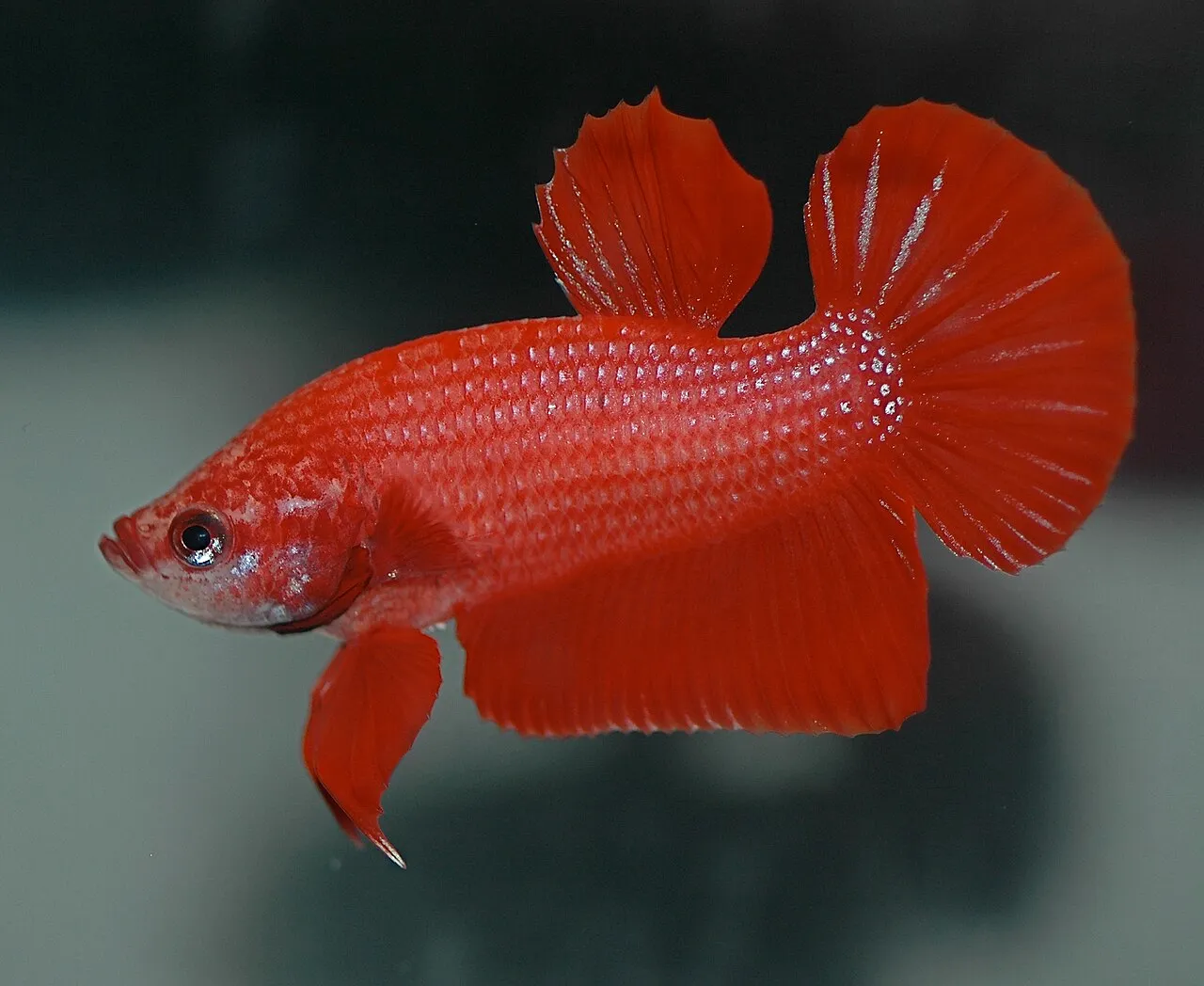
In long-finned show varieties, males are easy to spot: longer fins, richer colour and a bigger beard, the membrane under the gill covers that flares out when excited. Females have shorter fins, a slightly fuller body and a small white egg spot, the ovipositor, between the ventral and anal fins.
Short-finned plakats are trickier because both sexes look similar. Compare body shape, beard size and the presence of an egg spot together. Females flare too, so flaring alone does not tell you the sex.
5. Tail types and colours
Bettas are named first by tail and fin shape and then by colour and pattern, so you will see labels such as red halfmoon or koi plakat.
| Tail type | Description | Notes |
|---|---|---|
| Veiltail | Long tail drooping downward | Most common and affordable |
| Halfmoon | Tail opens to a 180-degree D shape | Heavy fins tire easily and tear |
| Over-halfmoon | Spreads past 180 degrees | Especially prone to fin damage |
| Delta and super delta | Triangular spread, less than 180 degrees | More active than halfmoons |
| Crowntail | Rays extend beyond the webbing like spikes | Thin webbing, sensitive to water quality |
| Double tail | Tail split into upper and lower lobes | Shorter body, watch for buoyancy issues |
| Rosetail and feathertail | Heavily branched, ruffled rays | Very heavy fins, less active |
| Plakat | Short fins, close to fighting and wild lines | Active and robust |
| Halfmoon plakat | Short tail that still spreads to a half circle | Very popular |
| Dumbo (elephant ear) | Oversized pectoral fins | Slower swimmer |
| Giant | Body up to 8–10 cm | Needs a larger tank |
Colour names are just as varied: solid red, blue or black; translucent cellophane; dragon scale, with thick silvery scales; koi and galaxy patterns with red, black and white patches and sparkling spots; mustard gas, with a blue or green body and yellow fins; and many more. Different sellers use these names a little differently.
6. Behaviour
ZooFari · CC BY 3.0
6.1. Life in the wild
Wild bettas live in shallow, warm, almost still water: rice paddies, marshes, ditches and floodplain pools across Thailand, Cambodia, Laos and southern Vietnam. The water is typically 25–30°C, thick with plants and leaf litter and often stained brown. In the dry season fish may be trapped in shrinking pools, where breathing air becomes a lifesaver.
They feed mainly on insects that fall onto the surface, mosquito larvae and tiny crustaceans. Males hold territories among the vegetation, and in open habitat the loser of a dispute can simply swim away, which is why fights in nature rarely end the way they do in a tank.
6.2. Behaviour at home
A betta patrols the front glass, watches the room and investigates anything new you put in. Most learn to recognise whoever feeds them and rise to the surface when that person approaches. Some keepers teach simple tricks such as following a finger or swimming through a small hoop for a food reward.
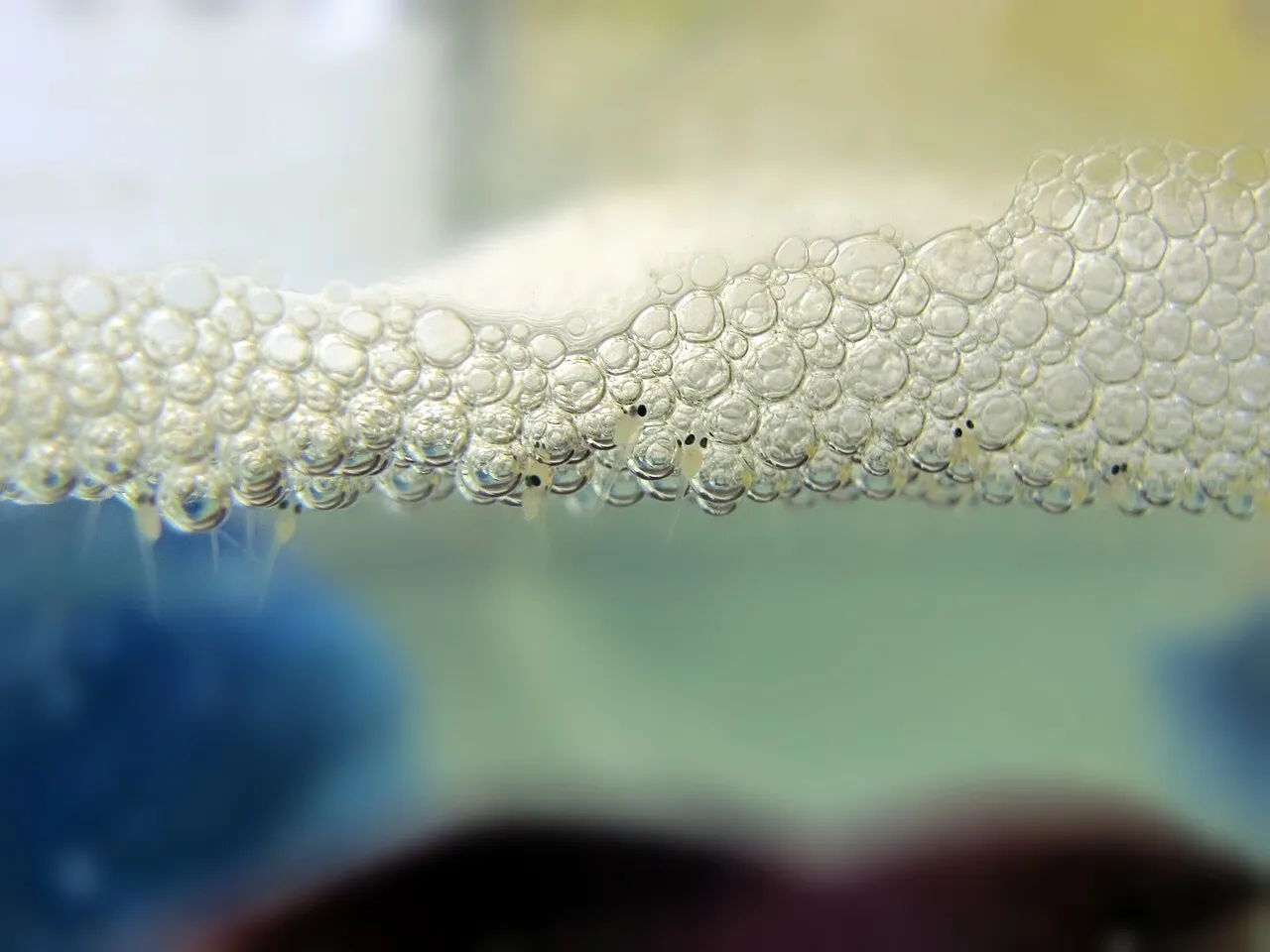
A comfortable male builds a bubble nest, a raft of saliva-coated air bubbles at the surface, often in a corner or under a floating leaf. He will do this with no female present, and it is generally a sign of contentment. Bettas also like to rest on broad leaves or a leaf hammock near the surface; a fish lounging on a leaf is usually relaxing, not ill.
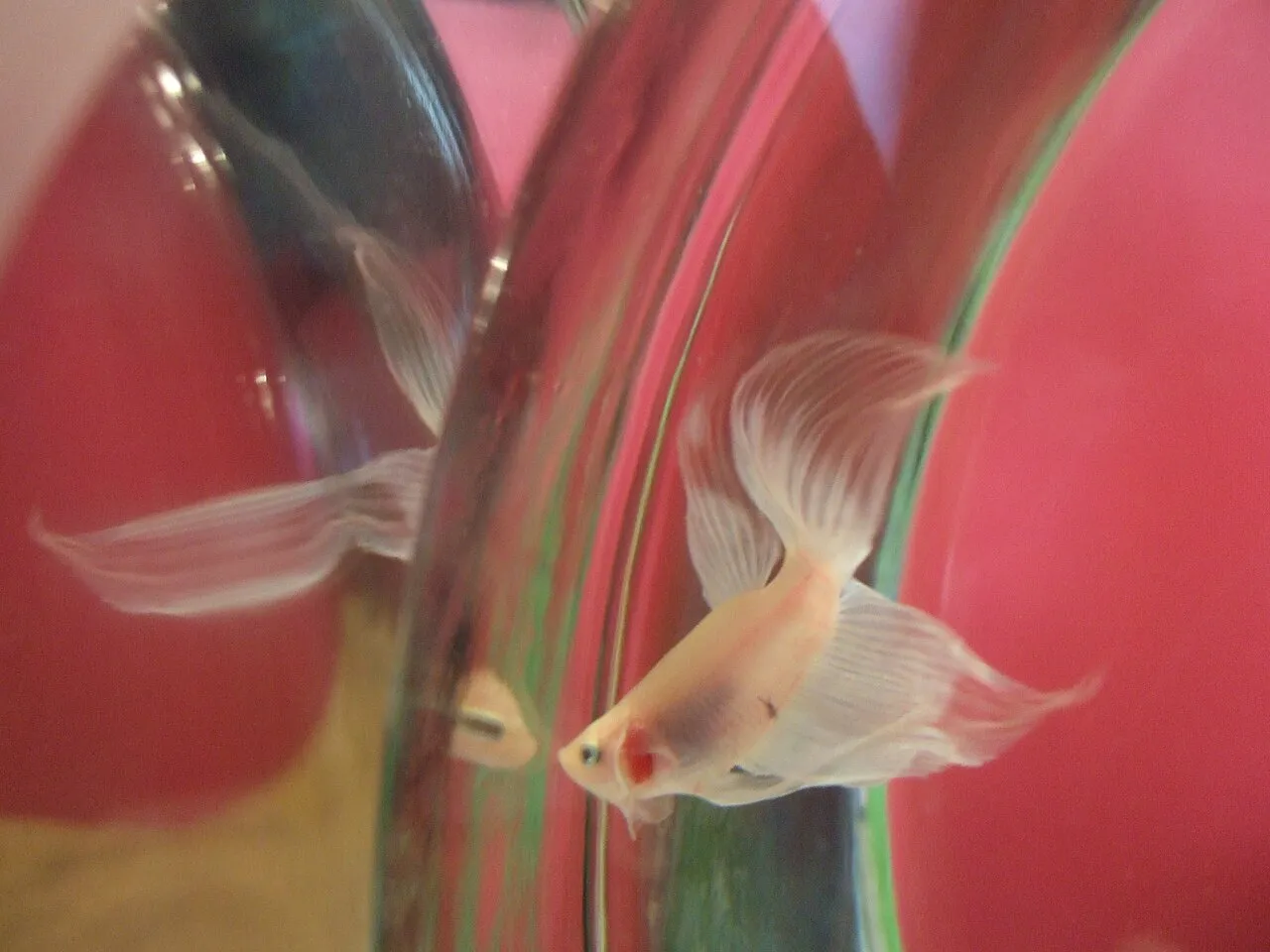
Males flare at other males, at mirrors, at their own reflection in the glass and sometimes at brightly coloured tankmates. A short flare now and then is harmless exercise, but a fish flaring at its reflection all day is stressed. A background on the glass or a change in lighting usually fixes it.
6.3. Reading the signals
Fins, colour and posture tell you a lot about a betta’s mood and health.
- Fins spread wide and colour vivid: relaxed and well.
- Fins clamped and colour dull: water too cold, poor water quality or early illness.
- Horizontal stripes along the body: stress or fear, common in females and newly bought fish.
- Strong vertical bars on a female: usually a sign she is ready to spawn.
- Swimming up and down the glass repeatedly: often reacting to a reflection or unhappy with the setup.
- Lying on the bottom and refusing food: check temperature, water quality and buoyancy first.
- Tail getting shorter day by day: tail biting or fin rot.
7. Life stages
Bettas typically live three to five years. Males in shops are usually at least four to six months old, because their fins must grow out before they are sold, so your time together may be a little shorter than the full lifespan. In excellent conditions some reach six or seven.
| Stage | Age | What happens |
|---|---|---|
| Egg | 1–2 days after spawning | Guarded by the male in the bubble nest |
| Wiggler | 2–3 days after hatching | Hangs in the nest, absorbing its yolk |
| Fry | 3 days–1 month | Free-swimming, eats microscopic food, labyrinth begins developing |
| Juvenile | 1–3 months | Fins and colour appear; young males start sparring |
| Adult | 4 months–3 years | Full finnage, able to breed |
| Senior | Roughly 3 years on | Drooping fins, fading colour, less activity |
Older bettas develop thinner, frayed fins, sometimes a slightly curved spine or cloudy eyes, and they may struggle to reach the surface. Lowering the water level a little and adding a resting leaf near the top makes life easier for an elderly fish.
8. Housing
ZooFari · CC BY-SA 3.0
8.1. Tank and temperature
Give one betta at least 10 litres and ideally 20 litres or more. A larger volume holds temperature and water quality steadier, which actually makes care easier. Bettas swim horizontally and must surface often to breathe, so a tank 25–30 cm tall suits them better than a deep one.
Keep the water at 24–28°C, ideally around 26°C. A heater is essential anywhere the room cools below that range; for a 20-litre tank, an adjustable heater of about 25 W is typical. Always use a separate thermometer in case the heater fails. A pH of 6.5–7.5 suits most bettas, and conditioned tap water is fine in most areas.
8.2. Filtration, lid and decor
Long fins catch current like sails, so filtration should be gentle. An air-driven sponge filter is the classic choice; if you use a hang-on-back filter, baffle the outflow with a sponge or turn it to its lowest setting. If your betta is pushed around the tank and struggles to hold position, the flow is too strong.
Bettas are accomplished jumpers, so a lid is essential, but leave a few centimetres of air between the water and the lid so the fish can breathe warm, humid air. Many keepers believe repeatedly gulping cold air is hard on the labyrinth organ.
Choose decor that will not snag fins. Skip hard plastic plants and sharp ornaments in favour of live plants such as anubias, Java fern and floating plants, or soft silk replicas. Dried Indian almond leaves release tannins that tint the water brown, echoing the wild habitat, and give the fish places to hide and rest.
- A tank of 10–20 litres or more, with a lid
- An adjustable heater and a thermometer
- A sponge filter with an air pump and flow control
- Water conditioner and a test kit
- Live or silk plants, plus a leaf hammock
- Fine sand or smooth gravel
- A small net and a cup or siphon for water changes
8.3. Tankmates
A male betta is fundamentally a solo fish; two males in one tank will almost certainly fight. Groups of females, often called sororities, need a large, densely planted tank and experience, and injuries from squabbles over rank are common.
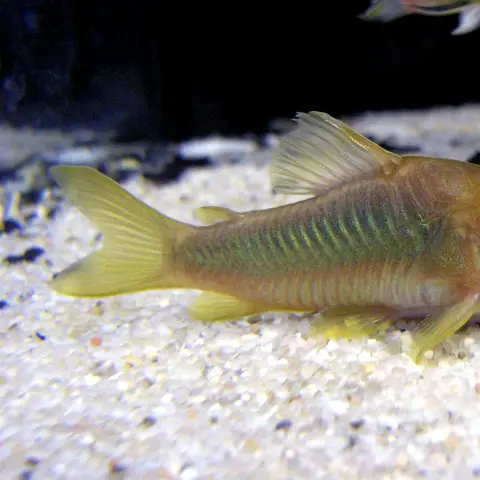
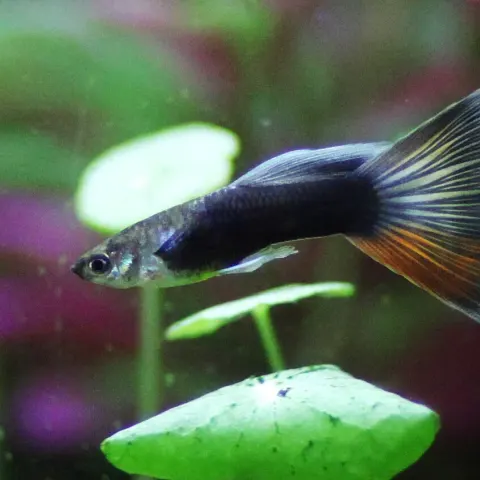
In tanks of 40 litres or more, some keepers succeed with small, peaceful, short-finned fish, bottom-dwelling corydoras or nerite snails. Personality varies hugely, though: the same combination can be peaceful with one betta and a disaster with another. Watch closely for the first few days, and have a spare tank ready in case you need to separate them. Avoid fancy-tailed fish such as guppies, which a betta may mistake for a rival, and fin-nippers like tiger barbs.
9. Diet
Bettas are carnivores that eat insects and tiny crustaceans in the wild, so a high-protein betta pellet should be the staple. Goldfish flakes and plant-heavy foods do not meet their needs.
| Type | Examples | How often and how much |
|---|---|---|
| Staple | Small betta pellets | Once or twice a day, 2–4 pellets per meal |
| Frozen | Bloodworm, brine shrimp, daphnia | Once or twice a week, in place of pellets |
| Freeze-dried | Freeze-dried bloodworm and similar | Occasionally, pre-soaked |
| Fast | Nothing | About one day a week |
A betta’s stomach is roughly the size of its eye. It will eat as long as food keeps coming, and overfeeding leads quickly to bloating, constipation and buoyancy problems. Freeze-dried foods swell as they absorb water, so soak them first. Daphnia are often recommended as a gentle remedy for constipation.
Uneaten pellets sink and rot, so remove them with a pipette after about five minutes. Holiday feeder blocks can wreck water quality in a small tank; a healthy adult betta can safely go three or four days without food while you are away.
10. Health
Daniella Vereeken · CC BY 2.0
Cold, dirty water is behind most betta illness. When something looks wrong, check the thermometer and heater first, then test for ammonia and nitrite.
| Condition | Cause | Signs | Prevention and response |
|---|---|---|---|
| Fin rot | Bacterial infection | Fin edges blackened, whitish or melting away | Better water, remove snagging decor |
| Velvet | Dinoflagellate parasite | Gold or rust-coloured dust on body, clamped fins | Dim lights, stable heat, seek advice |
| White spot (ich) | Ciliate parasite | Salt-grain white dots | Quarantine newcomers, avoid temperature swings |
| Dropsy | Bacterial infection, organ failure | Swollen belly, raised scales | Catch early; outlook often poor |
| Popeye | Infection or injury | One or both eyes bulging | Improve water, see a vet |
| Swim bladder problems | Overfeeding, constipation, body shape | Lying on side or floating | Fast, smaller meals, daphnia |
| Columnaris | Bacterial infection | Cottony patches near mouth or back, fast spread | Isolate and treat promptly |
| Tail biting | Stress, boredom, genetics | Fins shortening overnight | Change setup, add plants, reduce flow |
Aquarium water can carry non-tuberculous mycobacteria that occasionally cause skin infections in people. Wear gloves if you have cuts on your hands, and wash up after tank maintenance.
Consult a fish-experienced vet if you see any of the following.
- Refusing food for three days or more
- Scales standing out like a pinecone
- Cotton-like white patches spreading quickly
- Bulging eyes or ulcers on the skin
- Symptoms continuing after water and temperature are corrected
Dose medications precisely. In a small tank, salt and drug concentrations climb quickly, so measure carefully.
11. Breeding
Bettas breed in a way few aquarium fish do: the male builds a bubble nest and cares for the eggs alone. Breeders condition both fish for one to two weeks on frozen foods, keeping them in sight of each other behind a divider. The breeding tank is typically around 20 litres with the water lowered to 10–15 cm, heated to 27–28°C and with no current.
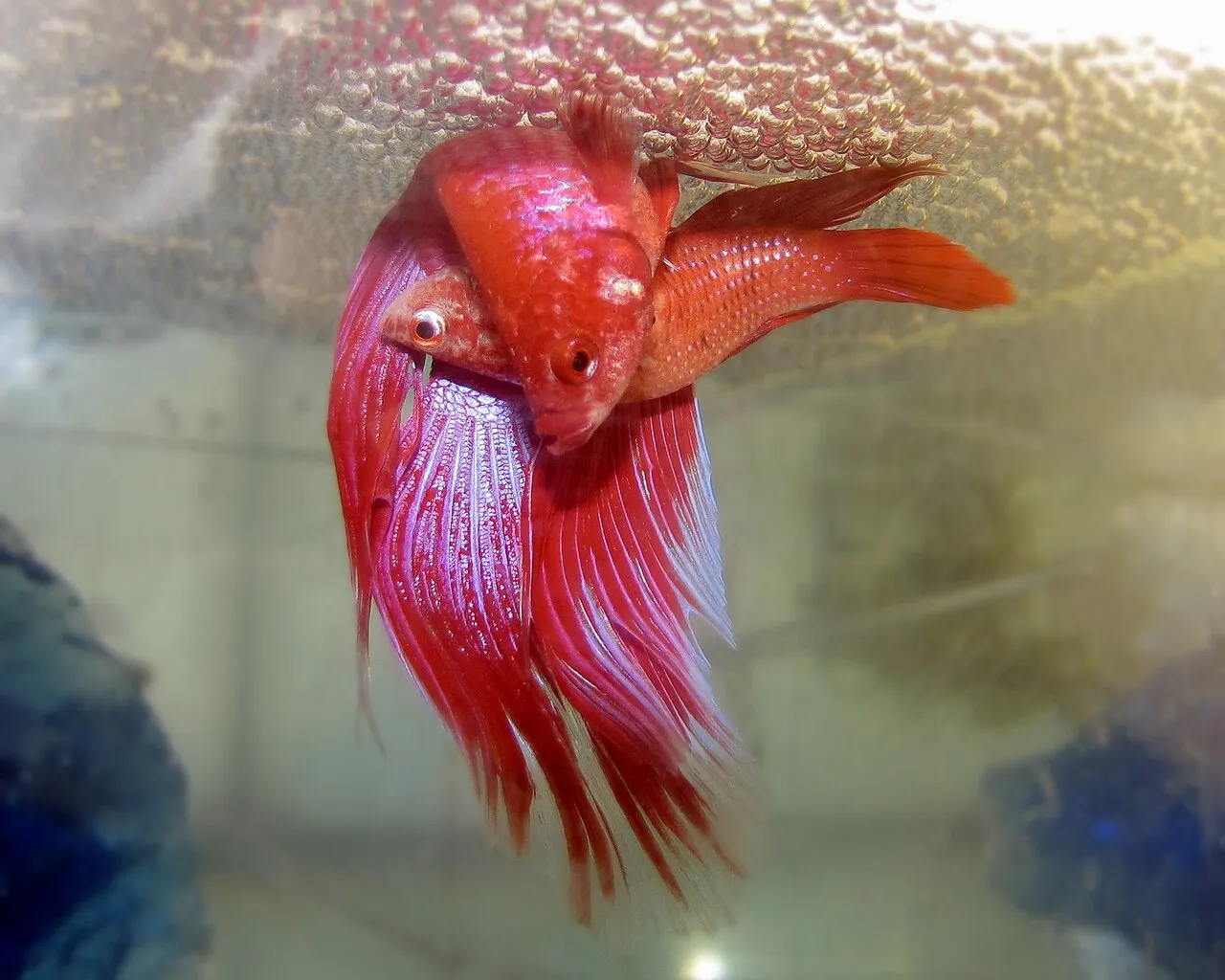
Once the male has built a nest and the female shows vertical bars, the pair are introduced. Beneath the nest the male wraps his body around the female in a series of embraces, and with each one she releases eggs. He catches the sinking eggs in his mouth and blows them into the nest; a spawning typically produces dozens to a few hundred eggs. The female must be removed as soon as spawning ends, because the male may turn on her.
Eggs hatch in one to two days, and the fry hang in the nest for a few more days before swimming freely. At that point the male is removed and the fry are fed infusoria, microworms and newly hatched brine shrimp several times a day. Keep the tank covered while the labyrinth organ develops, so the air above the water stays warm and humid.
The real challenge comes later. From around two to three months the young males start fighting, and each one needs its own container, heat and water changes. A single spawn can produce dozens of males that all need space and homes, so do not breed bettas out of curiosity without a clear plan for every fish.
12. Costs
Because the tank is small, a betta is one of the cheaper aquarium setups to start. The figures below assume one betta in a 20-litre tank and are rough examples in Korean won; actual prices vary a great deal by shop, brand and the quality of the fish.
| Item | Approximate cost (KRW) | Notes |
|---|---|---|
| One betta | 5,000–50,000+ | Pet-shop fish are cheap; breeder lines and rare colours cost far more |
| Tank and lid | 20,000–60,000 | 10–20 L |
| Heater and thermometer | 15,000–40,000 | Adjustable heater recommended |
| Sponge filter and air pump | 10,000–30,000 | |
| Substrate, plants, hammock | 10,000–30,000 | |
| Conditioner and test kit | 10,000–20,000 | |
| Start-up total | About 60,000–180,000 | |
| Monthly food and consumables | 3,000–8,000 | |
| Monthly electricity | 3,000–7,000 | Higher in winter with the heater on |
| Monthly total | About 8,000–15,000 | |
| Yearly | About 100,000–180,000 | Excluding equipment replacement |
Vet care for fish is limited and prices vary by area, so keep a small reserve for medication and a hospital container. Heaters wear out and a failure in winter can be fatal, which is why many keepers keep a spare.
13. Before you get one
Check the following before you bring a betta home.
- Do you have a power socket and a safe spot for a heated tank?
- Can you change water at least once a week?
- If you want a busy community tank, are you aware a betta may not fit that plan?
- Can you care for it consistently for three to five years?
- If the tank is new, can you run the filter for a few weeks to cycle it before adding the fish?
When choosing, start with the water in the cup or shop tank: it should be clear. Look for intact, evenly spread fins, no white spots or gold dusting on the body, and a fish that reacts when you approach. Avoid bettas lying motionless on the bottom or showing greyish, washed-out colour.
On the first day, float the cup in the tank for 20–30 minutes, add small amounts of tank water to the cup to help the fish adjust, then net the betta across without pouring in the shop water. It may hide or look pale for a day or two, but most settle quickly.
14. Laws
Betta splendens is not listed by CITES and is not regulated as a pet in most countries, so ownership normally needs no licence. Tropical though it is, never release a betta or any aquarium animal into local waters.
Deliberately staging fights between animals for gambling or entertainment is illegal under animal welfare law in many countries, though how far those laws extend to fish varies. Regardless of the legal position, setting bettas against each other causes severe injuries and death.
Some countries restrict the collection or export of wild Betta species, and a few places have rules on how live fish may be displayed or sold. If you plan to import fish or keep wild-type species, check the regulations that apply where you live.
15. Bettas in culture
In Thailand the betta is tied to national identity. Since becoming the national aquatic animal it has appeared on stamps, souvenirs and public campaigns, and the flowing shape of a flaring male turns up as a decorative motif. Traditional fish fighting survives in parts of the country, though it draws growing criticism on welfare grounds.
In film, Francis Ford Coppola’s Rumble Fish (1983) uses fighting fish confined in a tank as a metaphor for restless young men trapped in a dead-end town. In the 1990s and 2000s, the betta vase, a plant perched on top of a vase with a betta in the water below, was a popular decor item in the United States; today it is widely regarded as poor welfare.
On social media, slow-motion clips of halfmoon males spreading their fins have made bettas the definitive desk pet. Flare photos, taken by briefly showing a male a mirror, are a whole genre of betta photography.
16. Trivia
- A male whose bubble nest is wrecked during a water change will usually start rebuilding within hours, so there is no need to tiptoe around it.
- Bettas attack their own reflection as if it were a rival, a classic example of fish failing the mirror test.
- Some Betta species skip the bubble nest altogether: the male holds the eggs in his mouth until they hatch.
- Marble bettas can change so much over a year that photos taken months apart look like two different fish.
- Damaged fins regrow over several weeks in clean water, and the new growth is often clear or a slightly different colour at first.
- In Thai street markets you can still see long rows of bettas, each in its own small bottle, separated by cards so they do not flare at each other all day.
Health notes are general information. If something seems wrong, contact a vet who treats this species.
FAQ
Can a betta really live in a small cup?
It can survive for a while because it breathes air, but temperature and water quality swing constantly. A heated tank of at least 10 L is the realistic minimum.
There are bubbles all over the surface. Is something wrong?
Most likely a bubble nest built by a male, which usually means he feels comfortable. There is no need to remove it.
What can live with a betta?
In 20 L or more, nerite snails and sometimes shrimp can work, though some bettas hunt shrimp. Watch closely for the first few days.
Further reading
- 🗳️ Bettas: solo tank or a peaceful community tank?
- 🚗 Moving House and Traveling With Pets
- 🏢 Choosing a Pet When You Live Alone or Work Full Time
Photo credits
Photos are freely licensed images from Wikimedia Commons. Authors and licenses are listed below.
- Bojownik syjamski.jpg — Henryk Niestrój · CC BY 4.0
- 2014 Rice paddies Phrao district.jpg — Takeaway · CC BY-SA 3.0
- Betta Fighting Reflection.JPG — Malzees at en.wikipedia · CC BY-SA 3.0
- Betta fry in bubble nest.jpg — ZooFari · CC BY 3.0
- Betta spawning.jpg — ZooFari · CC BY-SA 3.0
- Trad PK Red M - Betta-Online.jpg — Daniella Vereeken · CC BY 2.0